Safety / Tips and Tricks / Chemical Handling
Activity 06 · Chemical Handling
Eye and Face Protection for Chemical Splash
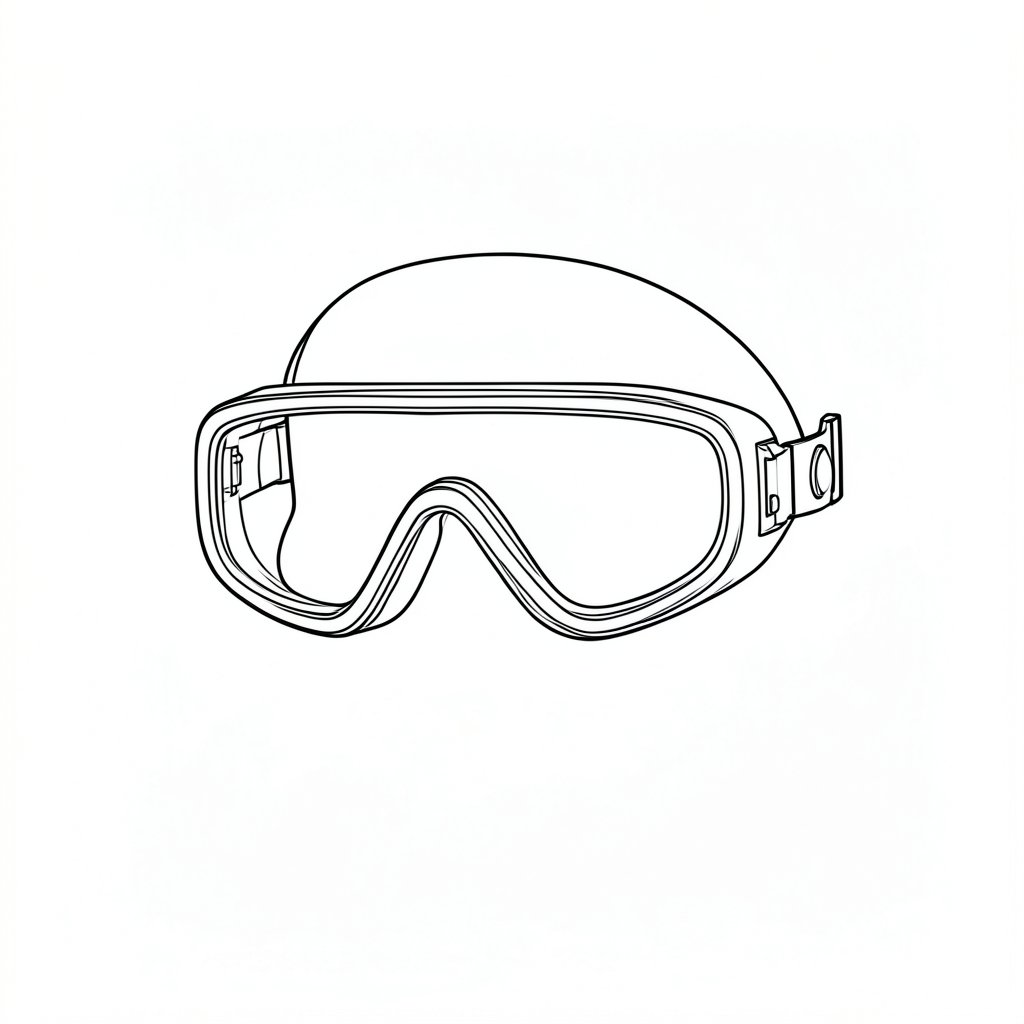
Ordinary safety glasses stop flying particles reasonably well, but a liquid chemical splash behaves completely differently — it can run around an open frame and reach the eye from angles a particle traveling in a straight line never would, which is why splash protection needs its own specific consideration rather than being assumed covered by general eye protection.
Why open-frame glasses are not enough for splash
Standard safety glasses, even those meeting EN 166 for impact resistance, typically leave gaps at the brow, temples and below the lens that a liquid splash can enter even when the glasses themselves are correctly worn, because liquid does not need a direct line-of-sight path the way a flying particle does. EN 166 includes a specific marking for protection against liquid droplets and splash, and this marking, not the general impact rating, is what should be checked when selecting eyewear for chemical handling tasks.
Sealed goggles as the appropriate baseline
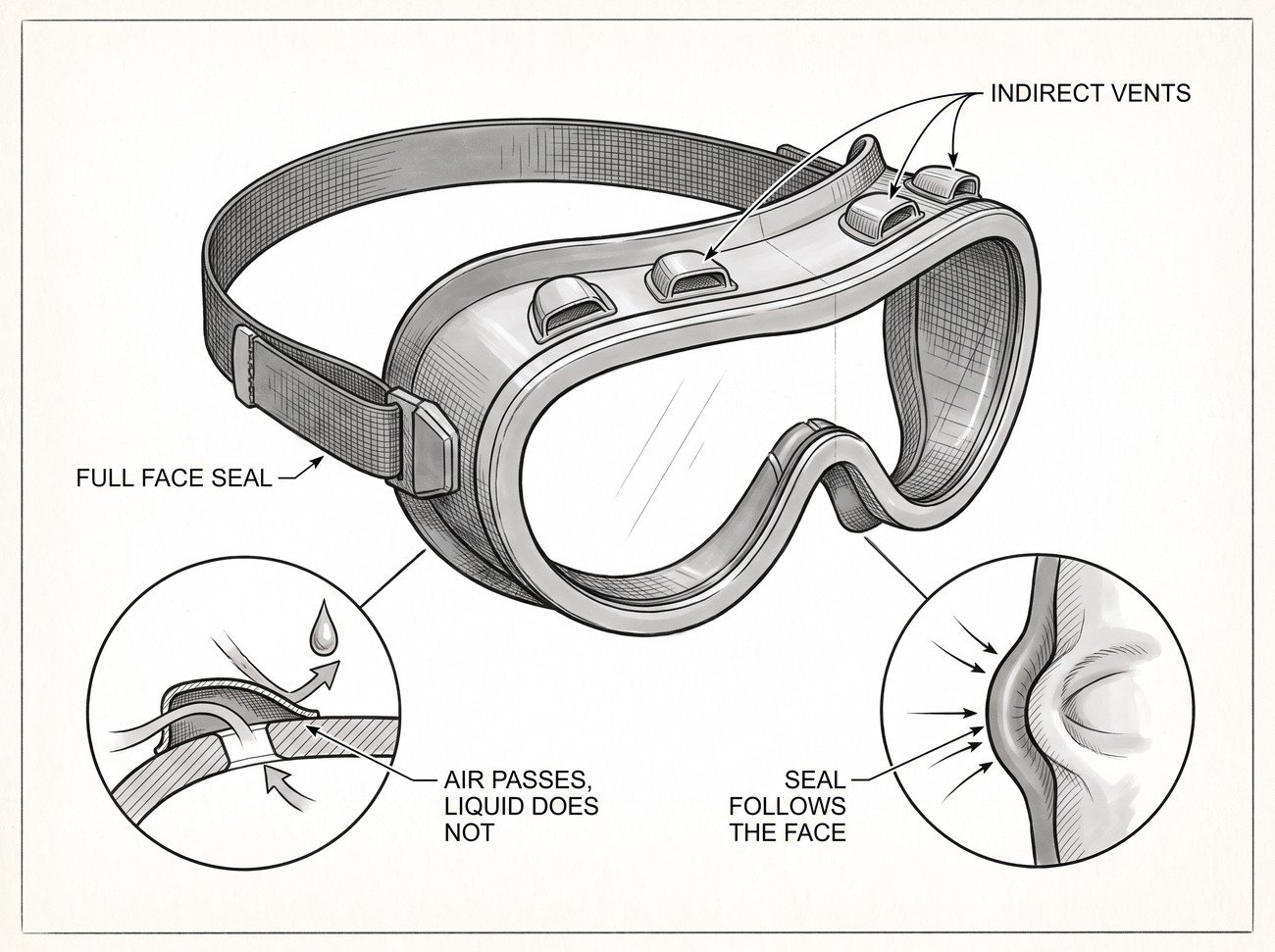
Goggles with a sealed, flexible frame that conforms to the face close the gaps that open-frame glasses leave, and they are the appropriate baseline for any task with a realistic chemical splash exposure, not an upgrade reserved only for the most hazardous chemicals in use. Indirect-vent goggles, with vents that baffle the direct path from outside to inside the goggle, offer better splash protection than direct-vent designs, which trade some splash protection for improved airflow and anti-fog performance.
Face shields as a secondary barrier
A face shield adds protection for the wider face and neck area and helps with tasks involving a larger volume of potential splash, such as pouring or decanting, but it should be worn over goggles, not instead of them, since a face shield’s open bottom and sides do not seal against the eyes the way goggles do. Treating a face shield as sufficient on its own for genuine splash risk leaves the eyes exposed from below and the sides even though the face appears well covered.
Compatibility with respiratory protection
Goggles and a half-mask or full-face respirator need to be checked together for compatibility, since a goggle strap positioned incorrectly relative to a respirator’s own straps can break the seal of either device, and a full-face respirator with its own integrated eye protection may make separate goggles unnecessary or even counterproductive to fit. Confirming the specific combination in use has actually been checked for compatible fit, not just assumed compatible because both items are individually rated, avoids compromising either device’s protection.
Lens material and chemical compatibility
Some chemicals can attack certain lens or frame materials directly, clouding, softening or degrading them in ways that reduce optical clarity or structural integrity over the course of repeated exposure, so lens and frame material should be checked against the specific chemicals in regular use, not assumed universally compatible because the eyewear is rated for splash generally.
For the respiratory protection worn alongside eye protection in chemical handling, see respiratory protection for chemical vapours and gases.
Related standards
The standards below set the test methods and performance levels behind the equipment referenced in this note.
Common errors
1Relying on open-frame safety glasses for tasks with a genuine chemical splash risk.
2Wearing a face shield alone without goggles underneath for tasks involving significant splash volume.
3Combining goggles and a respirator without checking that the two devices fit compatibly together.
4Assuming lens and frame material is compatible with every chemical in use without checking against the specific chemicals actually handled.
Frequently asked questions
Why are standard open-frame safety glasses not enough for chemical splash?
They typically leave gaps at the brow, temples and below the lens that liquid can enter even when correctly worn, because a splash does not need a direct line-of-sight path the way a flying particle does.
What should be checked on EN 166 eyewear for chemical splash tasks?
The specific marking for protection against liquid droplets and splash, not the general impact resistance rating, since impact and splash protection are separate performance characteristics.
Can a face shield be worn instead of goggles for chemical splash protection?
No, a face shield should be worn over goggles, not instead of them, since its open bottom and sides do not seal against the eyes the way sealed goggles do.
Why does goggle and respirator compatibility need to be checked together?
A goggle strap positioned incorrectly relative to a respirator's straps can break the seal of either device, so the specific combination needs to be checked for compatible fit rather than assumed compatible.
Can chemicals damage eye protection itself over time?
Yes, some chemicals can cloud, soften or degrade certain lens or frame materials with repeated exposure, so lens and frame material should be checked against the specific chemicals in regular use.
Need this as a document you can issue? The template library gives you the risk assessments, permits and inspection logs in editable form — and employer plans cover a whole team with completion records.