Safety / Tips and Tricks / Explosive Atmosphere
Activity 08 · Explosive Atmosphere
Purging and Inerting Procedures
Purging and inerting both work by removing one leg of the fire triangle rather than by controlling ignition sources, which makes them fundamentally different from every other explosive atmosphere control — and also means an incomplete purge can leave a system in a more dangerous state than not purging at all.
Purging versus inerting
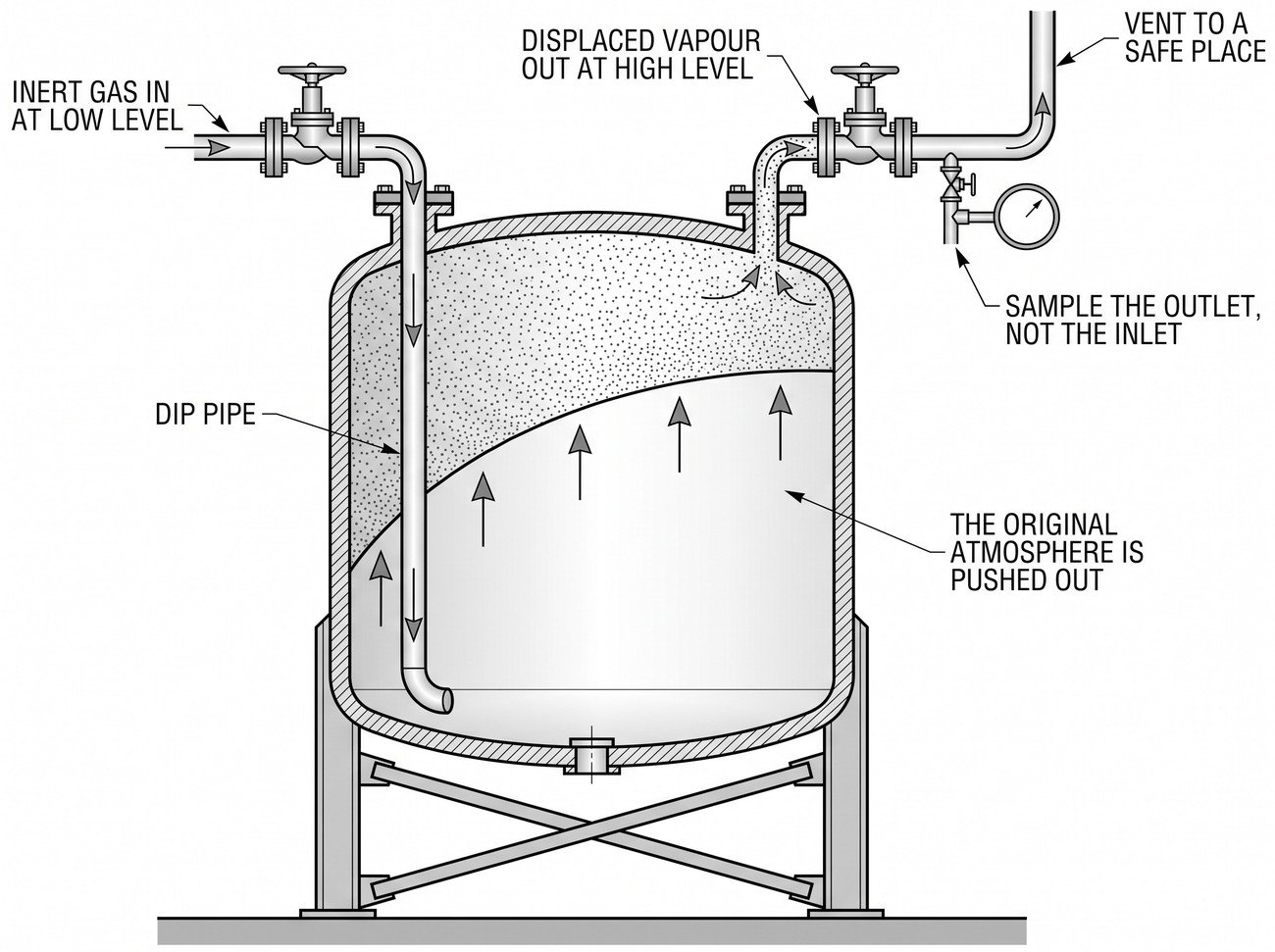
Purging generally means displacing a flammable atmosphere from a vessel or system, typically with an inert gas such as nitrogen, to bring it below the lower explosive limit before work begins. Inerting means maintaining an inert atmosphere in the system during operation so an explosive mixture cannot form in the first place. The distinction matters because the two have different success criteria: a purge is verified complete and then work proceeds, while inerting must be continuously maintained and monitored for as long as the protection is required.
Passing through the explosive range
Introducing air into a vessel containing flammable vapour, or introducing flammable material into a vessel containing air, takes the mixture through the explosive range on the way to either extreme, and this transitional period is the most hazardous part of the operation. Purging with an inert gas first, so the transition happens between flammable-rich and inert rather than between flammable-rich and air, avoids passing through the explosive range entirely, which is the core reason inert purging exists rather than simply ventilating with air.
The asphyxiation hazard inerting creates
An inerted vessel or space is oxygen-deficient by design, and this creates a life-threatening asphyxiation hazard that is invisible, odourless and can cause loss of consciousness within a very small number of breaths without any warning sensation. Nitrogen asphyxiation incidents frequently involve a second casualty attempting rescue, since the hazard gives no sensory warning to the person entering. Any inerted space must be treated as a confined space entry with full atmospheric testing and rescue arrangements, never entered on the basis that the flammability hazard has been controlled.
Verifying purge completion by measurement
Purge completion needs verifying by direct measurement at multiple points, including low points and dead legs where heavier vapour can persist, rather than by elapsed time or volume calculation alone. A vessel with internal structure, baffles or branch connections can retain pockets of flammable atmosphere well after the calculated purge volume has passed through, and single-point sampling at a convenient location can read clear while such a pocket remains.
Re-establishing the normal atmosphere afterward
Returning a system to service requires the same care in reverse, and reintroducing flammable material into a vessel still containing air, or admitting air into an inerted vessel before it has been purged of flammable residue, both recreate the explosive range transition the original purge was designed to avoid.
For confined space entry requirements that apply to inerted spaces, see Rope Access and Confined Space.
Related standards
The standards below set the test methods and performance levels behind the equipment referenced in this note.
- EN 136 — Full face masks
- EN 140 — Half masks and quarter masks
- EN 1149 — Electrostatic properties of protective clothing
Common errors
1Ventilating a flammable atmosphere directly with air, taking the mixture through the explosive range.
2Entering an inerted space on the basis that the flammability hazard is controlled, without treating the oxygen deficiency as a confined space hazard.
3Verifying purge completion by elapsed time or calculated volume rather than direct measurement at multiple points.
4Reintroducing flammable material or admitting air during return to service without repeating the purge sequence in reverse.
Frequently asked questions
What is the difference between purging and inerting?
Purging displaces a flammable atmosphere to bring a system below the explosive limit before work begins, while inerting maintains an inert atmosphere during operation so an explosive mixture never forms.
Why purge with inert gas rather than simply ventilating with air?
Introducing air into a flammable atmosphere takes the mixture through the explosive range in transition, while inert purging avoids passing through that range entirely.
Why is an inerted space a life-threatening hazard?
It is oxygen-deficient by design, and nitrogen asphyxiation is invisible and odourless, causing loss of consciousness within a few breaths with no warning sensation, frequently claiming would-be rescuers as second casualties.
How should purge completion be verified?
By direct measurement at multiple points including low points and dead legs, not by elapsed time or calculated volume, since internal structure can retain pockets of flammable atmosphere.
What is the risk when returning a purged system to service?
Reintroducing flammable material into a vessel still containing air, or admitting air before flammable residue is purged, recreates the explosive range transition the original purge avoided.
Need this as a document you can issue? The template library gives you the risk assessments, permits and inspection logs in editable form — and employer plans cover a whole team with completion records.