Safety / Tips and Tricks / Explosive Atmosphere
Activity 08 · Explosive Atmosphere
Maintenance and Permit Work Inside Hazardous Areas
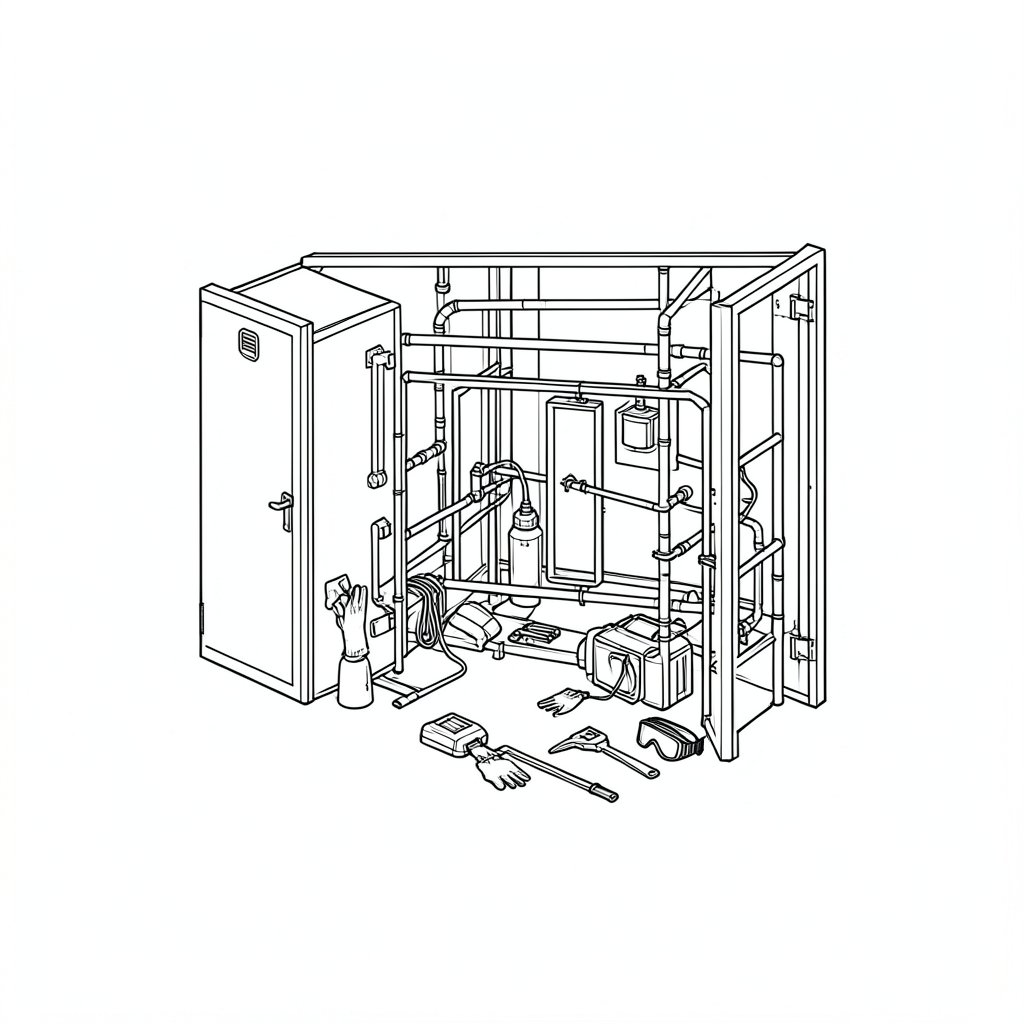
Maintenance work is where hazardous area protection is most likely to be temporarily dismantled — enclosures opened, circuits broken, equipment removed — which makes the maintenance period itself a distinct high-risk window rather than simply a continuation of normal operation.
Why maintenance is a distinct risk window
Normal operation in a classified zone relies on equipment protection concepts remaining intact, and maintenance deliberately breaches those concepts: a flameproof enclosure is opened, an intrinsically safe loop is broken, a sealed gland is removed. For the duration of the work, the protection the area’s safety case depends on is not present, which is why maintenance requires its own controls rather than inheriting the assumptions that apply during normal running.
Gas-free certification versus live working
The preferred approach is making the area genuinely gas-free before work begins, verified by testing rather than assumed from process shutdown, so that breaching equipment protection no longer matters because there is no explosive atmosphere to ignite. Where live working in a classified area cannot be avoided, the controls required escalate substantially, and this should be a documented, specifically authorized exception rather than a routine practice adopted because gas-freeing is inconvenient.
Isolation and lockout specifics
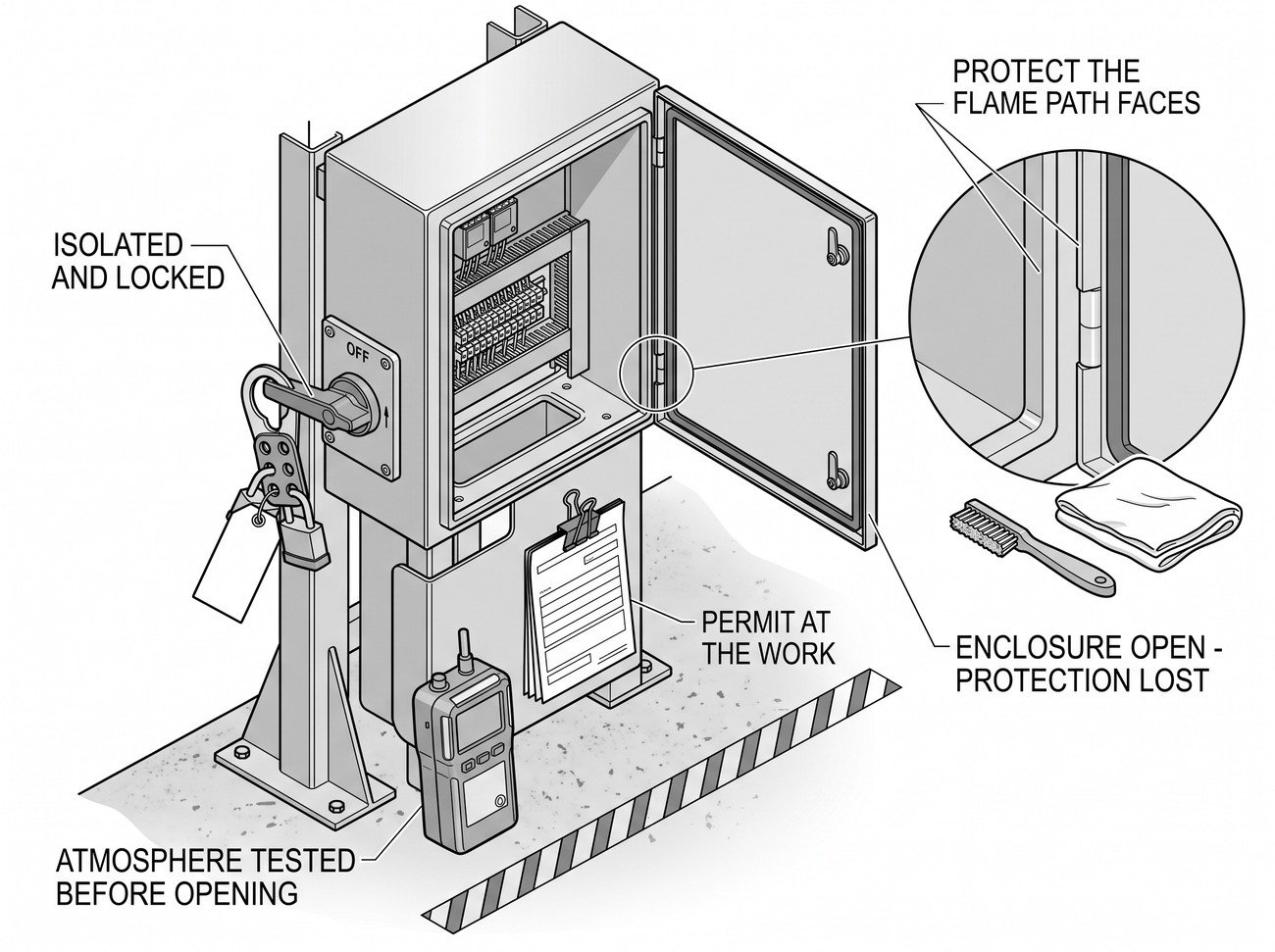
Electrical isolation with lockout, and process isolation of any pipework or vessel containing flammable material, both need to be in place and verified before work begins, and verification means proving isolation is effective rather than confirming an isolator has been operated. Stored energy — pressure in a vessel, residual charge in capacitive equipment, material held in a low point — also needs releasing, since an isolated system is not necessarily a de-energized one.
Reinstating protection correctly
The reinstatement step is where hazardous area maintenance most often fails: flameproof enclosure faces need cleaning and correct fastener torque, gaskets need replacing rather than reusing, cable glands need correct reassembly, and all fasteners need refitting rather than a subset that holds the lid on adequately. An enclosure that is closed and looks correct but has three of its bolts missing or a damaged flame path no longer provides the protection its certification represents, and this is not visible from outside once closed.
Post-maintenance verification
A documented verification step after maintenance — confirming protection concepts have been correctly reinstated, gaskets and fasteners are correct, and any temporary bonding or earthing has been removed while permanent connections are restored — closes the gap between finishing the mechanical work and returning the area to its normal safety case. Treating the work as complete once the equipment functions again, without this verification, is how a compromised protection concept enters service unnoticed.
For the tools used during this work, see non-sparking tools and intrinsically safe equipment.
Related standards
The standards below set the test methods and performance levels behind the equipment referenced in this note.
- ISO 12100 — Safety of machinery
- ISO 13849 — Safety-related parts of control systems
- EN 1149 — Electrostatic properties of protective clothing
Common errors
1Treating maintenance in a classified zone as inheriting normal-operation assumptions rather than requiring its own controls.
2Adopting live working as routine practice because gas-freeing the area is inconvenient.
3Confirming an isolator has been operated rather than verifying isolation is actually effective and stored energy released.
4Reinstating an enclosure without correct fastener count, torque, gasket replacement and flame path condition.
Frequently asked questions
Why is maintenance a distinct risk window in a classified zone?
Maintenance deliberately breaches the equipment protection concepts the area's normal safety case depends on, so for the duration of the work that protection is not present.
What is the preferred approach before maintenance in a hazardous area?
Making the area genuinely gas-free, verified by testing rather than assumed from process shutdown, so breaching equipment protection no longer matters because there is no atmosphere to ignite.
What does verifying isolation actually require?
Proving the isolation is effective rather than confirming an isolator has been operated, and releasing stored energy such as vessel pressure, residual capacitive charge or material held in low points.
Where does hazardous area maintenance most often fail?
At reinstatement: flame path cleaning and fastener torque, gasket replacement, correct cable gland reassembly, and refitting all fasteners rather than a subset that holds the lid on.
Why is a post-maintenance verification step needed?
It confirms protection concepts have been correctly reinstated and temporary bonding removed, closing the gap between the equipment functioning again and the area genuinely returning to its normal safety case.
Need this as a document you can issue? The template library gives you the risk assessments, permits and inspection logs in editable form — and employer plans cover a whole team with completion records.