Safety / Tips and Tricks / Explosive Atmosphere
Activity 08 · Explosive Atmosphere
Grounding and Bonding for Fixed Equipment and Structures
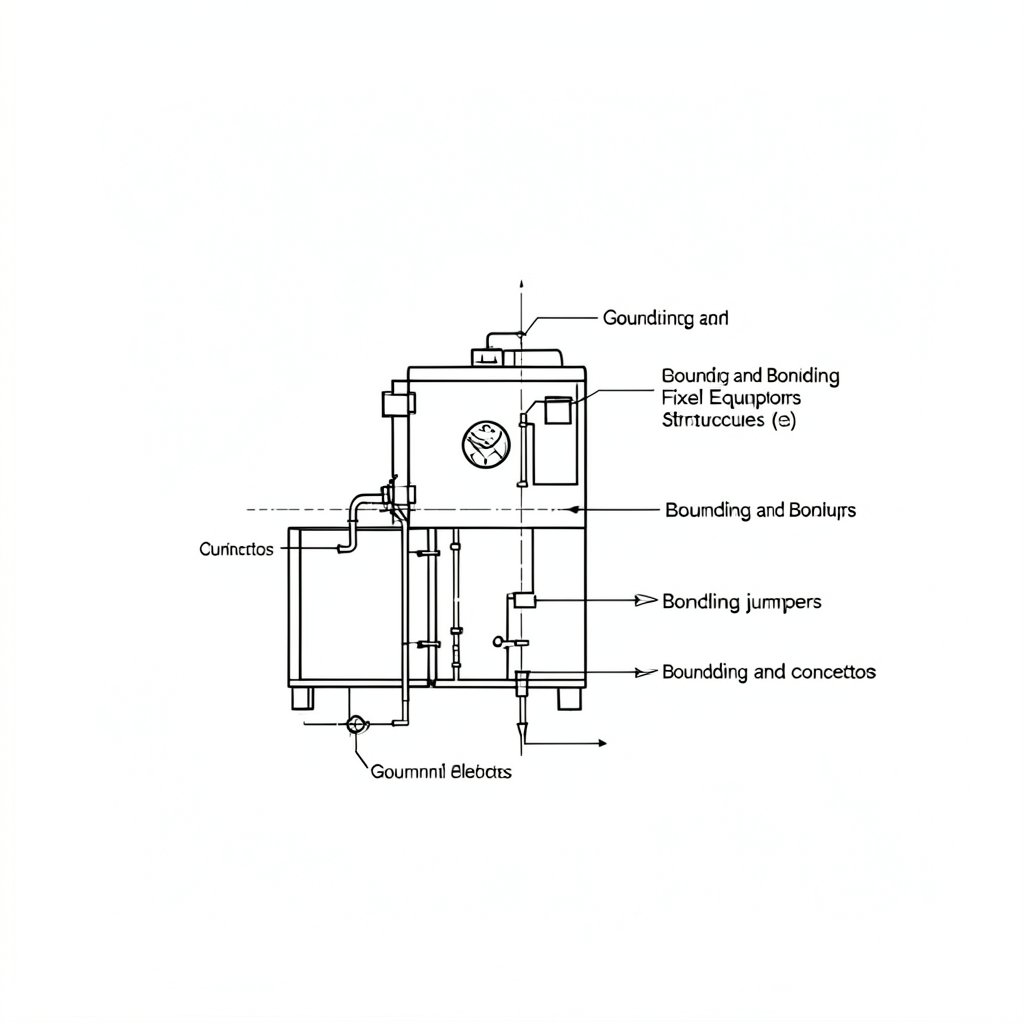
Bonding and grounding are frequently spoken about as a single concept, and treating them that way is precisely where installations go wrong — they address two genuinely different failure modes, and satisfying one does not automatically satisfy the other.
The distinction restated for fixed installations
Bonding connects two or more conductive items together so they share the same electrical potential, eliminating any voltage difference between them and therefore any possibility of a spark jumping between them. Grounding connects the bonded system to earth, providing a path for accumulated charge to drain away entirely rather than sitting on the system as a whole. A bonded but ungrounded system cannot spark internally between its bonded components, but can still carry a charge relative to earth and discharge to any grounded object it later contacts.
Continuity across flanges and joints
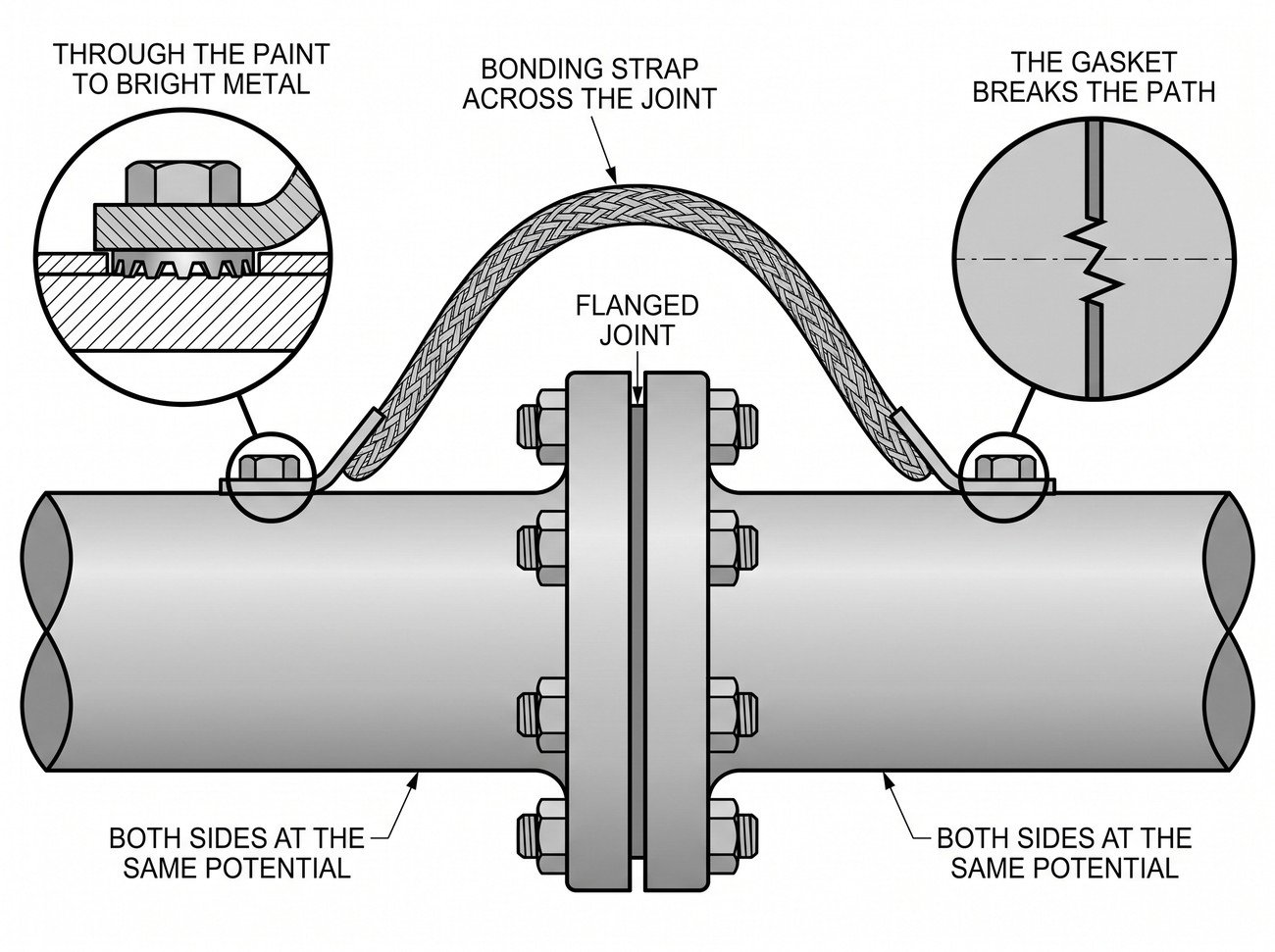
Metal pipework is often assumed to be electrically continuous because it is physically continuous, but gasketed flanges, non-conductive pipe sections, corroded joints and painted mating surfaces can all interrupt the electrical path even where the mechanical connection is entirely sound. Bonding straps across flanges and joints restore this continuity deliberately rather than relying on incidental metal-to-metal contact that may or may not actually be conductive.
Testing continuity rather than assuming it
Visual inspection confirms a bonding conductor is physically present and attached, but it cannot confirm the connection is actually conductive, since corrosion under a clamp, paint beneath a connection point, or a loose fixing can all leave a visually correct installation electrically ineffective. Periodic resistance testing of bonding and grounding connections, rather than visual inspection alone, is what actually verifies the system is performing its function.
Temporary and portable equipment
Portable equipment brought into a hazardous area — a temporary pump, a drum, a container, a sample vessel — needs to be bonded and grounded as deliberately as fixed installations, and this is a more common gap precisely because temporary equipment is not part of the permanent installation’s inspection and testing regime. Establishing a routine for bonding temporary equipment on arrival, rather than treating it as an exception, addresses this.
Corrosion, paint and connection point maintenance
Connection points degrade over time through corrosion and paint overspray during unrelated maintenance work, and a grounding point that was sound at installation can become high-resistance years later without any visible change that would prompt attention. Including grounding connection points in routine maintenance inspection, and cleaning connection surfaces to bare metal when reconnecting, prevents this gradual degradation from going unnoticed.
For the underlying static ignition mechanism these controls address, see static electricity as an ignition source.
Related standards
The standards below set the test methods and performance levels behind the equipment referenced in this note.
Common errors
1Treating bonding and grounding as interchangeable rather than two distinct controls addressing different failure modes.
2Assuming physically continuous metal pipework is electrically continuous across gasketed or painted joints.
3Relying on visual inspection of bonding connections rather than periodic resistance testing.
4Overlooking temporary or portable equipment brought into a hazardous area, since it falls outside the fixed installation's inspection regime.
Frequently asked questions
What is the difference between bonding and grounding for fixed installations?
Bonding connects conductive items so they share the same potential, eliminating sparks between them, while grounding connects the bonded system to earth so accumulated charge can drain away entirely.
Can a bonded system still be a static hazard?
Yes, a bonded but ungrounded system cannot spark internally between its components but can still carry a charge relative to earth and discharge to any grounded object it later contacts.
Is physically continuous metal pipework always electrically continuous?
No, gasketed flanges, non-conductive pipe sections, corroded joints and painted mating surfaces can interrupt the electrical path even where the mechanical connection is sound.
Why is visual inspection insufficient for bonding connections?
It confirms a conductor is present and attached but cannot confirm the connection is conductive, since corrosion, paint or a loose fixing can leave a visually correct installation electrically ineffective.
Why is temporary equipment a common grounding gap?
It falls outside the permanent installation's inspection and testing regime, so bonding portable pumps, drums and vessels needs a deliberate routine rather than being treated as an exception.
Need this as a document you can issue? The template library gives you the risk assessments, permits and inspection logs in editable form — and employer plans cover a whole team with completion records.