Safety / Tips and Tricks / Tree care and grounds
Activity 04 · Tree care
Ground-to-Aerial Communication During Tree Felling and Rigging
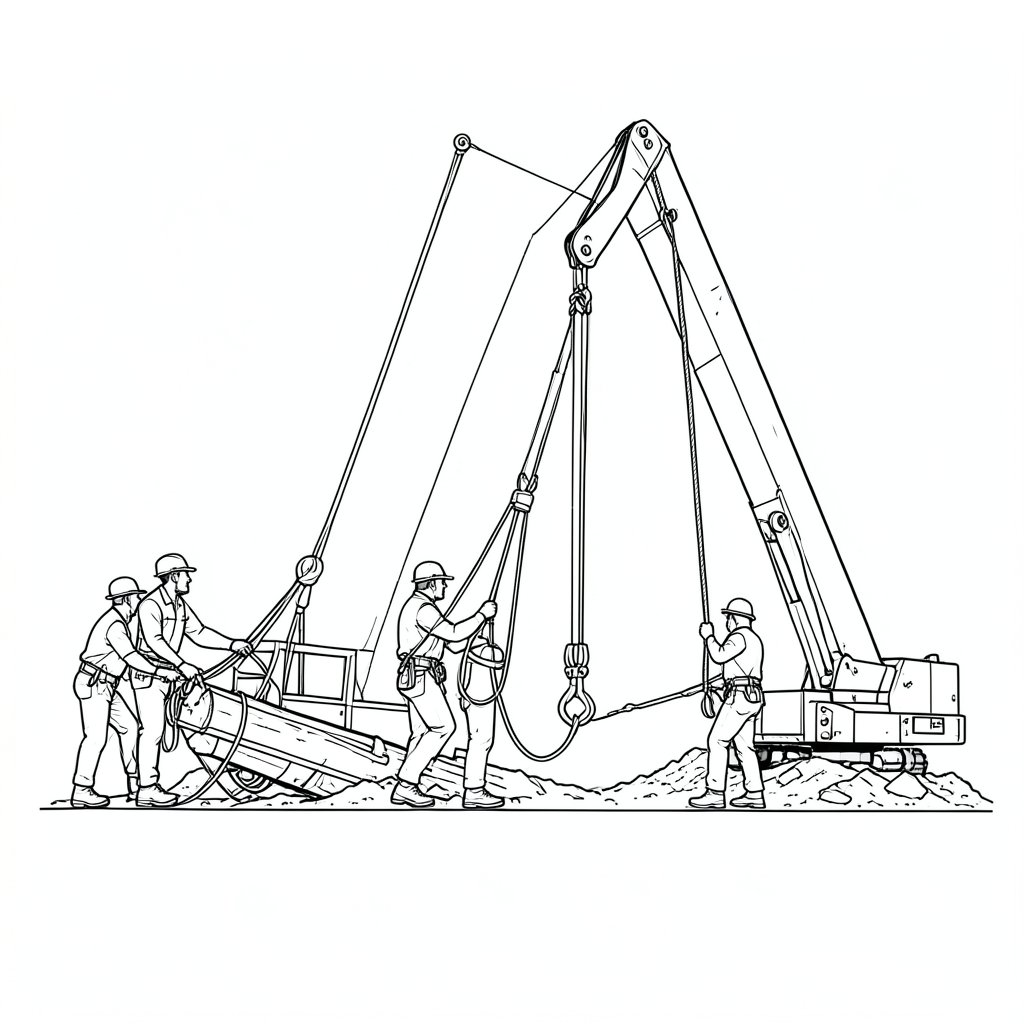
A felling or rigging operation with more than one person only works if everyone involved shares the same understanding of what is about to happen and when — and that shared understanding depends entirely on communication that is clear, unambiguous, and actually heard over chainsaw noise and distance.
Why standard conversation fails for this task
Chainsaw and chipper noise, distance between an aerial climber and the ground, and wind can all defeat ordinary spoken communication at exactly the moments when a clear signal matters most — the instant before a limb is released or a tree begins to fall. Relying on conversational volume and assuming a message was heard, rather than confirming it, is a common and preventable point of failure in team felling and rigging operations.
Establishing a signal system before work starts
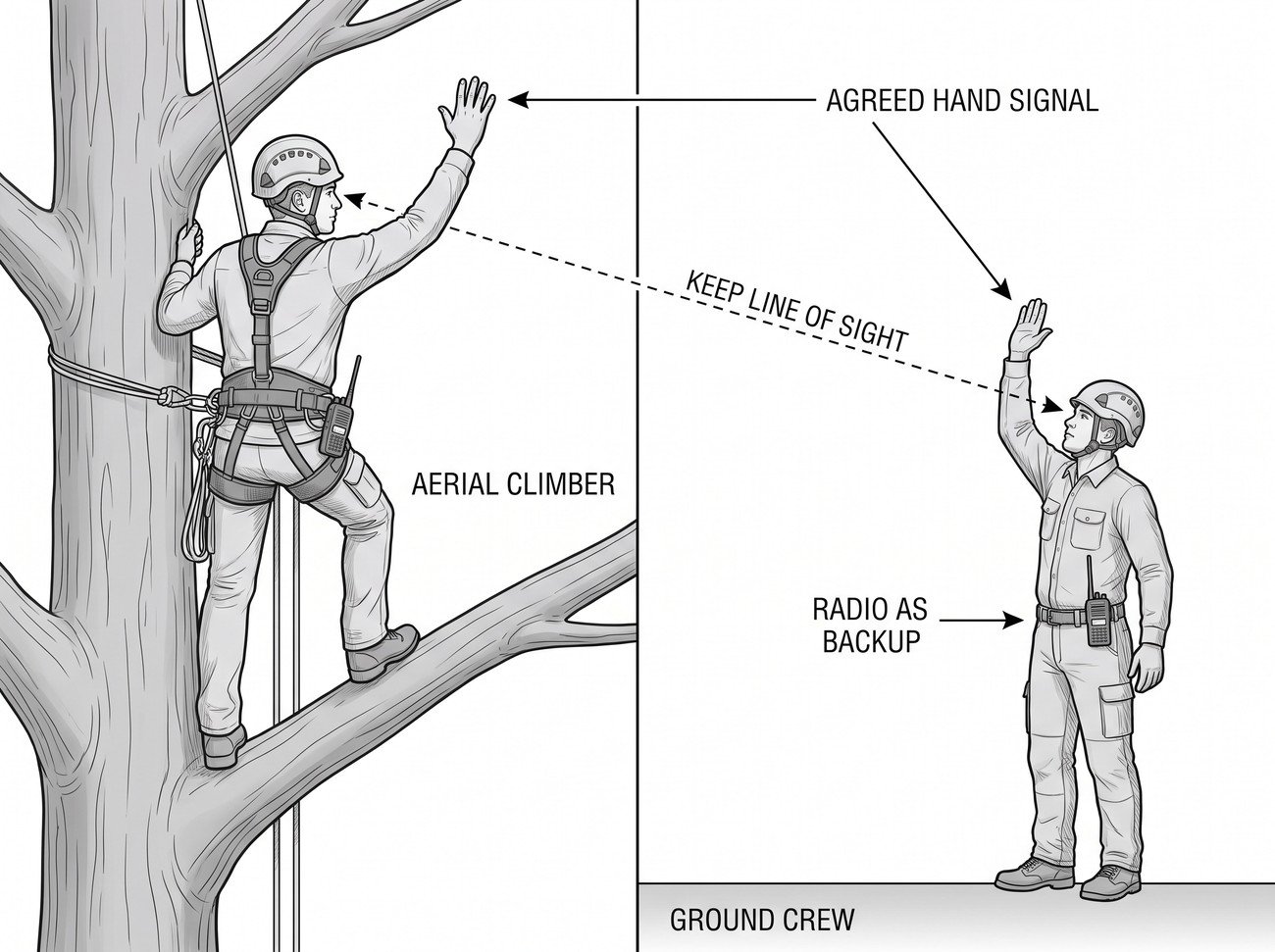
A small set of clear, distinct signals — whether verbal calls, whistle signals, or hand signals for situations where verbal communication is not possible — should be agreed and confirmed understood by every person on the crew before the operation begins, not assumed from general experience or improvised as the task develops. Every crew member, including anyone new to that specific team, needs to actually know the signals being used that day, not just have used a similar system elsewhere previously.
Confirming the message was received
A signal is only useful once it has been acknowledged by the receiving party, not simply sent. A warning call from the ground that goes unacknowledged by the aerial climber, or a readiness signal from aloft that ground crew did not actually confirm hearing, leaves the operation proceeding on an assumption rather than a confirmed shared understanding.
What must be communicated before a critical action
Before releasing a limb, cutting a rigged section free, or committing to a felling cut, the operator needs positive confirmation that ground crew are clear of the drop zone, not silence interpreted as clearance. “No response” should be treated as “not clear” by default, requiring the action to be held until an actual confirmation is received, rather than proceeding because enough time has passed without an objection.
Backup communication methods
Where verbal or visual signals could plausibly be missed — long distances, poor sightlines, high wind noise — a backup method such as radios gives redundancy against the primary system’s specific weaknesses. Radios introduce their own failure points, such as battery charge and signal reliability, so a backup should be checked functional at the start of the operation, not assumed to work because it usually does.
For the felling technique this communication supports, see felling cuts and escape route planning.
Related standards
The standards below set the test methods and performance levels behind the equipment referenced in this note.
- EN 352 — Hearing protectors
- EN 458 — Hearing protector selection and use
- EN 397 — Industrial safety helmets
Common errors
1Assuming a shouted warning was heard rather than confirming it was received.
2Proceeding with a critical cut on silence rather than treating no response as not clear.
3Using signals that were not specifically agreed and confirmed understood by every crew member that day.
4Not checking backup communication equipment is functional before the operation begins.
Frequently asked questions
Why does ordinary spoken communication often fail during felling and rigging operations?
Chainsaw and chipper noise, distance between an aerial climber and the ground, and wind can all defeat ordinary conversational volume at exactly the moments when a clear signal matters most.
When should a crew's communication signals be established?
Before the operation begins, agreed and confirmed understood by every person on the crew, not assumed from general experience or improvised as the task develops.
Is sending a warning signal enough, or does it need to be acknowledged?
It needs to be acknowledged by the receiving party – an unacknowledged warning or readiness signal leaves the operation proceeding on an assumption rather than a confirmed shared understanding.
What should silence from ground crew be treated as before a critical cut?
Not clear, by default – the action should be held until an actual confirmation is received, rather than proceeding because enough time has passed without an objection.
Why is a backup communication method like radios useful even with agreed hand signals?
Long distances, poor sightlines or high wind noise can defeat visual or verbal signals, so a backup gives redundancy against the primary system's specific weaknesses, provided it is checked functional beforehand.
Need this as a document you can issue? The template library gives you the risk assessments, permits and inspection logs in editable form — and employer plans cover a whole team with completion records.