Safety / Tips and Tricks / Tree care and grounds
Activity 04 · Tree care
Chainsaw Maintenance and Pre-Use Checks
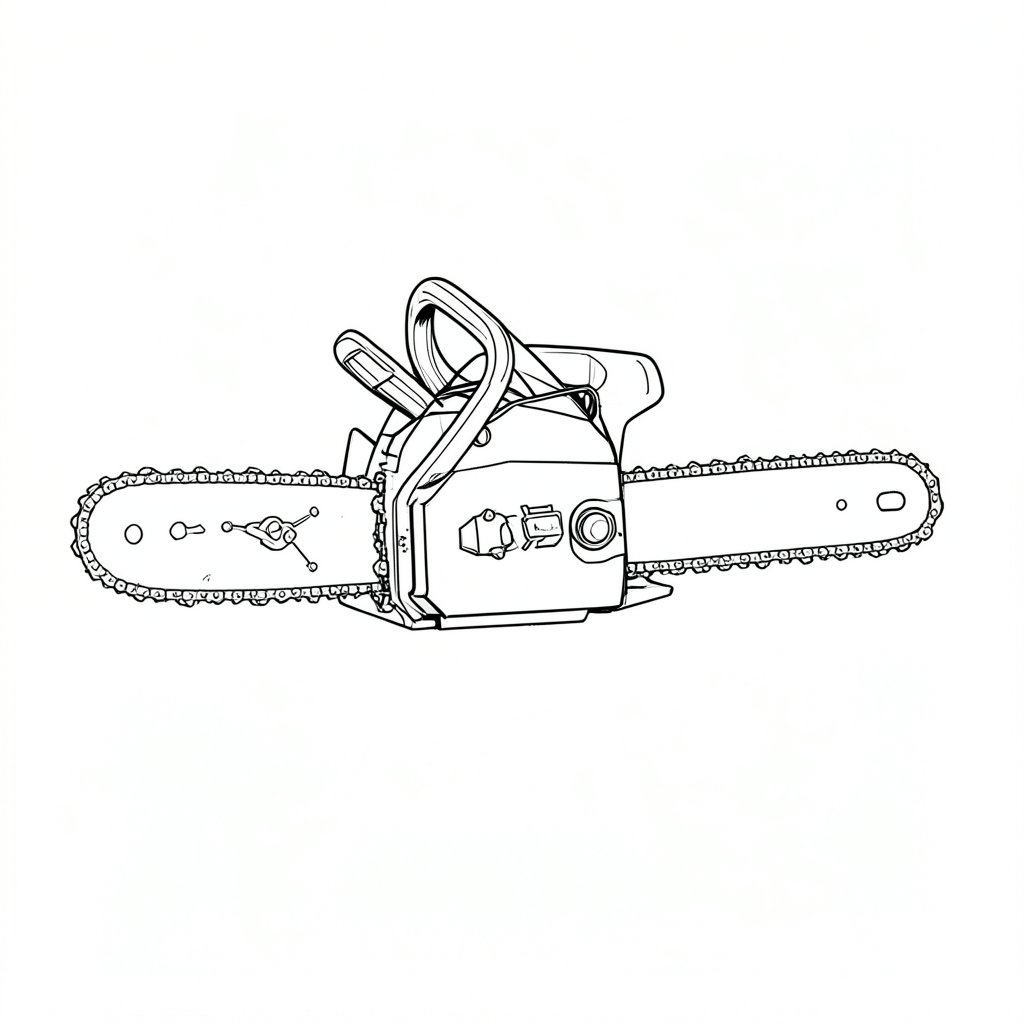
A chainsaw's safety features and cutting performance both depend on maintenance that happens before problems become visible, and a saw that looks fine at a glance can still have a chain brake, chain tension, or bar condition that will not perform as intended when it matters.
What a pre-use check actually needs to cover
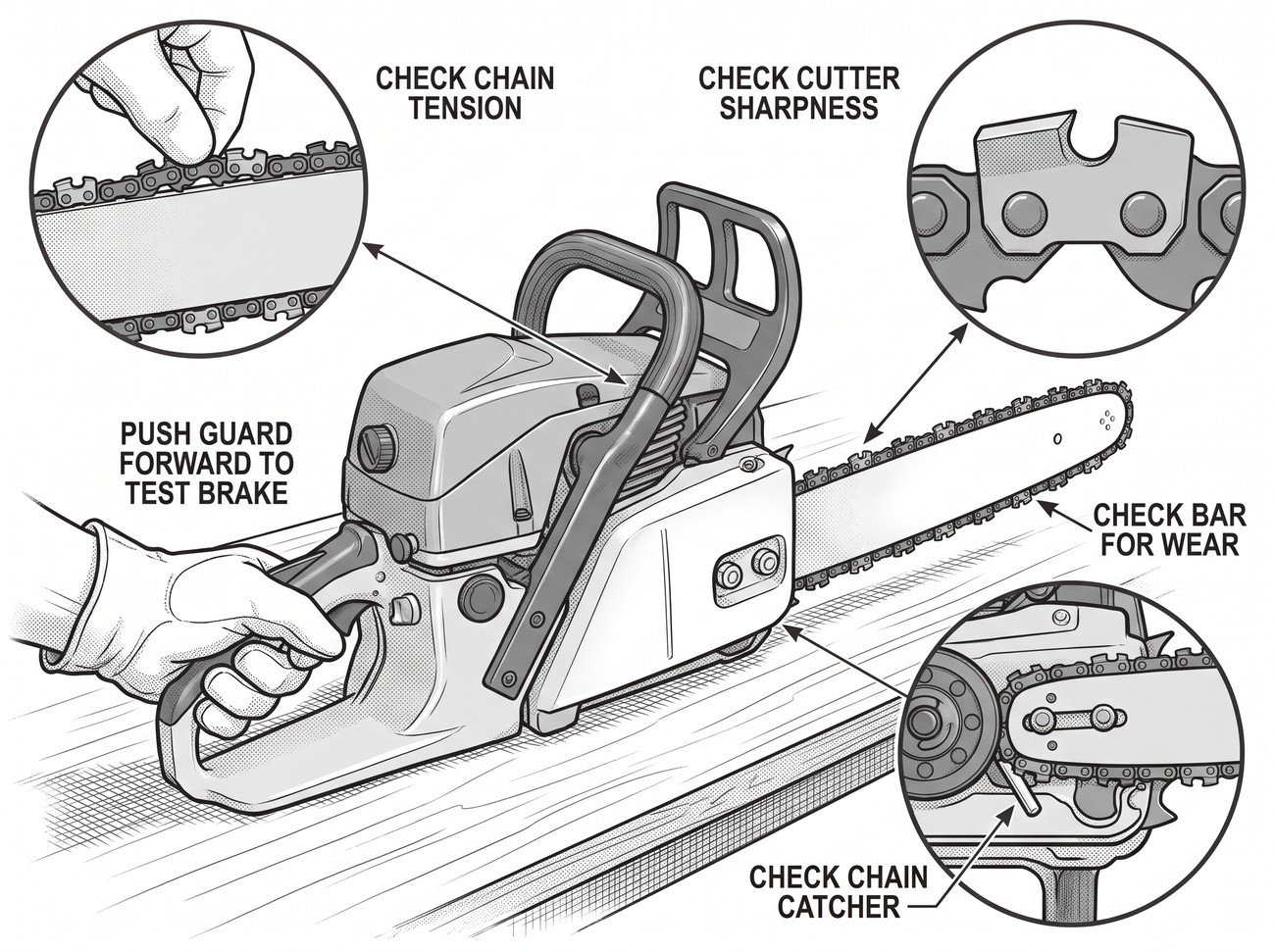
Before starting work: chain tension correct and the chain moving freely by hand with the brake released, chain brake engaging and disengaging correctly and stopping the chain when tested, chain sharpness and depth gauge setting within specification, bar condition with no visible damage or excessive wear to the guide groove, and all guards, including the front hand guard that activates the chain brake, present and undamaged. A saw failing any of these checks should not be used until the fault is corrected, not carried into the first cut with the issue noted for later.
Chain brake function specifically
The chain brake is one of the saw’s primary kickback-consequence controls, and testing that it actually engages and stops the chain — not just that the lever moves — should happen at the start of every work period. A chain brake that moves freely but does not actually stop the chain provides none of its intended protection despite appearing functional at a glance.
Fuel, bar oil and general condition
Correct fuel mixture for two-stroke engines, adequate bar and chain oil, and general cleanliness of the air filter and cooling fins all affect both performance and, for fuel and oil specifically, fire and slip hazards if handled or maintained incorrectly. Refuelling should happen with the engine off and cooled, away from ignition sources, following the same discipline every time regardless of how routine it feels.
Sharpening and depth gauge maintenance
A dull chain requires more force to cut, increasing the chance of the saw being pushed or pulled unpredictably during the cut, and depth gauge settings outside the manufacturer’s specification change the saw’s kickback behaviour. Sharpening to the correct angle and maintaining depth gauges within specification, using the tools and gauges designed for that specific chain, keeps the saw performing as tested rather than as a modified, less predictable version of it.
Recordkeeping and escalation
Where a fault is identified that cannot be corrected on site — bar damage, a brake that does not reliably engage, chain stretch beyond the adjustment range — the saw should be tagged out of service and escalated for repair, not returned to the tool store undocumented for the next person to discover the same fault themselves.
For how chain brake function relates to kickback specifically, see chainsaw kickback.
Related standards
The standards below set the test methods and performance levels behind the equipment referenced in this note.
- EN 381 — Chainsaw protective clothing
- EN 388 — Gloves against mechanical risks
- EN 166 — Eye protection
Common errors
1Testing the chain brake lever's movement without confirming it actually stops the chain.
2Continuing to use a saw with a known fault, planning to report it after the task rather than before.
3Modifying depth gauge settings beyond the manufacturer's specification for perceived faster cutting.
4Returning a faulty saw to general use without tagging it out and escalating the repair.
Frequently asked questions
What should a chainsaw pre-use check cover?
Chain tension and free movement with the brake released, chain brake engagement and stopping function, chain sharpness and depth gauge setting, bar condition, and all guards including the front hand guard present and undamaged.
Why isn't checking that the chain brake lever moves enough?
The brake is a primary kickback-consequence control, so it needs testing that it actually engages and stops the chain – a lever that moves freely but does not stop the chain provides none of its intended protection.
Why does a dull chain increase risk beyond just cutting more slowly?
It requires more force to cut, increasing the chance the saw is pushed or pulled unpredictably during the cut, which changes how the saw behaves in ways a sharp chain would not.
What should happen if a fault is found that cannot be corrected on site?
The saw should be tagged out of service and escalated for repair, not returned to general use undocumented for the next person to discover the same fault.
Why does depth gauge setting matter for saw behaviour?
Settings outside the manufacturer's specification change the saw's kickback behaviour, so maintaining them within specification keeps the saw performing as tested rather than as a modified, less predictable version.
Need this as a document you can issue? The template library gives you the risk assessments, permits and inspection logs in editable form — and employer plans cover a whole team with completion records.