Safety / Tips and Tricks / Chemical Handling
Activity 06 · Chemical Handling
Flammable Liquid Handling and Static Control
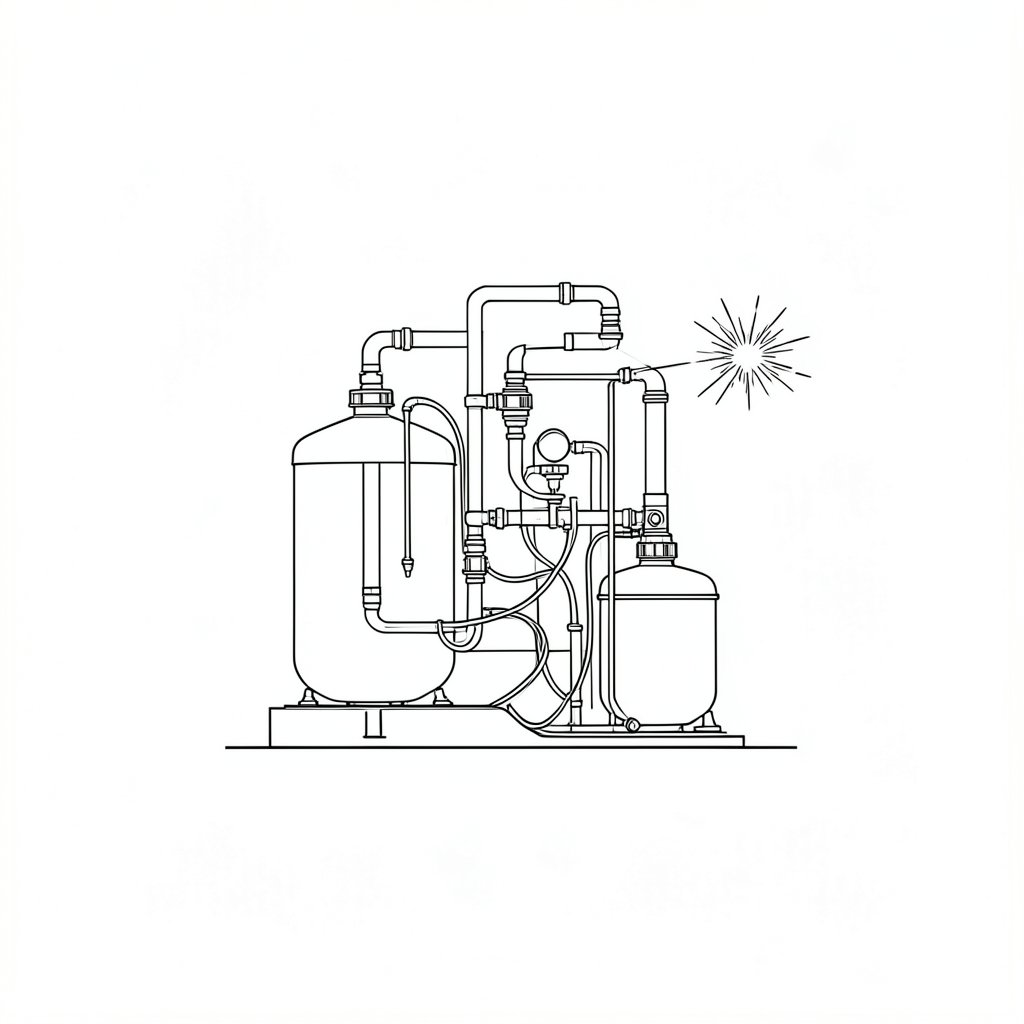
A static spark carries very little energy compared to most ignition sources people instinctively think to control, and that is exactly what makes it dangerous around flammable liquids — many common flammable vapours ignite from an amount of energy far smaller than what a person can feel as a static shock.
How static charge builds during liquid handling
Static charge accumulates as a flammable liquid flows through a hose or pipe, splashes into a container, or is poured from height, with the charge separating between the liquid and the container or equipment it moves through. This charge has nowhere to go if the equipment involved is electrically isolated from the liquid or from other nearby conductive surfaces, and it builds until it discharges, potentially as a spark, at whatever point offers the easiest path — which, around a flammable vapour, is exactly the ignition source that must not exist.
Bonding and grounding: two distinct controls
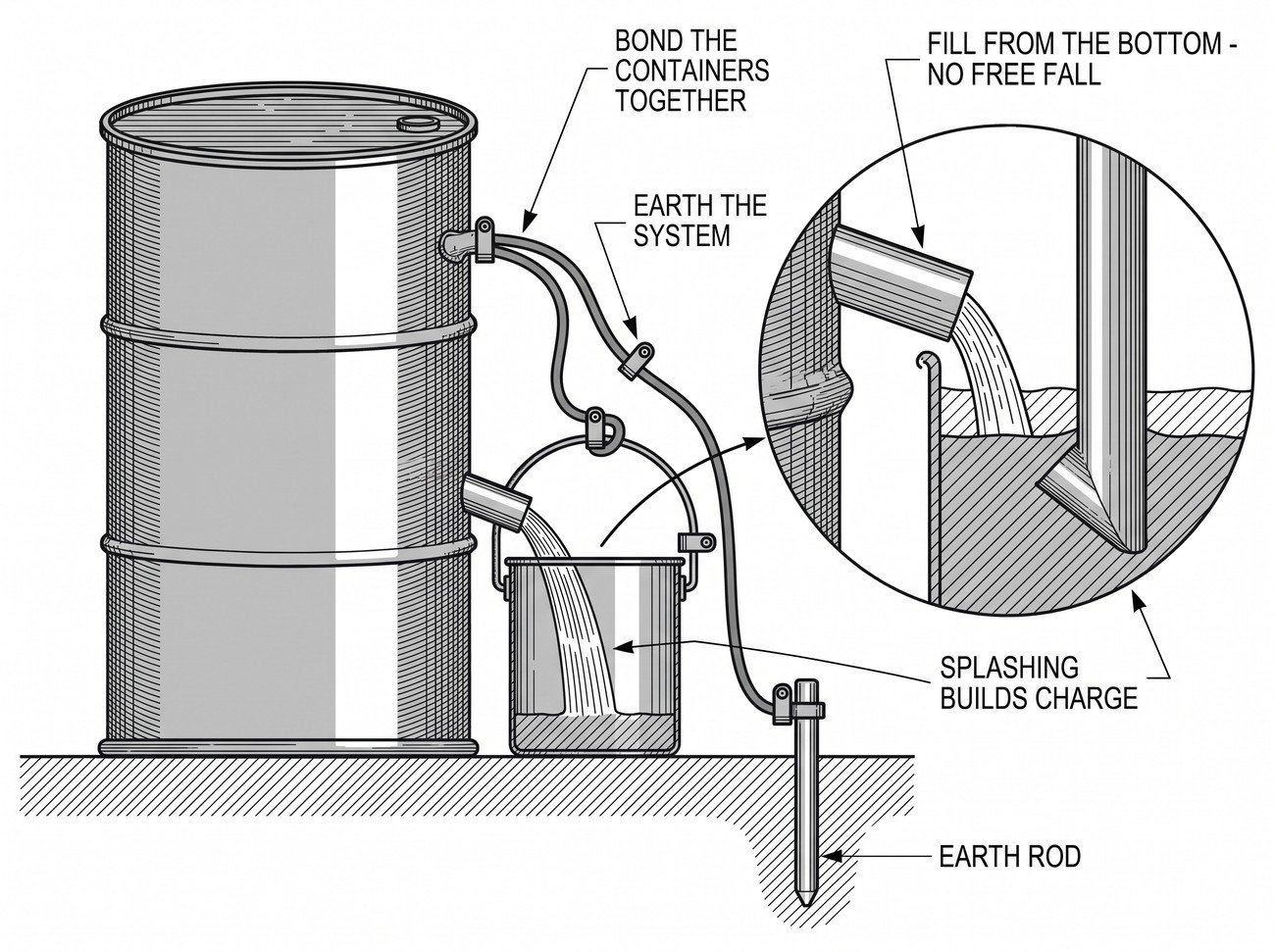
Bonding connects two containers or pieces of equipment together with a conductive cable so they share the same electrical potential, preventing a spark between them even if both are charged, while grounding connects equipment to earth specifically to drain accumulated charge away entirely. Both are typically needed together for a genuinely safe transfer: bonding alone does not stop the bonded system as a whole from carrying a charge relative to earth, and grounding without bonding does not prevent a spark between two ungrounded but differently charged pieces of equipment.
Filling technique
Splash filling, where liquid falls freely through air before reaching the surface of what is already in the container, generates significantly more static charge than sub-surface or dip-pipe filling, where the fill line extends below the existing liquid surface so the incoming liquid enters without falling through open air. Where practical, filling technique that minimizes splash and free-fall distance reduces charge generation at the source, rather than relying entirely on bonding and grounding to manage whatever charge is generated.
Antistatic clothing
EN 1149 covers antistatic protective clothing, and ordinary synthetic clothing worn by a person handling flammable liquids can itself generate and hold a static charge on the body through friction and movement, independent of anything happening in the liquid transfer equipment. Antistatic garments are designed to dissipate this charge rather than allow it to accumulate, and this is a distinct control from equipment bonding and grounding — both address static risk, but from different sources of charge generation.
Environmental conditions and container material
Low humidity increases static charge accumulation and retention, since moisture in the air normally provides a path for charge to dissipate naturally, making dry conditions a period of elevated risk worth specific awareness during flammable liquid transfer. Non-conductive plastic containers cannot be effectively bonded or grounded the way metal containers can, since bonding and grounding rely on a conductive path that plastic does not provide, which is a reason to prefer conductive containers for flammable liquid transfer wherever practical.
For static control specifically at the pump and transfer connection, see chemical transfer and pump safety.
Related standards
The standards below set the test methods and performance levels behind the equipment referenced in this note.
- EN 1149 — Electrostatic properties of protective clothing
- EN ISO 20345 — Safety footwear
- EN 374 — Chemical resistant gloves
Common errors
1Transferring flammable liquid between containers without bonding them together first.
2Assuming bonding alone is sufficient without also grounding the bonded system to earth.
3Splash filling from height when sub-surface or dip-pipe filling is practical and available.
4Using non-conductive plastic containers for flammable liquid transfer where bonding and grounding cannot be effectively applied.
Frequently asked questions
Why is static charge a particular concern around flammable liquids?
Many common flammable vapours ignite from an amount of energy far smaller than what a person can even feel as a static shock, making static discharge a realistic ignition source even when it feels minor.
What is the difference between bonding and grounding?
Bonding connects two containers together so they share the same electrical potential, preventing a spark between them, while grounding connects equipment to earth to drain accumulated charge away entirely; both are typically needed together.
Why does filling technique affect static charge generation?
Splash filling, where liquid falls freely through air, generates significantly more static charge than sub-surface or dip-pipe filling, where the fill line stays below the existing liquid surface.
Why is antistatic clothing a separate control from equipment bonding and grounding?
Ordinary synthetic clothing can generate and hold static charge on the body through friction and movement, independent of anything happening in the transfer equipment, so EN 1149 antistatic garments address a different source of charge.
Why are non-conductive plastic containers a poor choice for flammable liquid transfer?
Bonding and grounding rely on a conductive path, which plastic containers do not provide, so they cannot be effectively bonded or grounded the way metal containers can.
Need this as a document you can issue? The template library gives you the risk assessments, permits and inspection logs in editable form — and employer plans cover a whole team with completion records.