Safety / Tips and Tricks / Chemical Handling
Activity 06 · Chemical Handling
Confined Space Chemical Hazards
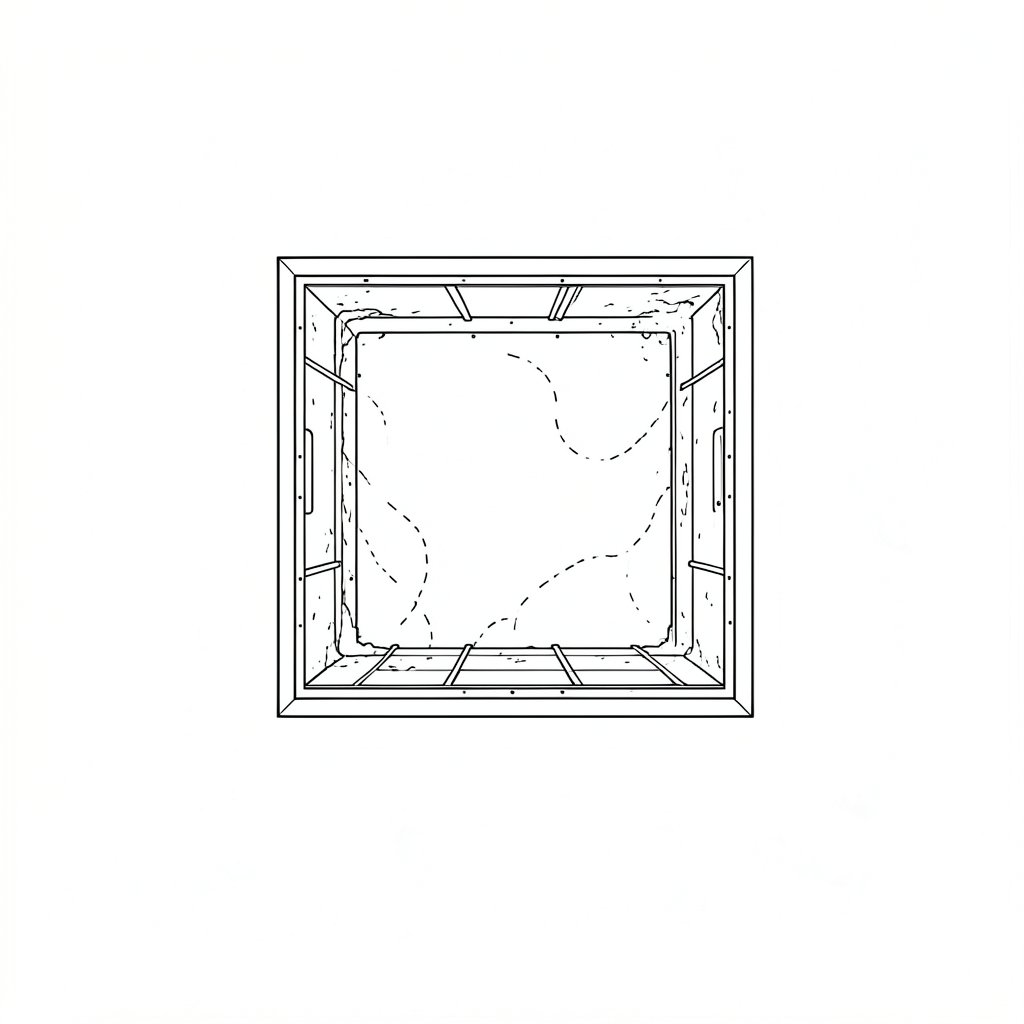
A confined space that once held a chemical can remain hazardous long after the visible liquid or solid is gone, since residue on the walls, in seams, or absorbed into scale and sludge can continue releasing vapour into the space well after the vessel appears empty and clean.
Residual contamination after apparent cleaning
A tank, vessel, or pit that has been drained and even visually cleaned can still hold enough residual chemical in surface residue, scale, or absorbed into porous linings to generate a hazardous atmosphere once the space is sealed and left to sit, and this off-gassing can continue at a low but meaningful rate long after the space would appear, to a visual inspection, to be empty and safe. Atmospheric testing before entry needs to account for this possibility specifically, testing after any purge or ventilation period rather than assuming a visually clean space is a chemically clean one.
Vapour density and where contamination collects
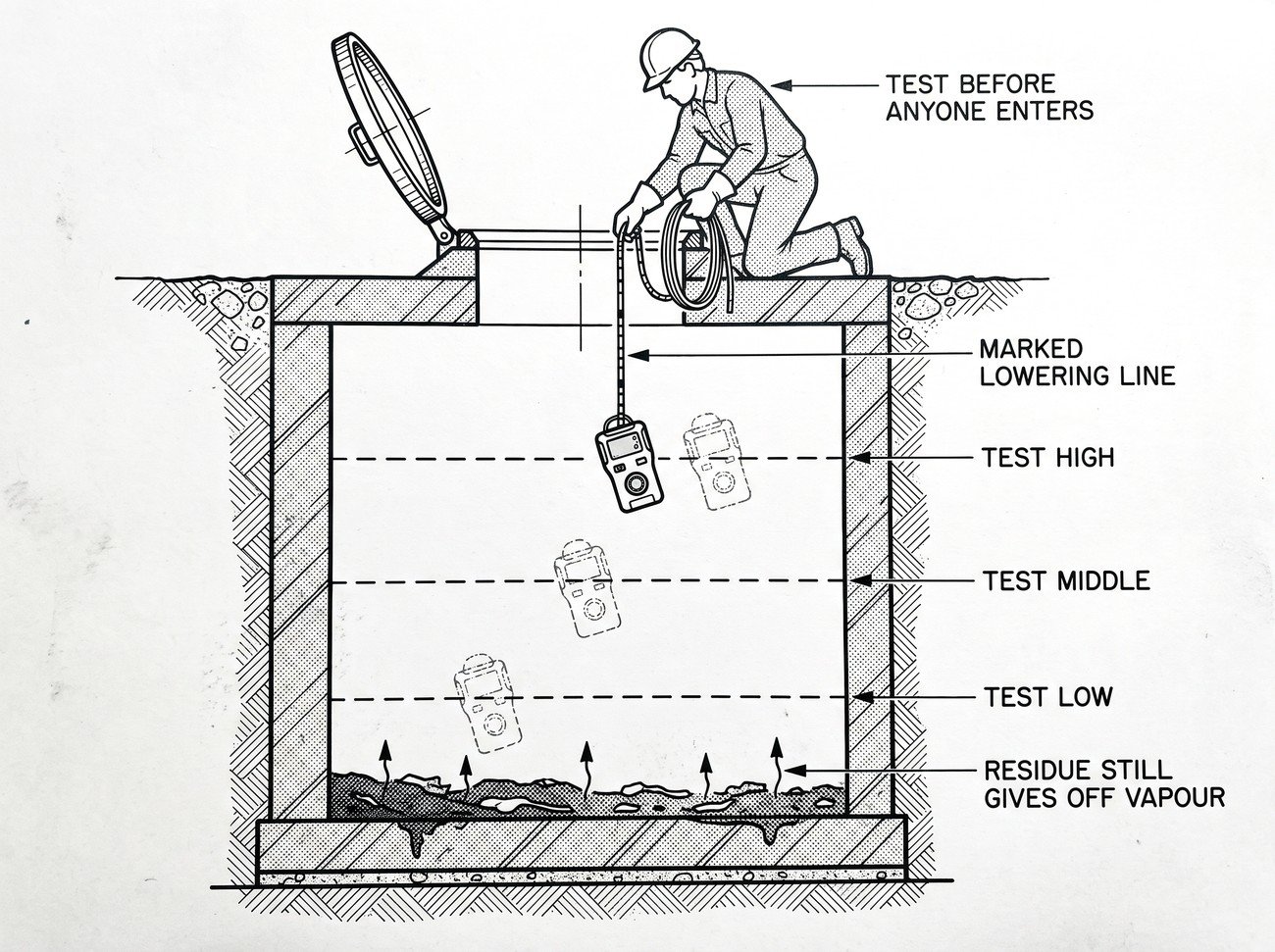
Many chemical vapours are heavier than air and collect at the lowest points of a confined space, displacing oxygen there even while readings taken at chest or head height would appear acceptable, which is why atmospheric testing needs to sample at multiple heights within the space, including low points, rather than relying on a single reading taken at the entry point. A space that tests acceptable at the entrance can still have a dangerous, oxygen-deficient or vapour-rich layer near the floor that a single-point test would miss entirely.
Specific contaminant monitoring beyond a standard four-gas meter
A standard confined space gas meter typically monitors oxygen, combustible gas, carbon monoxide and hydrogen sulphide, but a space with a history of a different specific chemical may need monitoring calibrated for that actual substance, since a generic four-gas meter will not necessarily detect or accurately quantify every possible contaminant. Identifying what the space actually contained, or could reasonably still contain residue of, and monitoring specifically for that chemical, not just the standard gas panel, closes a gap a default monitoring setup would otherwise leave open.
Ventilation and continuous monitoring during the work
As with confined space hot work, continuous atmospheric monitoring throughout chemical-related confined space work is necessary because conditions can change during the task itself — disturbing residue during cleaning or maintenance work can release additional vapour that was not present in the pre-entry test, and forced ventilation needs to remain running and effective throughout the work, not just confirmed adequate before entry.
PPE and heat stress inside a confined space
Chemical protective clothing worn inside a confined space compounds the space’s own heat and ventilation limitations, since impermeable protective garments trap body heat in an environment that may already have limited air movement, and heat stress becomes a genuine competing risk to the chemical hazard itself on longer tasks. Planning shorter work periods with recovery breaks outside the space, rather than treating PPE selection and heat stress as separate considerations, reflects how these two hazards actually interact inside a confined space.
For the full confined space entry procedure this work sits inside, see Rope Access and Confined Space.
Related standards
The standards below set the test methods and performance levels behind the equipment referenced in this note.
- EN 136 — Full face masks
- EN 140 — Half masks and quarter masks
- EN 14605 — Chemical protective clothing (liquid-tight)
Common errors
1Assuming a visually clean confined space is free of hazardous chemical residue without testing after purging.
2Testing atmosphere only at the entry point rather than at multiple heights, including low points where heavier-than-air vapour collects.
3Relying on a standard four-gas meter for a space with a history of a specific chemical the meter is not calibrated to detect.
4Treating PPE selection and heat stress as unrelated considerations rather than planning shorter work periods to manage both together.
Frequently asked questions
Can a confined space still be hazardous after it has been visually cleaned?
Yes, residual chemical in surface residue, scale, or absorbed into porous linings can continue releasing vapour into the space well after it appears empty and clean to a visual inspection.
Why does atmospheric testing need to sample at multiple heights inside a confined space?
Many chemical vapours are heavier than air and collect at the lowest points, so a space that tests acceptable at the entrance can still have a dangerous layer near the floor that a single reading would miss.
Is a standard four-gas meter always sufficient for confined space chemical hazards?
Not necessarily; a space with a history of a specific chemical may need monitoring calibrated for that substance, since a generic meter will not necessarily detect or accurately quantify every possible contaminant.
Why does monitoring need to continue throughout chemical-related confined space work?
Disturbing residue during cleaning or maintenance can release additional vapour that was not present in the pre-entry test, so conditions can change during the task itself.
Why does chemical protective clothing add a heat stress risk inside a confined space?
Impermeable protective garments trap body heat in an environment that may already have limited air movement, making heat stress a genuine competing risk to the chemical hazard on longer tasks.
Need this as a document you can issue? The template library gives you the risk assessments, permits and inspection logs in editable form — and employer plans cover a whole team with completion records.