Safety / Tips and Tricks / Chemical Handling
Activity 06 · Chemical Handling
Corrosive Chemical Burns: First Aid and Immediate Response
The instinct to neutralize a corrosive chemical on the skin — treating an acid with a base or a base with an acid — is one of the most persistent and dangerous myths in chemical first aid, because that reaction generates heat directly against already-injured tissue and makes the outcome worse, not better.
Water, not neutralization
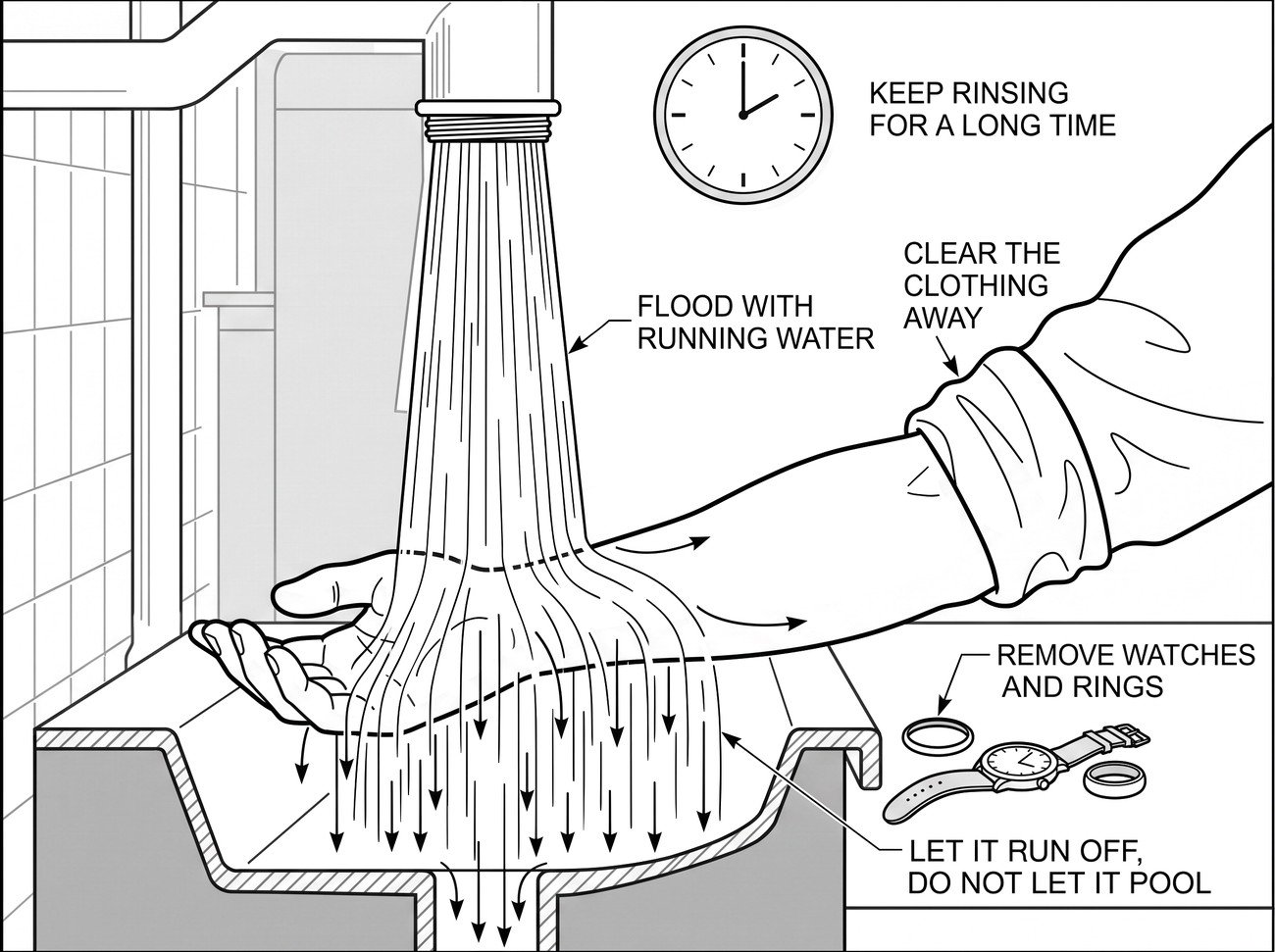
Copious flushing with water is the correct immediate response to almost all corrosive chemical exposure to skin or eyes, diluting and physically removing the chemical rather than attempting to react it away, and attempting to neutralize a corrosive chemical on the body should not be done outside of a specific, chemical-identified exception with documented medical guidance. The heat generated by a neutralization reaction happening directly on skin or in the eye adds a thermal injury on top of the chemical one, compounding the harm rather than resolving it.
Flushing duration for chemical exposure
Chemical burns generally need considerably longer flushing than a thermal burn would, frequently in the range of fifteen to thirty minutes or more depending on the specific chemical and the severity of exposure, and stopping once the immediate pain reduces, before the full recommended duration has passed, can leave residual chemical still causing tissue damage. This mirrors the flushing duration point covered for emergency shower use generally, but bears repeating specifically in the context of what to actually do once flushing has started.
Eye exposure specifics
Eye exposure to a corrosive chemical requires flushing with the eyelids held open, since blinking alone does not adequately clear chemical trapped behind the lid, and contact lenses should be removed as part of the flushing process, not left in place, since a lens can trap chemical directly against the eye’s surface and continue causing damage even as the surrounding area is flushed. Flushing should continue through the full recommended duration on both eyes even if only one appears affected, since chemical can transfer between eyes during the initial exposure.
Removing contaminated clothing
As with general decontamination, contaminated clothing needs to be removed as part of the immediate response, not after flushing has finished, since fabric holding chemical against the skin continues the exposure throughout the time it remains in place.
Hydrofluoric acid: a genuine exception
Hydrofluoric acid exposure is a specific, well-documented exception to general chemical first aid, since it requires calcium gluconate treatment in addition to water flushing to bind the fluoride ion and prevent it continuing to penetrate tissue and cause deep, delayed injury, including effects on calcium levels that can become life-threatening even from a relatively small exposed area. Anywhere hydrofluoric acid is in regular use should have calcium gluconate gel or solution stocked, and everyone handling the chemical should know this exception exists, since generic chemical burn first aid is genuinely insufficient for this specific substance.
For the emergency shower and eyewash equipment this response depends on, see decontamination: emergency showers and eyewash.
Related standards
The standards below set the test methods and performance levels behind the equipment referenced in this note.
- EN 374 — Chemical resistant gloves
- EN 166 — Eye protection
- EN 14605 — Chemical protective clothing (liquid-tight)
Common errors
1Attempting to neutralize a corrosive chemical on skin or in the eye instead of flushing with water.
2Stopping flushing once the immediate pain reduces, before the full recommended duration has passed.
3Leaving contact lenses in place during eye flushing.
4Treating hydrofluoric acid exposure with only generic water flushing, without calcium gluconate treatment.
Frequently asked questions
Why is neutralizing a corrosive chemical on the skin the wrong response?
The neutralization reaction generates heat directly against already-injured tissue, adding a thermal injury on top of the chemical one, which is why copious water flushing is the correct response instead.
How long should flushing continue for a corrosive chemical exposure?
Frequently fifteen to thirty minutes or more depending on the chemical and severity, considerably longer than a thermal burn would need, and stopping once pain reduces can leave residual chemical still causing damage.
Why should contact lenses be removed during eye flushing for a chemical exposure?
A lens can trap chemical directly against the eye's surface and continue causing damage even as the surrounding area is flushed, so it should be removed as part of the flushing process.
Why is hydrofluoric acid treated as a specific exception in chemical first aid?
It requires calcium gluconate treatment in addition to water flushing to bind the fluoride ion, since generic flushing alone does not stop it continuing to penetrate tissue and cause deep, delayed injury.
Should contaminated clothing be removed before or after flushing is complete?
As part of the immediate response, not afterward, since fabric holding chemical against the skin continues the exposure for as long as it remains in place.
Need this as a document you can issue? The template library gives you the risk assessments, permits and inspection logs in editable form — and employer plans cover a whole team with completion records.