Safety / Tips and Tricks / Chemical Handling
Activity 06 · Chemical Handling
Decontamination: Emergency Showers and Eyewash
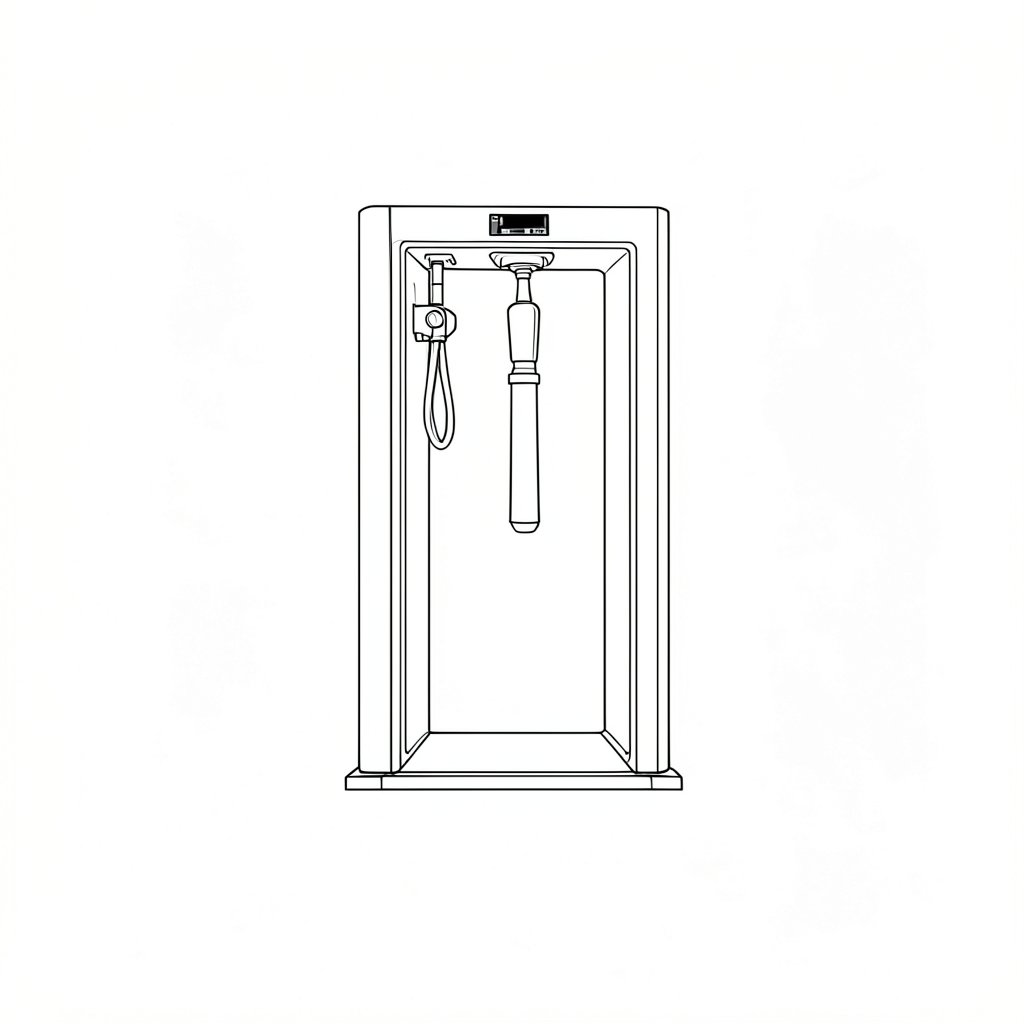
An emergency shower or eyewash station only helps if it can be reached and used within seconds of an exposure, which makes its location, accessibility and readiness at least as important as the chemicals it is meant to respond to.
Reachability and the ten-second principle
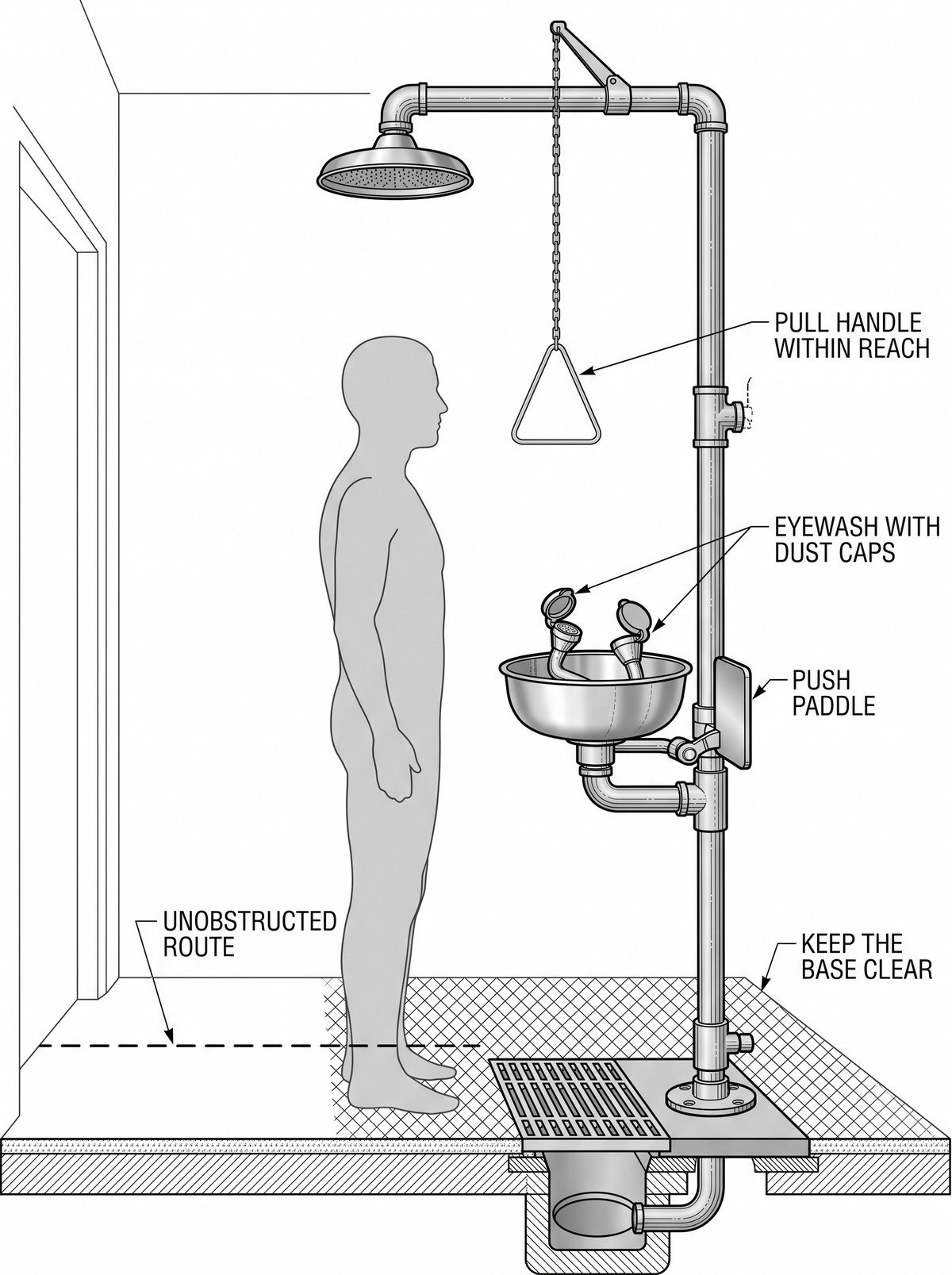
Emergency shower and eyewash equipment should be positioned so it can be reached within about ten seconds from anywhere a splash or contact exposure is realistically possible, along a path that is unobstructed and does not require passing through a door or around equipment that could be blocked. A station that is technically present in the building but requires a longer or obstructed route from the actual point of use does not meet the purpose the equipment exists for, regardless of what its rated flow or coverage specifications are.
Flushing duration
Chemical exposure to skin or eyes generally needs considerably longer flushing than the instinct to stop once discomfort eases would suggest, often fifteen minutes or more depending on the chemical, and stopping early because the immediate stinging has reduced can leave residual chemical still causing damage after flushing has stopped. Continuing to flush for the full recommended duration, even once the exposure feels manageable, is a discipline worth building into training rather than assuming it will happen instinctively during an actual event.
Water temperature
Tepid water is the appropriate temperature for emergency flushing — cold water tends to cause people to stop flushing early due to discomfort, cutting the exposure short of the recommended duration, while water that is too warm can increase absorption of some chemicals through the skin. Stations plumbed to deliver genuinely tepid water, not just whatever temperature the building’s cold supply happens to run, better support the full flushing duration actually needed.
Removing contaminated clothing during flushing
Clothing soaked with a chemical continues to hold that chemical against the skin even while the exposed skin itself is being flushed, so contaminated clothing should be removed as part of the flushing process, not treated as a secondary step to address afterward, since water alone reaching skin still covered by saturated fabric does not achieve the same decontamination as flushing directly against exposed skin.
Testing and maintenance
Emergency showers and eyewash stations need to be activated regularly, typically weekly, to clear stagnant water from the supply line and confirm the equipment actually functions when needed — a station that has sat unused for months can deliver water contaminated with sediment or bacterial growth from the standing line, which is a genuinely counterproductive outcome during an actual chemical exposure response. Documented, routine testing, not just an assumption that plumbed equipment stays reliable indefinitely, keeps the station actually ready.
For the sequence of removing contaminated PPE that typically follows emergency flushing, see PPE doffing and personal decontamination sequence.
Related standards
The standards below set the test methods and performance levels behind the equipment referenced in this note.
- EN 166 — Eye protection
- EN 374 — Chemical resistant gloves
- EN 14605 — Chemical protective clothing (liquid-tight)
Common errors
1Positioning emergency shower or eyewash equipment along a route that is obstructed or takes longer than about ten seconds to reach.
2Stopping flushing as soon as discomfort eases rather than continuing for the full recommended duration.
3Leaving contaminated clothing in place while flushing only the directly exposed skin.
4Skipping routine weekly activation testing, allowing stagnant water to sit in the supply line.
Frequently asked questions
How quickly should emergency shower or eyewash equipment be reachable?
Within about ten seconds from anywhere a splash or contact exposure is realistically possible, along an unobstructed path.
Why is it important to keep flushing even after discomfort starts to ease?
Stopping early because the immediate stinging has reduced can leave residual chemical still causing damage after flushing has stopped, so the full recommended duration, often fifteen minutes or more, needs to be completed.
Why does water temperature matter for emergency flushing?
Cold water tends to cause people to stop flushing early due to discomfort, while water that is too warm can increase absorption of some chemicals through the skin, so tepid water is the appropriate temperature.
Should contaminated clothing be removed during flushing or afterward?
During flushing, since clothing soaked with a chemical continues to hold it against the skin, and water reaching skin still covered by saturated fabric does not achieve the same decontamination as direct flushing.
Why do emergency showers need regular weekly testing?
A station that has sat unused can deliver water contaminated with sediment or bacterial growth from the standing supply line, so routine activation confirms the equipment is actually ready when needed.
Need this as a document you can issue? The template library gives you the risk assessments, permits and inspection logs in editable form — and employer plans cover a whole team with completion records.