Safety / Tips and Tricks / Chemical Handling
Activity 06 · Chemical Handling
PPE Doffing and Personal Decontamination Sequence
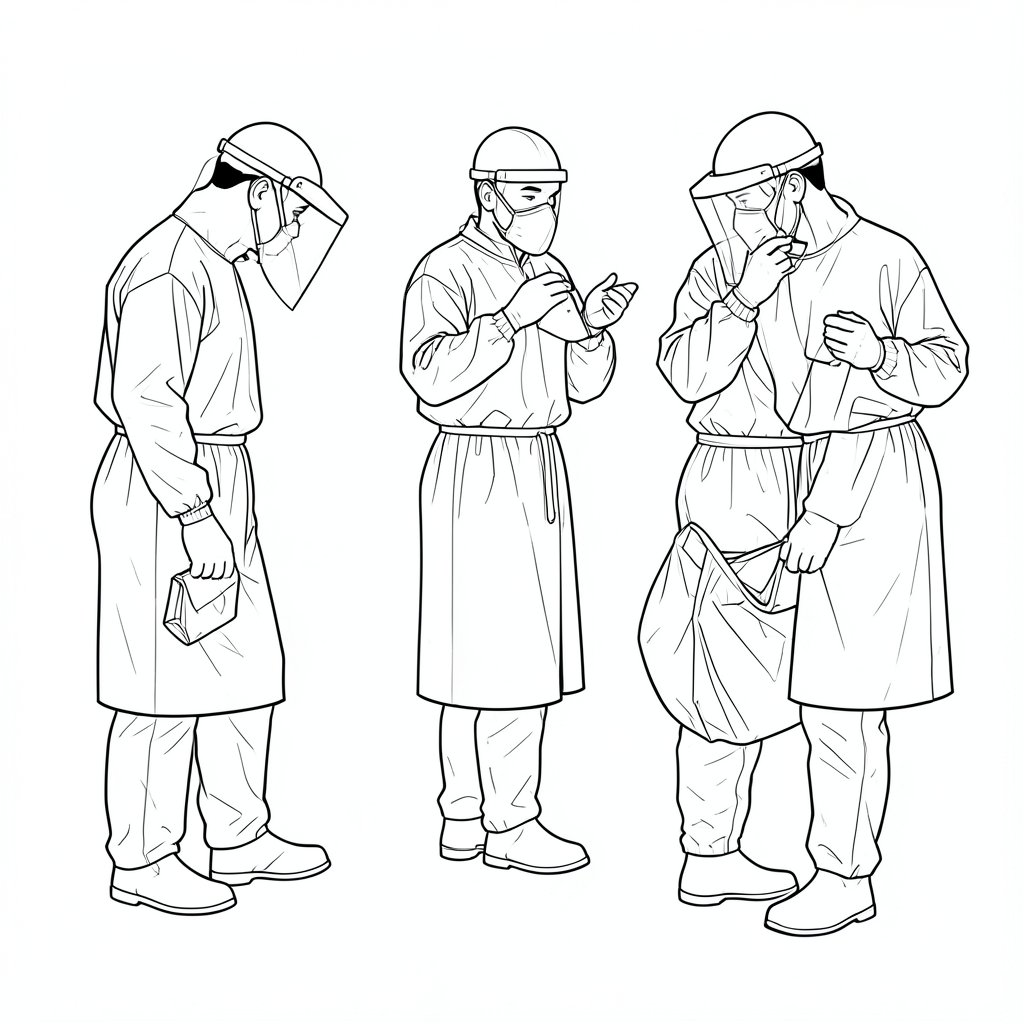
Removing contaminated PPE incorrectly can transfer exactly the chemical the equipment was protecting against onto the skin at the very last step, which makes the doffing sequence itself a genuine safety procedure, not simply a matter of taking equipment off in whatever order feels convenient.
Why sequence matters
The outer surface of PPE worn during a chemical task is the most contaminated surface present at the end of that task, and the doffing sequence exists specifically to prevent that outer, contaminated surface from ever touching skin, clean clothing, or the inside surface of another piece of equipment during removal. A rushed or out-of-order removal, even by someone who wore every piece of PPE correctly throughout the task, can recontaminate the wearer in the final seconds of an otherwise successful task.
Working from most to least contaminated
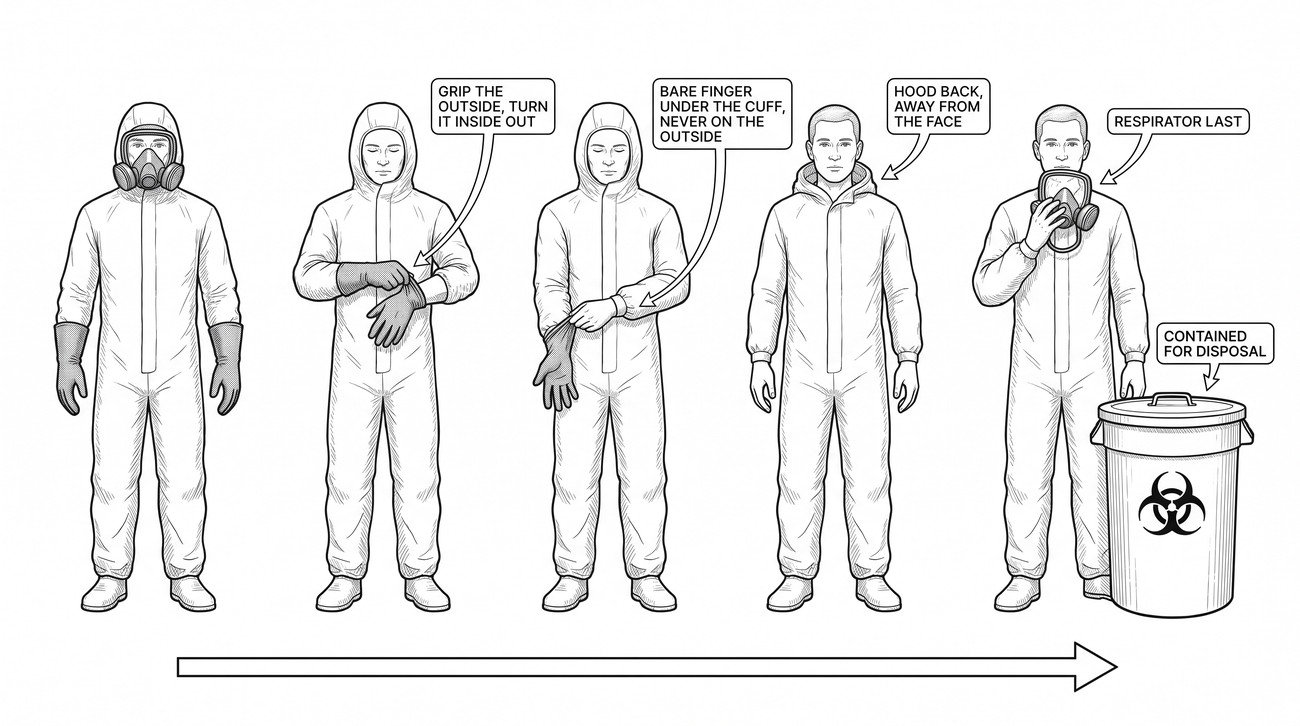
A general principle across doffing sequences is removing the most heavily contaminated items first, working toward less contaminated items, and always turning contaminated items inside-out or rolling them away from the body rather than pulling them off in a way that brings the outer surface across the skin or face. Gloves in particular are typically removed using a technique where the first glove is peeled off using the opposite gloved hand without the bare hand touching the outer surface, and the second glove is then removed by reaching inside its cuff with the now-bare hand.
Designated doffing areas
A designated doffing area, physically separated from clean areas and positioned at the boundary of the contaminated work zone, prevents contaminated equipment or the act of removing it from spreading contamination into spaces that are assumed clean. Walking back to a general changing area or break room still wearing contaminated PPE, intending to remove it there instead, defeats the purpose of having a designated doffing area at all.
The role of an observer
A second person observing the doffing process, watching specifically for any moment the contaminated outer surface contacts skin or clean surfaces, catches breaches that the person doffing, focused on their own process, is likely to miss in themselves. This buddy system is a low-cost control that meaningfully improves the reliability of a process that is otherwise entirely dependent on one person executing every step correctly under their own observation alone.
Hand washing between steps and after completion
Washing hands between major doffing steps, not just once at the very end, reduces the chance that a small amount of contamination transferred to the hands during one step gets carried onto the next item being removed. A final, thorough hand and, where relevant, face wash after all PPE has been removed completes the sequence rather than being treated as optional once the visible equipment is off.
For the immediate response if contamination does reach the skin during a task, see corrosive chemical burns: first aid and immediate response.
Related standards
The standards below set the test methods and performance levels behind the equipment referenced in this note.
- EN 374 — Chemical resistant gloves
- EN 14605 — Chemical protective clothing (liquid-tight)
- EN ISO 13688 — General requirements for protective clothing
Common errors
1Removing PPE in a rushed or out-of-order sequence that lets the contaminated outer surface touch skin.
2Doffing contaminated equipment in a general area rather than a designated, separated doffing zone.
3Doffing without an observer present to catch contamination breaches the wearer cannot see in themselves.
4Washing hands only once at the end of the sequence rather than between major doffing steps.
Frequently asked questions
Why is the order PPE is removed in considered a safety procedure?
Because the outer surface of PPE is the most contaminated surface present, and an out-of-order or rushed removal can let that surface touch skin or clean clothing, recontaminating the wearer at the final step.
What is the general principle behind a correct doffing sequence?
Removing the most heavily contaminated items first, working toward less contaminated items, and always rolling or turning items away from the body rather than pulling them across the skin.
Why should PPE be removed in a designated doffing area rather than a general changing space?
A designated area separated from clean spaces prevents contaminated equipment, or the act of removing it, from spreading contamination into areas assumed to be clean.
What does an observer add to the doffing process?
A second person watching specifically for contamination breaches catches mistakes the person doffing is likely to miss in themselves, since they are focused on their own process rather than observing it from outside.
Should hands be washed only once at the end of doffing?
No, washing between major steps reduces the chance that contamination transferred to the hands during one step gets carried onto the next item being removed.
Need this as a document you can issue? The template library gives you the risk assessments, permits and inspection logs in editable form — and employer plans cover a whole team with completion records.