Safety / Tips and Tricks / Chemical Handling
Activity 06 · Chemical Handling
Chemical Exposure Monitoring and Health Surveillance
Some of the most serious effects of chemical exposure develop slowly, well after any individual exposure event, which is exactly why monitoring cannot rely only on obvious symptoms in the moment — by the time a symptom is noticeable, a cumulative or delayed-effect exposure may have already been building for months or years.
Personal versus area air monitoring
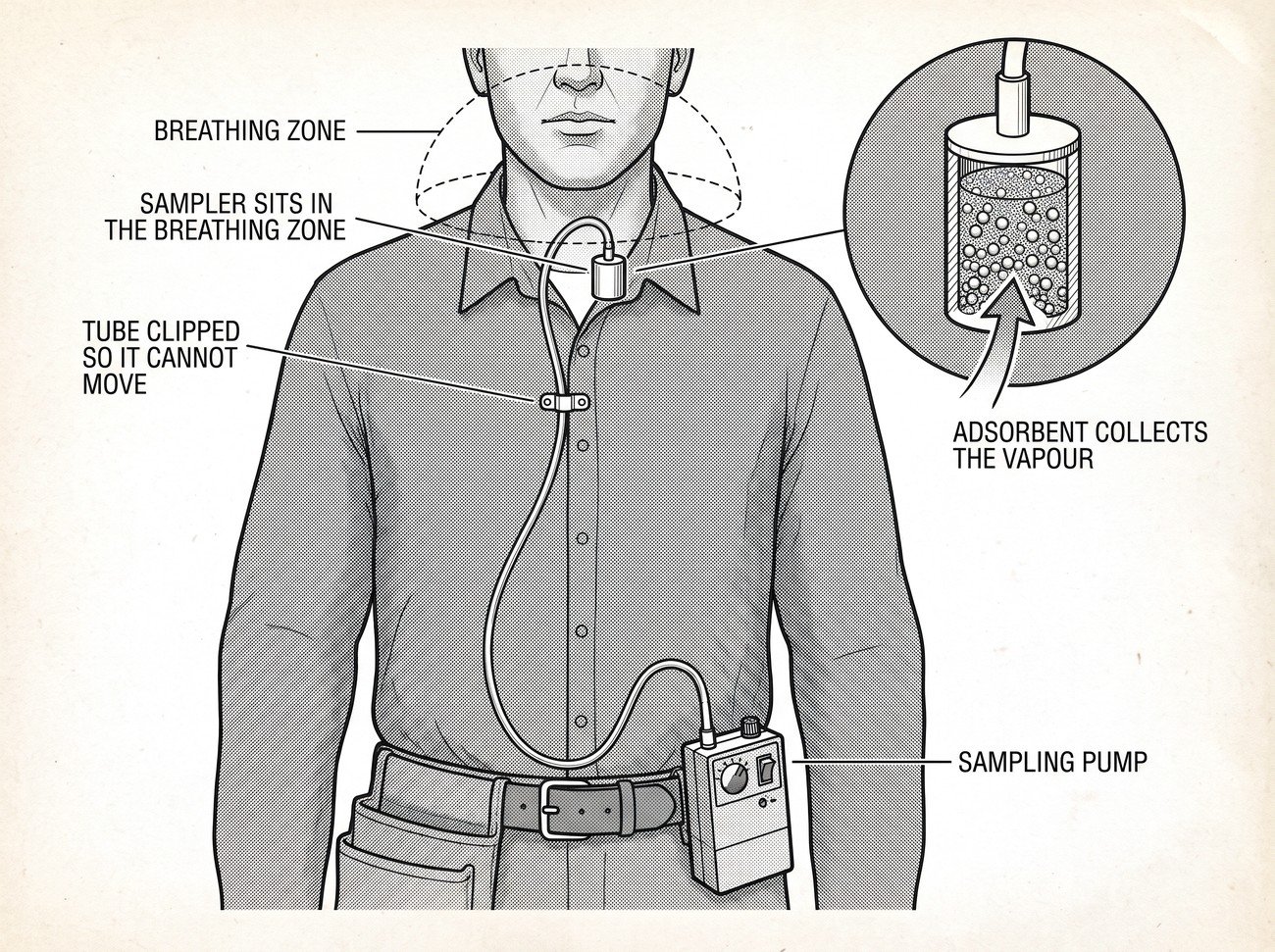
Area monitoring, using fixed detectors positioned around a workspace, answers the question of what concentration exists at that location, while personal monitoring, using a badge or pump worn by an individual worker, answers a genuinely different question: what concentration that specific person is actually being exposed to as they move through their task. A worker’s actual exposure can differ substantially from a fixed area reading depending on their proximity to the source and how their task is performed, which is why personal monitoring, not area monitoring alone, is what should inform decisions about an individual’s PPE and exposure limits.
Biological monitoring
For certain chemicals, biological monitoring — testing blood, urine, or other samples for the chemical itself or its metabolic byproducts — captures total absorption through all routes, including skin absorption that air monitoring alone would miss entirely, since air monitoring only measures what is inhaled, not what passes through skin contact or an imperfect PPE seal. This makes biological monitoring a meaningfully different and complementary measurement to air monitoring for chemicals with significant dermal absorption potential, not a redundant check of the same exposure route.
Health surveillance for specific exposures
Health surveillance appropriate to the specific chemicals in use — lung function testing for respiratory sensitizers, periodic skin assessment for dermal sensitizers, and other targeted checks depending on the actual substance — catches developing effects at a stage where intervention can still change the outcome, rather than only after a condition has become established and symptomatic. Baseline testing before exposure begins, followed by periodic re-testing, gives a genuine point of comparison that a single test at the point symptoms appear cannot provide.
Record-keeping over the long term
Exposure and health surveillance records need to be retained for periods that reflect the delayed nature of many chemical health effects, which can be years or decades depending on the substance, and short-term record retention that discards data once someone changes roles or leaves the organization removes exactly the historical exposure information that would matter if a delayed effect is later investigated. This long retention need is a genuine practical difference from most other workplace safety records.
Triggers for reviewing monitoring and surveillance programs
Introducing a new chemical, changing a process in a way that alters exposure patterns, or workers reporting symptoms potentially related to exposure should all trigger a review of whether existing monitoring and surveillance arrangements are still adequate, rather than treating the original program design as fixed indefinitely regardless of what has changed since it was set up.
For selecting respiratory protection informed by this monitoring, see respiratory protection for chemical vapours and gases.
Related standards
The standards below set the test methods and performance levels behind the equipment referenced in this note.
- EN 149 — Filtering half masks (FFP1/FFP2/FFP3)
- EN 143 — Particle filters
- EN 140 — Half masks and quarter masks
Common errors
1Relying on area monitoring alone to inform decisions about an individual worker's actual exposure and PPE needs.
2Treating air monitoring as sufficient for chemicals with significant dermal absorption, without biological monitoring to capture that route.
3Skipping baseline health surveillance testing before exposure begins, leaving no point of comparison for later testing.
4Discarding exposure records shortly after a worker changes roles rather than retaining them for the periods delayed effects may take to appear.
Frequently asked questions
What is the difference between area and personal air monitoring?
Area monitoring measures concentration at a fixed location, while personal monitoring, worn by an individual worker, measures the concentration that specific person is actually exposed to as they move through their task.
Why does biological monitoring add something air monitoring alone cannot capture?
It captures total absorption through all routes, including skin absorption that air monitoring alone would miss, since air monitoring only measures what is inhaled.
Why is baseline health surveillance testing done before exposure begins?
It gives a genuine point of comparison for later periodic testing, which a single test taken only after symptoms appear cannot provide.
Why do chemical exposure records need to be retained for such long periods?
Many chemical health effects are delayed by years or decades, so short-term record retention removes exactly the historical exposure information that would matter if a delayed effect is later investigated.
What should trigger a review of existing exposure monitoring arrangements?
Introducing a new chemical, a process change that alters exposure patterns, or workers reporting symptoms potentially related to exposure, rather than treating the original program design as fixed indefinitely.
Need this as a document you can issue? The template library gives you the risk assessments, permits and inspection logs in editable form — and employer plans cover a whole team with completion records.