Safety / Tips and Tricks / Chemical Handling
Activity 06 · Chemical Handling
Permeation versus Degradation: Choosing Gloves for Multiple Chemicals
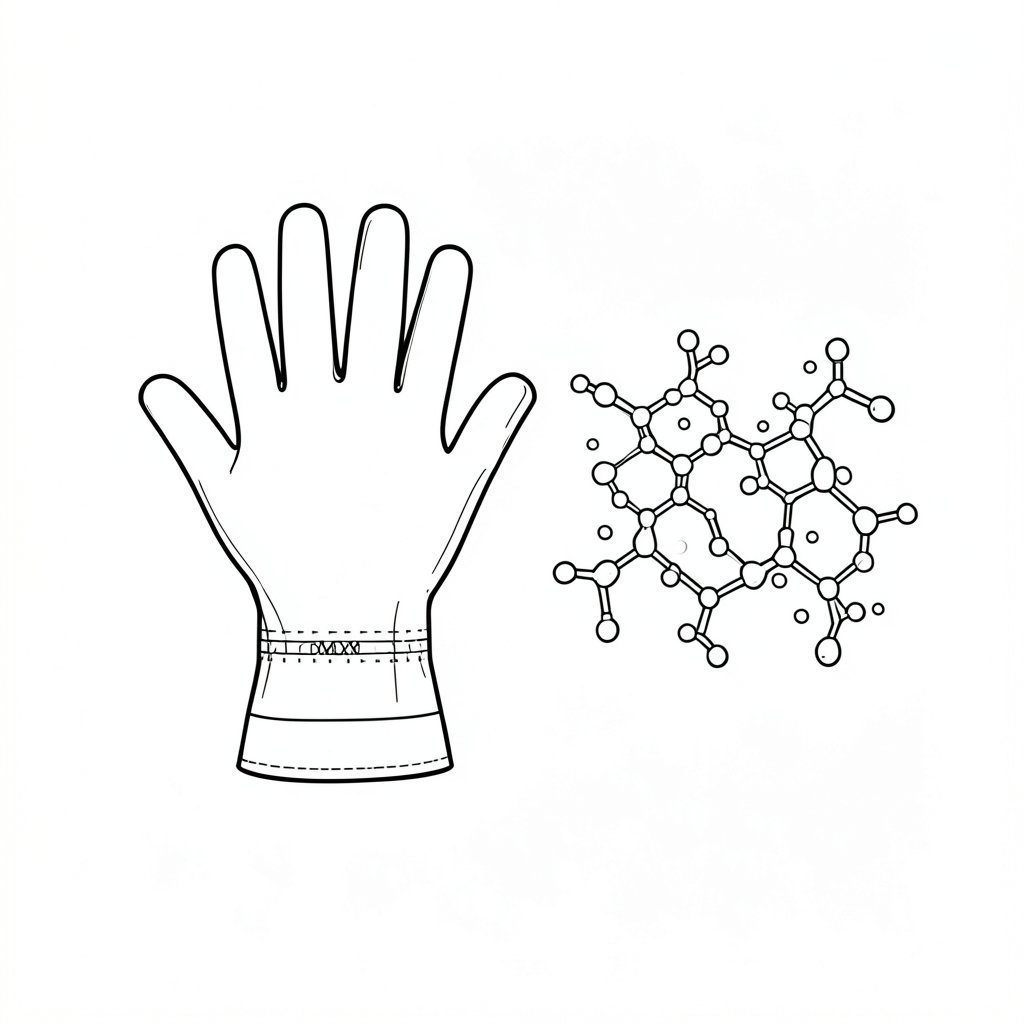
A glove can look completely intact, show no cracking, softening or visible damage, and still be failing to protect the wearer, because permeation happens at a molecular level that a visual inspection cannot detect, which makes it a fundamentally different and more deceptive failure mode than the visible degradation people naturally watch for.
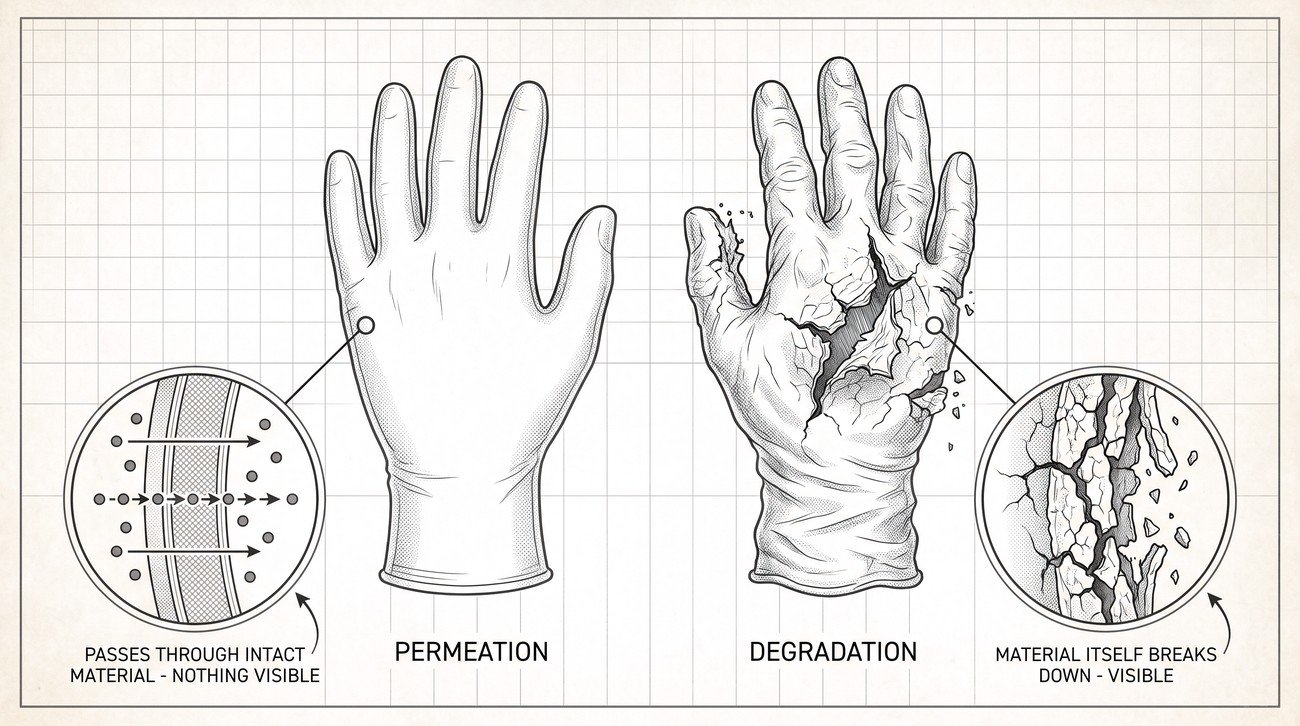
Permeation versus degradation: two distinct failure modes
Degradation is a physical change to the glove material itself — swelling, cracking, softening, or dissolving — that is generally visible or otherwise detectable through inspection, while permeation is the process of a chemical migrating through the glove material at a molecular level without necessarily causing any visible change at all. A glove can have excellent degradation resistance against a chemical, showing no physical damage whatsoever, while still permeating that same chemical through to the inside surface within a relatively short time, and manufacturer breakthrough time ratings specifically address permeation, not degradation, which is a distinction worth understanding rather than assuming the two always track together.
Why mixture exposure complicates published breakthrough times
Manufacturer breakthrough time data is generally generated by testing against single, pure chemicals, but many real handling tasks involve mixtures, and mixtures can behave very differently from any of their individual components tested alone — one chemical in a mixture can accelerate the permeation of another, producing an effective breakthrough time considerably shorter than either component’s own individually-rated time would suggest. Treating a mixture’s expected breakthrough time as simply the lower of its two component ratings understates the risk in some genuinely documented cases, since the interaction between components can be worse than either alone.
A practical approach for multi-chemical tasks
Where a task genuinely involves handling more than one chemical, or a mixture, testing or manufacturer guidance against that specific combination, not just each component individually, gives a more reliable picture than assuming the more conservative of the individual ratings automatically applies. Where combination-specific data is not available, treating the actual expected use duration with a meaningful safety margin below any individual component’s rated breakthrough time is a more defensible practical approach than relying on the full rated time.
Double-gloving and proactive change-out
Double-gloving, wearing a thinner inner glove beneath the primary chemical-resistant glove, adds a layer of protection against the specific failure mode where permeation reaches the inside surface of the outer glove without any external sign, giving a further barrier and, if the outer glove is changed proactively, a chance to detect any chemical that has reached between the layers before it reaches skin. Changing gloves on a fixed, proactive schedule based on expected task duration, rather than waiting for any visible sign of failure, directly addresses the fact that permeation itself produces no such visible sign.
When to consult the manufacturer directly
For genuinely unusual mixtures, unusually long task durations, or high-consequence tasks, contacting the glove manufacturer’s technical support directly for guidance specific to the actual chemical combination in use is a legitimate and often underused step, since published general charts cannot cover every possible real-world combination a specific site might handle.
For the underlying EN 374 rating system this builds on, see selecting chemical-resistant gloves to EN 374.
Related standards
The standards below set the test methods and performance levels behind the equipment referenced in this note.
- EN 374 — Chemical resistant gloves
- EN 388 — Gloves against mechanical risks
- EN ISO 13688 — General requirements for protective clothing
Common errors
1Relying on a glove's undamaged visual appearance as evidence it is still protecting against permeation.
2Assuming a chemical mixture's breakthrough time is simply the lower of its individual components' rated times.
3Using published single-chemical breakthrough time ratings at face value for tasks that actually involve a mixture.
4Waiting for visible signs of glove failure rather than proactively changing gloves on a schedule based on expected task duration.
Frequently asked questions
What is the difference between permeation and degradation in a chemical-resistant glove?
Degradation is a physical change to the material, like swelling or cracking, that is generally visible, while permeation is a chemical migrating through the material at a molecular level without necessarily causing any visible change.
Can a glove show no visible damage and still be failing?
Yes, a glove can have excellent degradation resistance, showing no physical damage, while still permeating a chemical through to the inside surface, since breakthrough time ratings address permeation specifically.
Why do chemical mixtures complicate published glove breakthrough times?
Manufacturer data is generally generated against single, pure chemicals, but mixtures can behave differently, with one component sometimes accelerating another's permeation to produce a shorter effective breakthrough time than either alone.
Why is double-gloving useful for multi-chemical tasks?
It adds a further barrier against the specific failure mode where permeation reaches the inside of the outer glove without any external sign, and allows a chance to detect chemical between the layers before it reaches skin.
Why change gloves on a proactive schedule rather than waiting for visible signs of failure?
Permeation itself produces no visible sign, so waiting for visible failure does not protect against the actual failure mode breakthrough time ratings are meant to address.
Need this as a document you can issue? The template library gives you the risk assessments, permits and inspection logs in editable form — and employer plans cover a whole team with completion records.