Safety / Tips and Tricks / Machinery and manufacturing
Activity 12 · Machinery
First Response to a Machine Entrapment
Someone trapped in a machine is a situation where the instinctive response — reverse the machine and free them — is frequently the one that causes the greater injury.
Stop, do not reverse
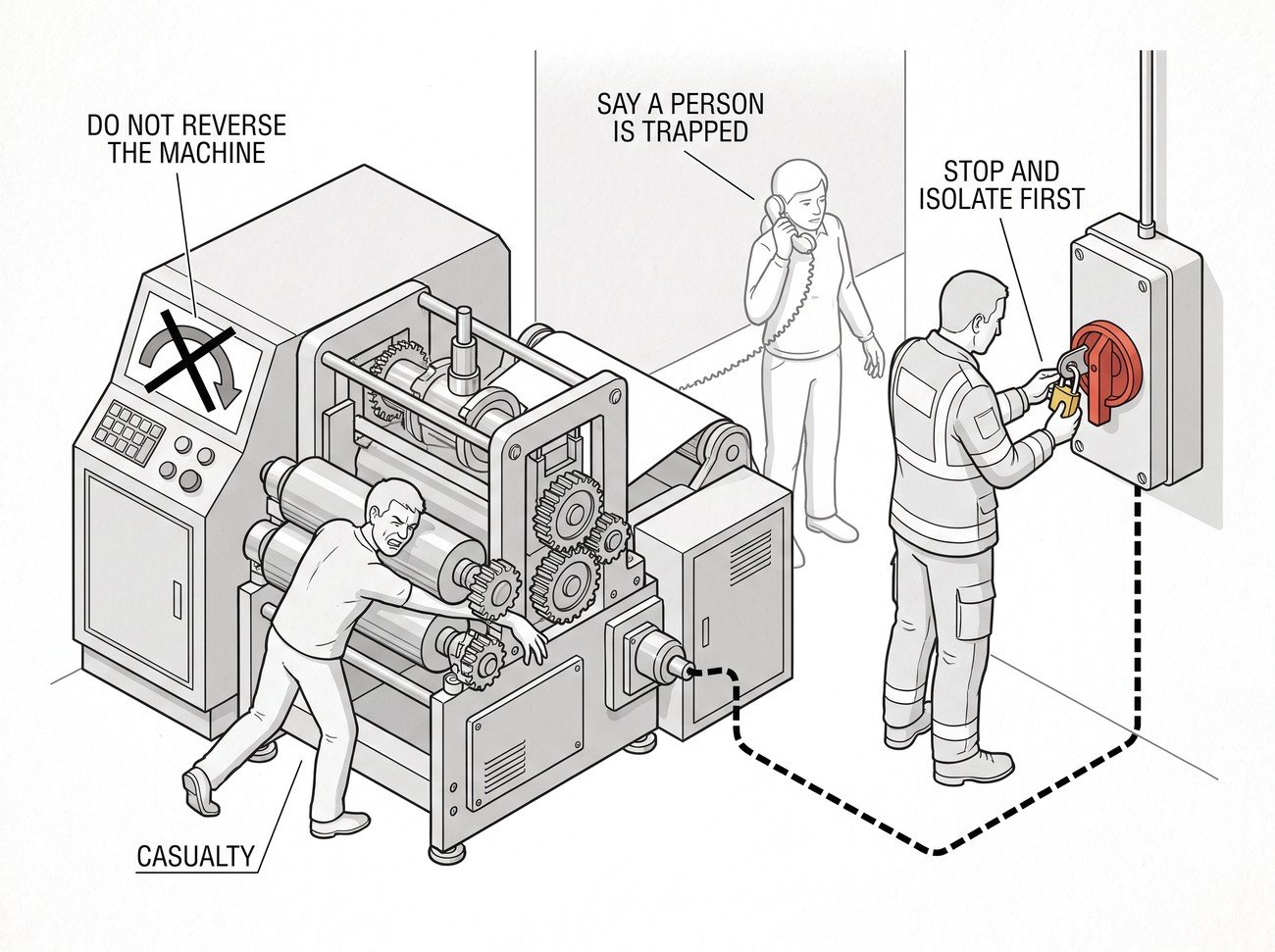
The first action is to stop all motion, by emergency stop or by isolation. Reversing a machine to release a trapped limb takes the limb back through the mechanism that trapped it, often causing worse damage than the original entrapment, and it can lose the compression that is currently limiting blood loss. Reversing is sometimes the right answer, and it is a decision for the emergency services with the casualty assessed — not a first response.
Isolate and secure before anyone approaches
An emergency stop halts the machine without removing its stored energy, so a raised part can still fall, a spring can still release, and a charged accumulator can still drive movement. Before anyone puts their hands near the mechanism to assist, the machine is isolated, locked and its stored energy released or restrained. That is what prevents a second person being trapped by the same machine while helping the first.
Compression may be holding the injury together
Where a limb is crushed or trapped, the mechanism itself can be limiting bleeding, and releasing it suddenly can produce rapid blood loss and other serious effects. This is the strongest argument against a well-meant quick release. Keeping the casualty warm, still and talking while waiting for people who can manage what happens on release is more useful than getting them out fast.
Tell the responders what they are coming to
The call needs to say that a person is trapped in machinery, what part of the body, what the machine is, and whether it is isolated. That determines what equipment and which teams are dispatched, and it is often the difference between an appropriate response arriving first time and a delay while more capability is called for. Someone should meet them and take them to the machine rather than describing the route.
Afterwards, leave the machine alone
Once the casualty is clear, the machine stays isolated and untouched. It is the evidence for what actually happened, which is what makes a genuine fix possible rather than a guess about behaviour. Freeing a jam, refitting a guard, or resetting a control before anyone has examined the machine destroys the only record of the state it was in.
For why stopping is not isolating, see what emergency stop does not do and stored energy.
Related standards
The standards below set the design requirements, classification and test methods behind the safeguards and equipment referenced in this note.
Common errors
1Reversing the machine to free a trapped limb as a first response.
2Approaching the mechanism after an emergency stop but before isolation.
3Releasing a crushed limb quickly without anyone able to manage the consequences.
4Calling for help without saying that someone is trapped in machinery.
5Clearing, resetting or refitting the machine before the incident has been examined.
Frequently asked questions
Should a machine be reversed to free someone?
Not as a first response. Reversing takes the limb back through the mechanism that trapped it and can lose the compression currently limiting blood loss. It is a decision for the emergency services with the casualty assessed.
Is an emergency stop enough before helping?
No. It halts the machine without removing stored energy, so a raised part can still fall and an accumulator can still drive movement. The machine is isolated, locked and its stored energy released first.
Why can a quick release make things worse?
Because the mechanism may be limiting bleeding from a crushed limb, and sudden release can produce rapid blood loss and other serious effects.
What should the emergency call say?
That a person is trapped in machinery, which part of the body, what the machine is, and whether it is isolated. That determines what equipment and teams are dispatched.
What happens to the machine afterwards?
It stays isolated and untouched. Clearing a jam, refitting a guard or resetting a control destroys the only record of the state the machine was actually in.
Need this as a document you can issue? The template library gives you the risk assessments, permits and inspection logs in editable form — and employer plans cover a whole team with completion records.