Safety / Tips and Tricks / Rope access and confined space
Activity 01 · Rope access
Using a Single Rope Clamp: Why Not?
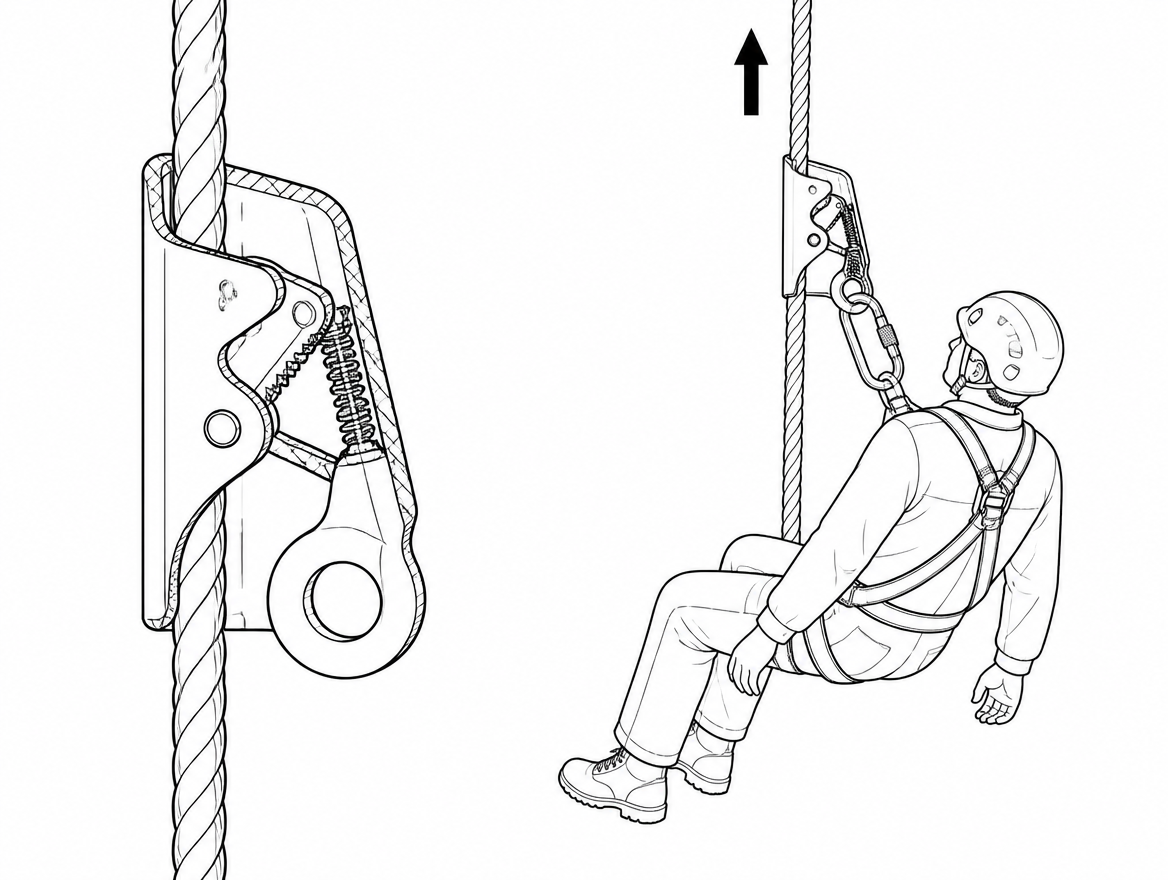
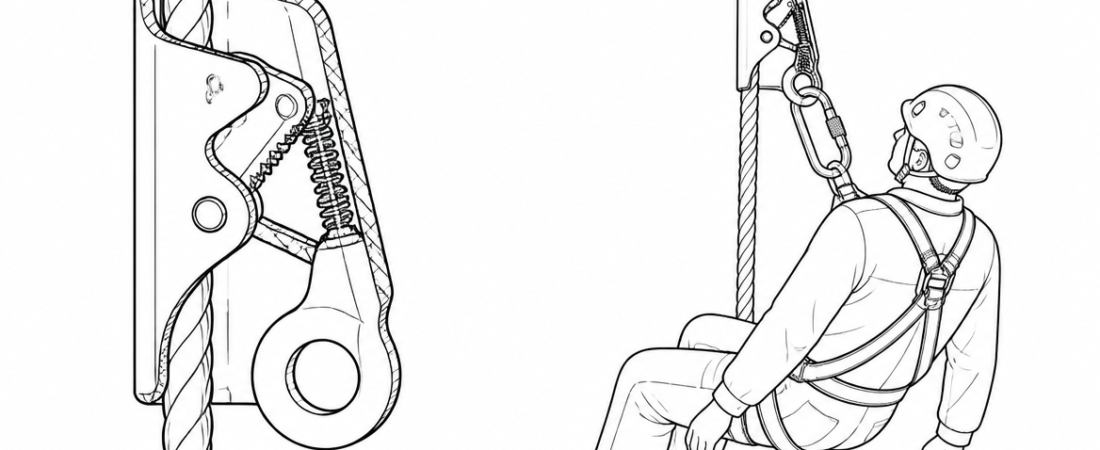
A toothed rope clamp will hold a suspended worker without complaint for an entire shift. That is exactly what makes it deceptive: the device works well within its intended use, so the habit of hanging everything on one of them looks harmless right up to the moment something goes wrong. The single rope clamp risk is not that the clamp is a weak component — it is that a single clamp on a single rope leaves no second load path when the rope is cut, when the cam is shock-loaded, or when the device is knocked off-axis and the cam lifts away from the sheath.
This article sets out what a rope clamp is qualified to do under EN standards, the specific failure modes that a lone clamp cannot cover, what the EU work-at-height provisions require in terms of separately anchored lines, and the narrow situations where a single clamp is a legitimate part of a system.
What a rope clamp is certified to do — and what it isn’t
Two European standards cover the devices commonly called rope clamps, ascenders or rope grabs:
- EN 567 — rope clamps for mountaineering and climbing.
- EN 12841 — rope adjustment devices for rope access systems, divided into type A (backup devices), type B (ascending devices for the working line) and type C (descending devices).
The distinction matters more than the shape of the hardware. A hand ascender or chest ascender is a type B device: it is qualified to move a worker up a working line and to hold them there under progressive load. EN 12841 does not treat type B or type C devices as standalone fall protection; the standard’s premise is that they are used on a working line while a type A backup device runs on a separately anchored safety line. A guided type fall arrester to EN 353-2 is a different animal again — it is designed and tested to arrest a fall on a flexible anchor line, but only as part of the specific system (line, device, energy absorber, connector) that was certified together. Its certification does not transfer to a toothed ascender that happens to be sitting in the same kit bag.
None of these devices are interchangeable, and a type B ascender never becomes a backup device simply because it is the only thing on the rope.
Four failure modes a lone clamp cannot cover
1. Sheath damage from a shock load
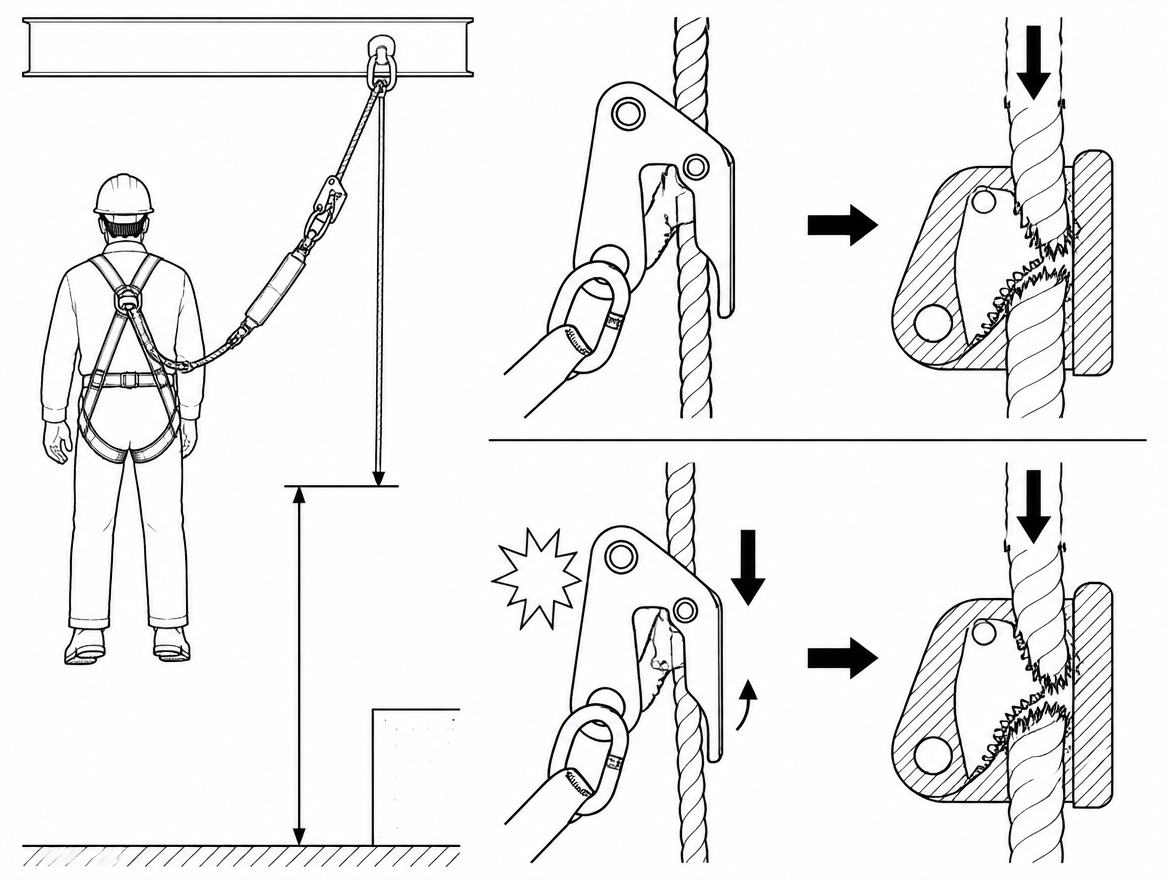
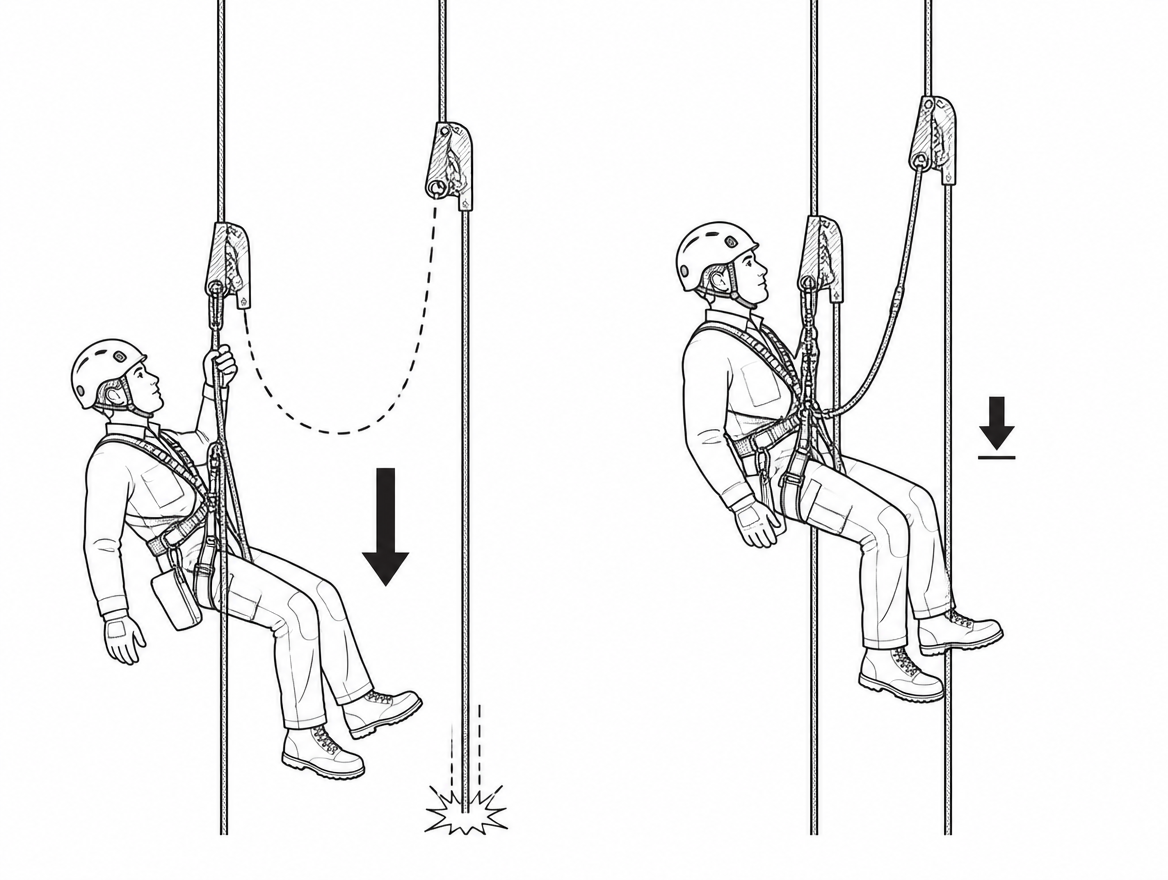
A toothed cam concentrates load onto a few millimetres of rope sheath. Under a slow, progressive load that is fine — it is what the geometry is for. Under a sudden load, the same teeth act on the sheath as a cutting edge rather than a gripping surface. Sheath rupture and, in severe cases, complete rope failure are recognised consequences of dropping onto a toothed ascender, which is why EN 12841 type B devices are qualified for working-line ascent rather than fall arrest, and why manufacturer instructions for these devices routinely prohibit their use above the anchor or with slack in the system.
2. Cut, abraded or heat-damaged rope
A clamp cannot protect against damage to the line it is standing on. Rope running over an unprotected parapet, a cut edge of sheet metal, a grinding or cutting operation on the same face, or a hot works area all put the rope itself at risk. With one rope and one device, the rope is the entire system. With a separately anchored safety line, a localised rope failure is survivable.
3. Off-axis loading and unintentional cam release
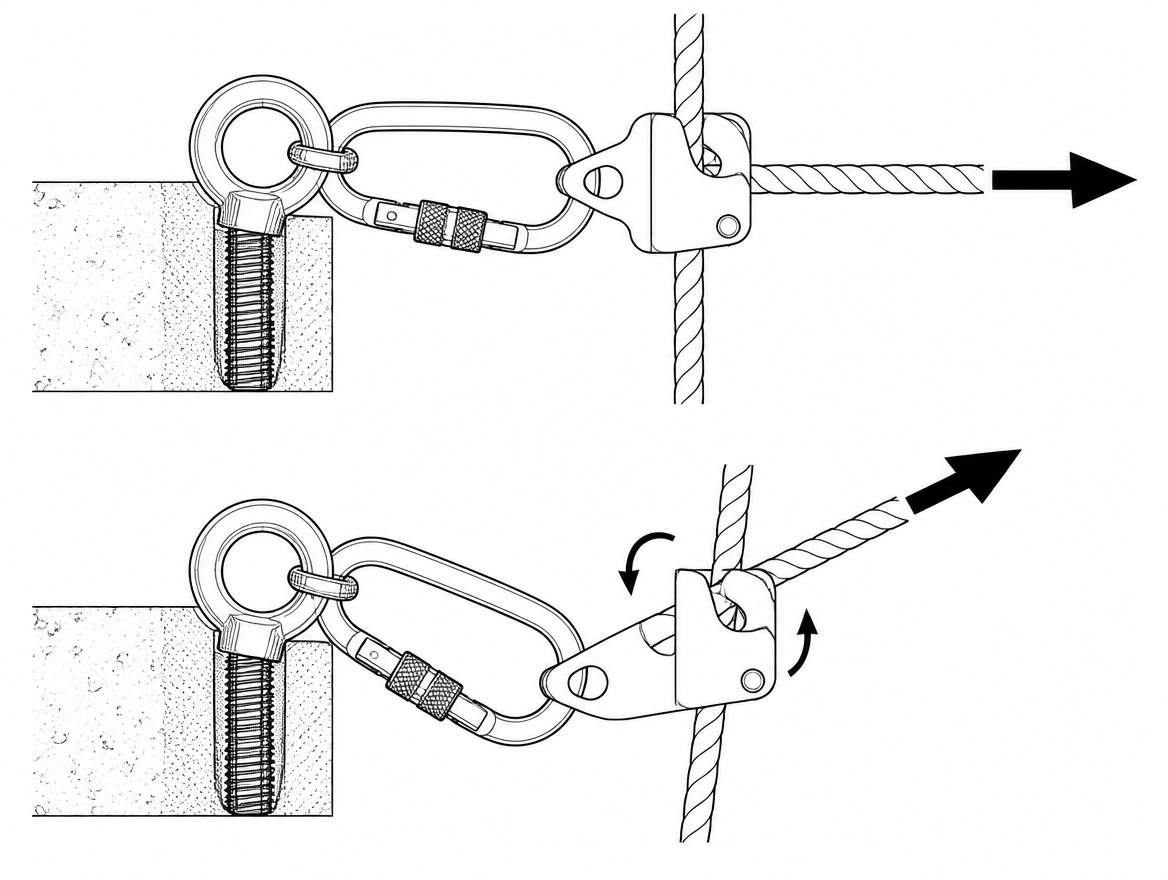
Rope clamps are designed to be loaded in line with the rope. Sideways loading, loading through a long sling or lanyard that pulls the body of the device out of alignment, or an obstruction pressing on the safety catch can all rotate the clamp and lift the cam clear of the rope. Many clamps have a catch that is easy to open with a gloved thumb — which also means it can be opened by a twig, a piece of webbing, a tool lanyard or a snagged sleeve while the device is momentarily unloaded.
4. Slip on contaminated or out-of-specification rope
Cam grip depends on the sheath. Mud, ice, water, dressing compounds and rope diameters outside the device’s stated range all reduce holding capacity. Rope clamps for rope access are normally specified for EN 1891 low-stretch kernmantel rope within a defined diameter window — commonly around 10–13 mm, though the device’s own instructions are the authority, not a rule of thumb. A clamp used on a thinner, softer or dynamic rope than it was tested with may slip, and slip converts a static hold into a moving load with all of the shock-loading problems described above.
What the EU work-at-height provisions actually require
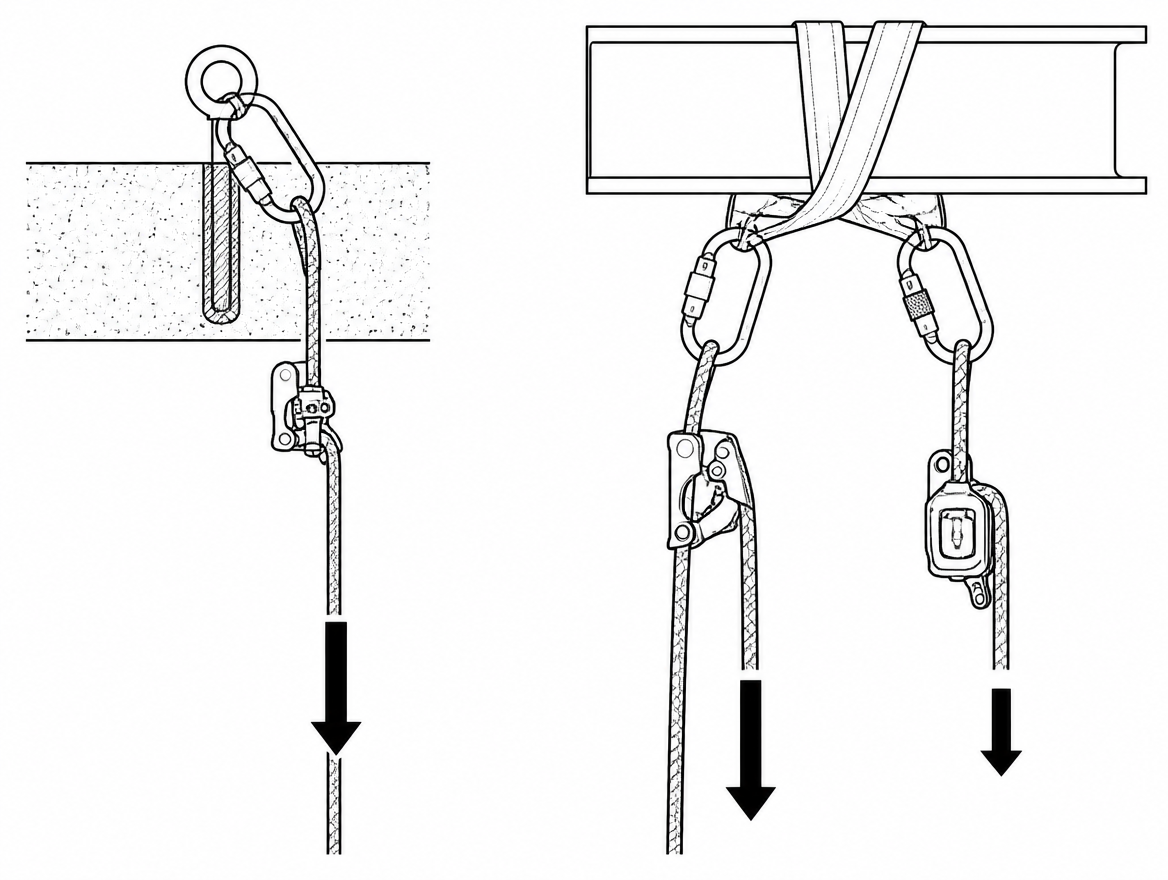
For rope access and positioning techniques, the minimum requirements are set out in the work-at-height provisions of Directive 2009/104/EC (Annex II), which consolidated the earlier amendment introduced by Directive 2001/45/EC. The core requirement is that the system comprises at least two separately anchored lines: one as the means of access, descent and support (the working line) and the other as a backup (the safety line). The worker’s harness must be attached to the safety line as well as to the working line.
The Directive contains one narrow exception: where a risk assessment shows that the use of a second line would make the work more dangerous, a single line may be used provided appropriate measures are taken to ensure safety. That exception is not a general-purpose escape hatch. It is assessment-driven, it must be documented, and national implementation varies between Member States — the applicable national regulation, not the Directive text alone, is what governs a given site.
The wider system standard, EN 363, describes how components combine into a personal fall protection system; anchor devices fall under EN 795. Two lines means two anchors that are genuinely independent, not two ropes girth-hitched to the same steel eye.
The configuration that replaces the lone clamp
A conventional two-rope rope access setup on a vertical face uses:
- A harness combining a sit harness ventral attachment to EN 813 with the fall arrest attachment points of a full body harness to EN 361, where the task requires fall arrest.
- A working line with an EN 12841 type C descender or type B ascender, depending on direction of travel.
- A separately anchored safety line with an EN 12841 type A backup device, kept as high and as close to the harness attachment as the device’s instructions allow, so that any fall is short and near-static.
- Locking connectors to EN 362, loaded along the major axis, with attention to the classes specified for the attachment in question.
The single most common error in an otherwise correct two-rope setup is slack in the safety line. A backup device sitting a metre below the harness on a loop of slack rope reintroduces the fall factor the second line was meant to eliminate.
Where one clamp is legitimate
The objection is to a single clamp as a worker’s sole attachment, not to the device itself. Rope clamps do defensible work in several configurations:
- As a type B ascender on the working line, while a type A backup runs on the safety line.
- As progress capture in a hauling or tensioning system for equipment loads, within the device’s stated load limits and rope specification.
- As a foot-loop or chest ascender forming part of a rope-walking setup — again, alongside a backup on a second line.
What none of these have in common with the practice this article addresses is a person suspended with one device, one rope and one anchor.
Pre-use check and periodic examination
Before each use, a rope clamp warrants a check of:
- Cam teeth — clean, not clogged with mud or grit, no rounded, chipped or missing teeth.
- Cam action — spring returns the cam fully and positively to the closed position.
- Safety catch — retains the cam so the device cannot be removed from the rope unintentionally.
- Body and attachment hole — no cracks, deformation, corrosion or elongation of the connector hole.
- Rope compatibility — diameter and construction within the range stated in the device’s instructions; sheath sound, dry and free of contamination at the working section.
- Connector — locking gate closed and locked, loaded along its major axis, with no risk of cross-loading against the gate.
Beyond pre-use checks, EN 365 covers marking, instructions for use and periodic examination of personal fall protection equipment, and recommends documented examination by a competent person at intervals of not more than 12 months, with the interval reduced where use is frequent or severe. Markings on the device and the identification of its rope diameter range are printed on real equipment for a reason — they are the primary source, ahead of any general guidance.
The practical takeaway
A single rope clamp on a single rope is a single point of failure carrying a person. The device is not the problem; the absence of a second, separately anchored load path is. Where rope access techniques are used, the default configuration is a working line and a backup line with an EN 12841 type A device, with the backup kept high and the slack managed. Where a single-line configuration is genuinely unavoidable, that decision belongs in a documented risk assessment under the applicable national implementation of the work-at-height provisions — not in an informal habit on site.
Next step for anyone specifying or auditing this equipment: read the type designation on each rope adjustment device against EN 12841 and check it against the manufacturer’s stated rope diameter range and permitted use, then confirm the periodic examination records are current under EN 365.
Frequently asked questions
Is a toothed rope clamp a fall arrest device?
No. EN 12841 type B devices are qualified for ascending a working line and holding a worker under progressive load, not for fall arrest. EN 12841 does not treat type B or type C devices as standalone fall protection; its premise is that they are used on a working line while a type A backup device runs on a separately anchored safety line.
What are the device types under EN 12841?
EN 12841 divides rope adjustment devices into type A (backup devices), type B (ascending devices for the working line) and type C (descending devices). A hand ascender or chest ascender is a type B device. These types are not interchangeable, and a type B ascender never becomes a backup device simply because it is the only thing on the rope.
Why is shock-loading a toothed ascender dangerous?
A toothed cam concentrates load onto a few millimetres of rope sheath. Under a slow, progressive load that is what the geometry is for, but under a sudden load the same teeth act as a cutting edge rather than a gripping surface. Sheath rupture and, in severe cases, complete rope failure are recognised consequences, which is why manufacturer instructions routinely prohibit use above the anchor or with slack in the system.
How can a rope clamp release unintentionally?
Rope clamps are designed to be loaded in line with the rope. Sideways loading, loading through a long sling or lanyard that pulls the body out of alignment, or an obstruction pressing on the safety catch can rotate the clamp and lift the cam clear of the rope. A catch that opens easily with a gloved thumb can also be opened by a twig, webbing, a tool lanyard or a snagged sleeve while the device is momentarily unloaded.
What do the EU work-at-height provisions require for rope access?
Under the work-at-height provisions of Directive 2009/104/EC (Annex II), which consolidated the earlier amendment from Directive 2001/45/EC, the system must comprise at least two separately anchored lines: a working line for access, descent and support, and a safety line as backup. The harness must be attached to both. A single line is allowed only where a risk assessment shows a second line would make the work more dangerous, with appropriate measures taken; that exception is assessment-driven, must be documented, and national implementation varies between Member States.
Need this as a document you can issue? The template library gives you the risk assessments, permits and inspection logs in editable form — and employer plans cover a whole team with completion records.