
Latest posts
-
General Principles for Work at Height: The Order of Decisions Before You Rig
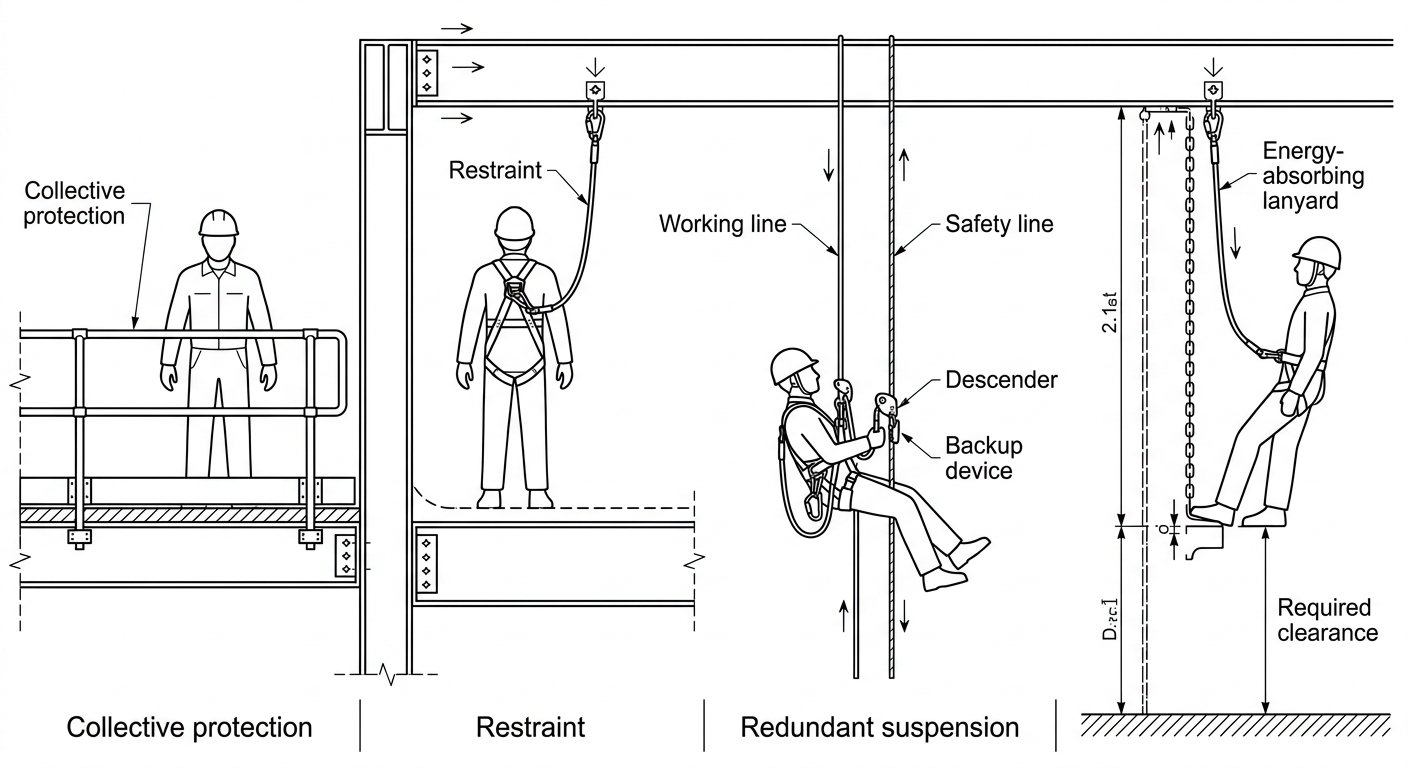
Most work-at-height failures are not equipment failures. They are ordering failures: someone chose a harness before checking whether the anchor could sit overhead, or chose a lanyard before measuring the clearance below the work position, or planned the access without planning the retrieval. The general principles for work at height exist to fix that order…
-
Energy Absorber Deployment Lengths: What They Mean and How They Change Your Clearance
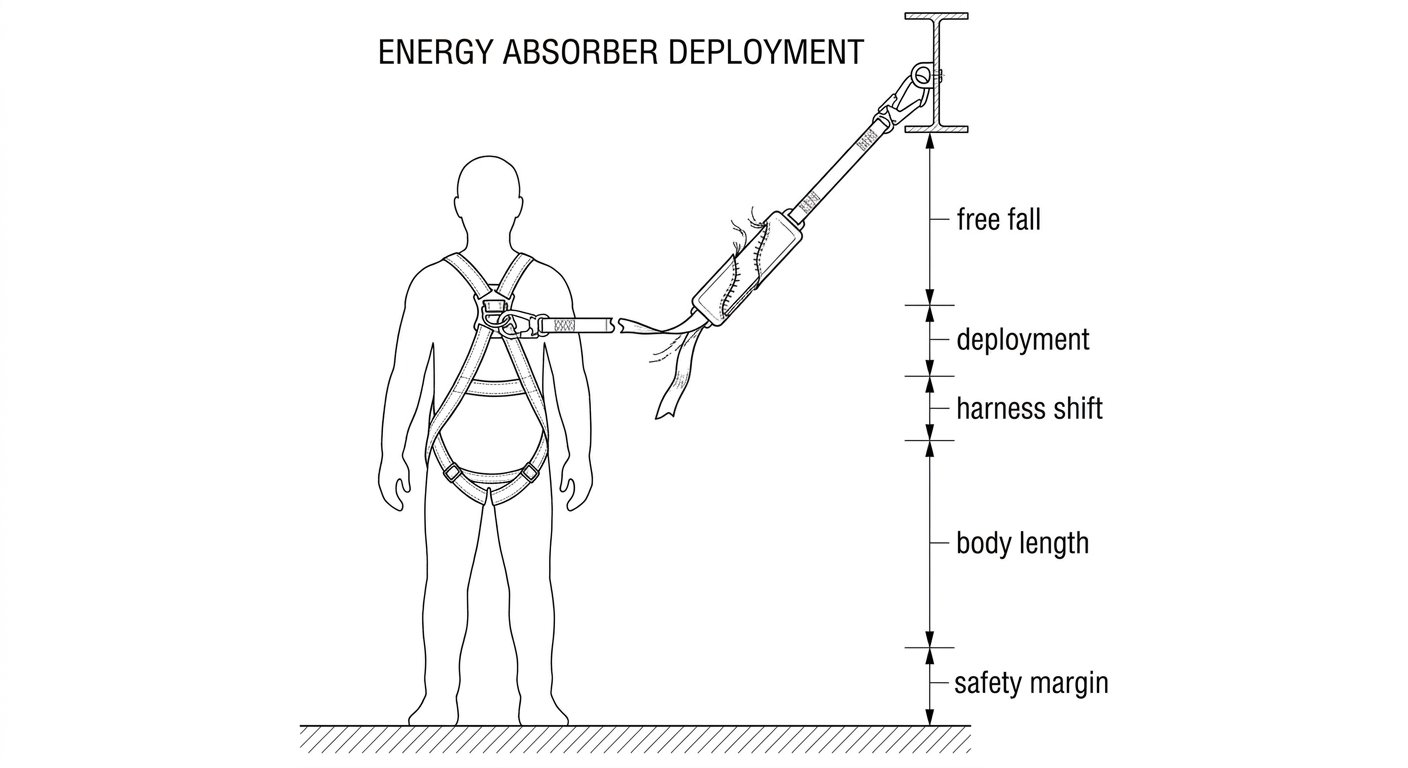
An energy absorber does its job by getting longer. That is the whole mechanism: stitching tears, webbing pays out, and the arrest force on the body is held down to a survivable level. The consequence for anyone planning work at height is that the lanyard length printed on the label is not the space the…
-
Harness Attachment Point Strength Ratings: What the Numbers Actually Cover
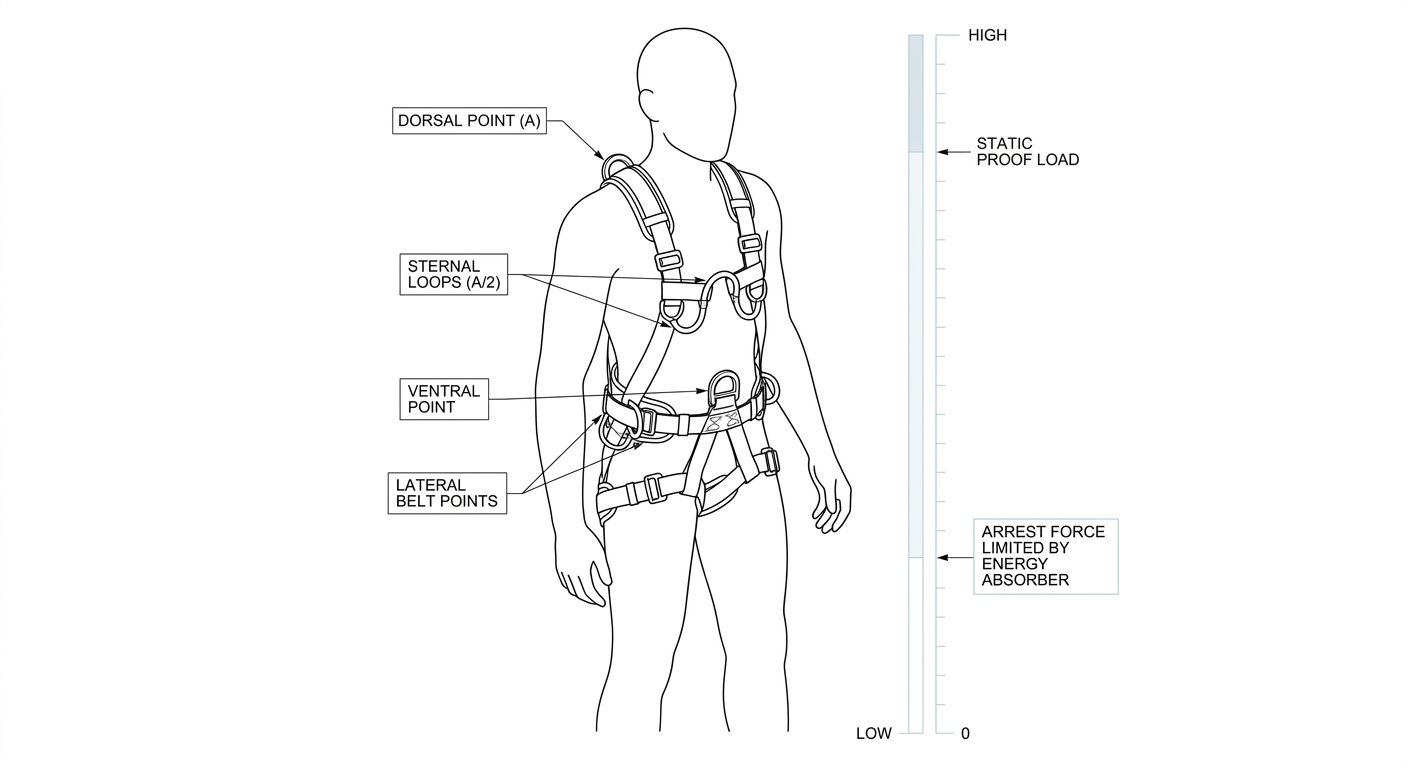
A harness attachment point is not simply a metal ring with a number stamped near it. It is a rated load path — webbing, stitching, adjusters and the ring or textile loop itself — that has been tested as an assembly. Understanding what those ratings mean, and where they stop applying, is the difference between…
-
Rope Grab Specifications and Rope Compatibility: Matching the Device to the Line
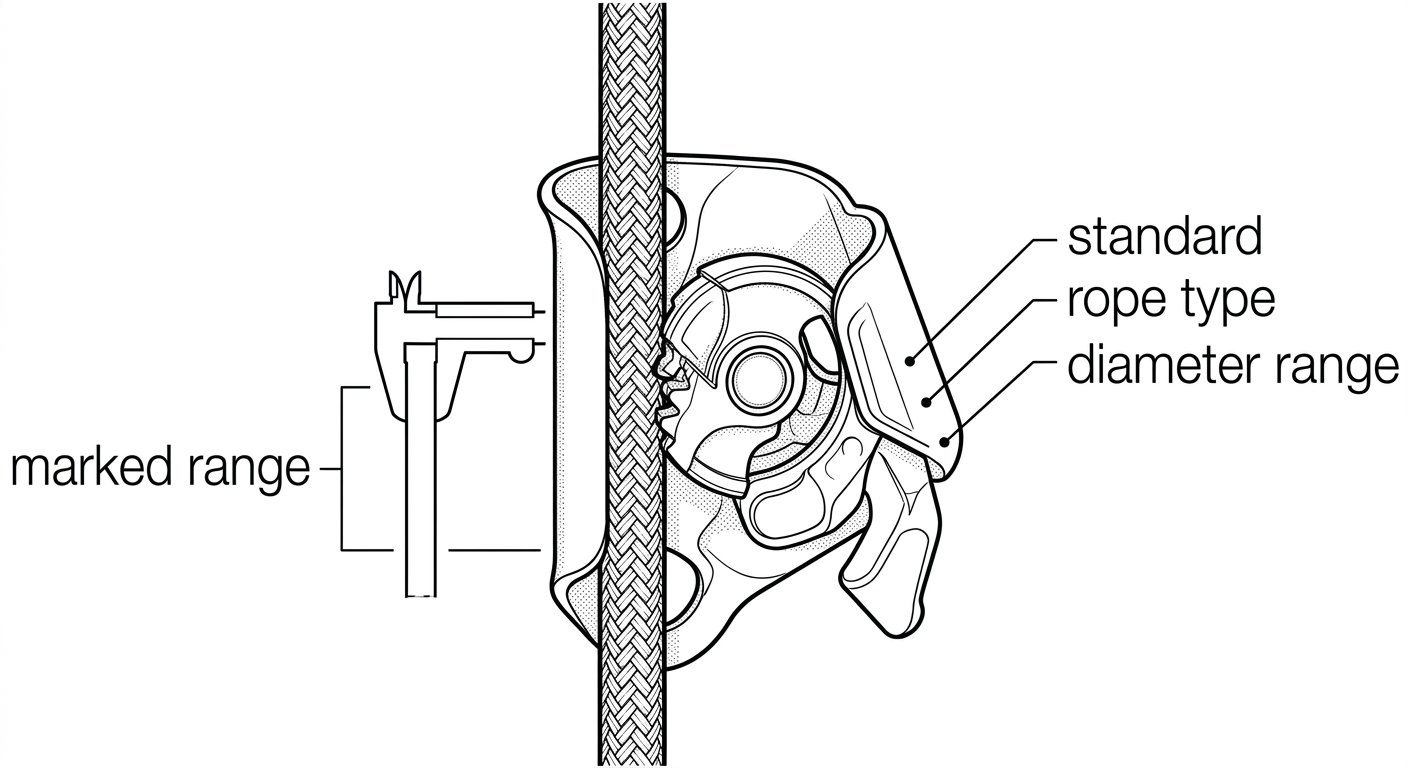
A rope grab is only as good as the rope it is sitting on. The device does not arrest a fall on its own – it does so by clamping a specific type of rope, of a specific diameter, in a specific condition. Put the same device on a line that is a millimetre too…
-
Choosing an Absorber for the Clearance Available
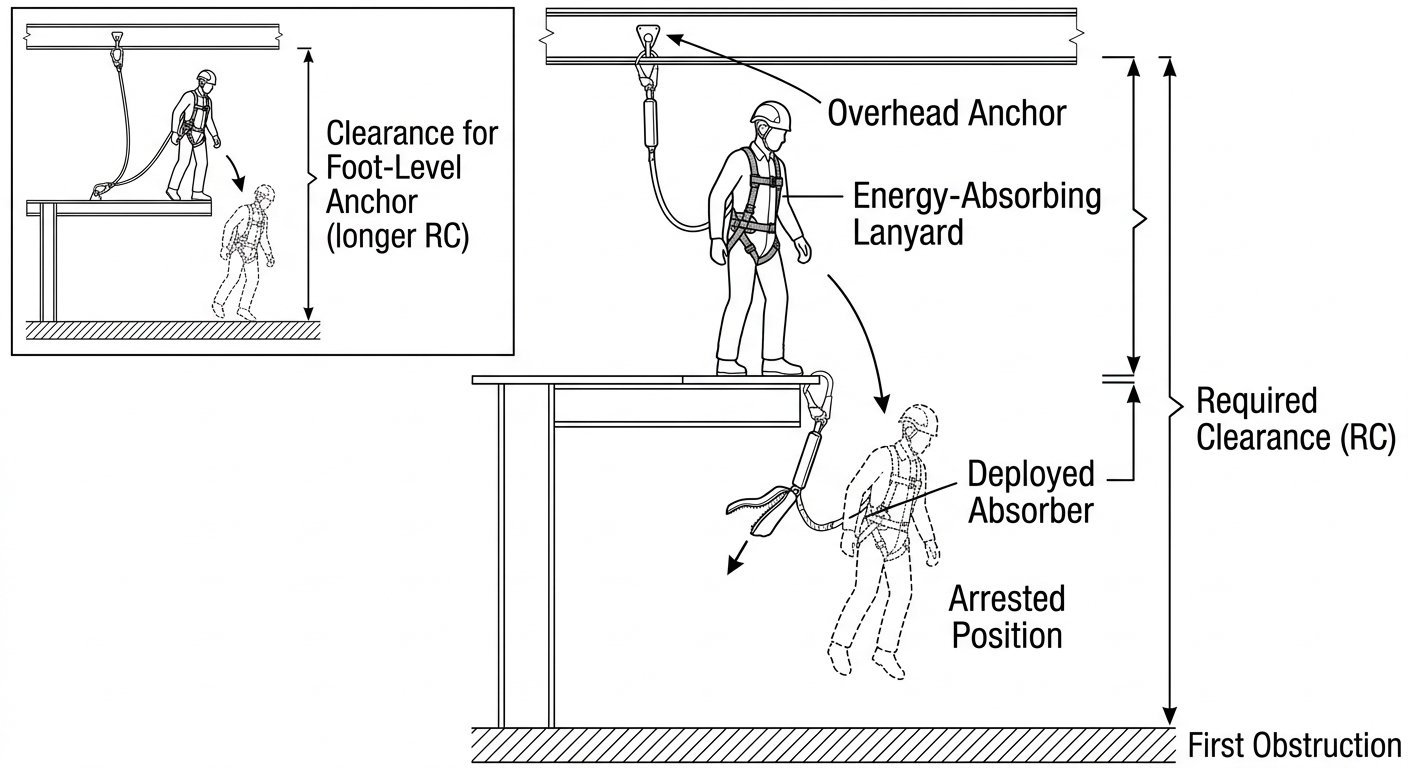
An energy absorber is only as good as the empty space underneath it. The absorber limits the force on the body during a fall arrest, but it does that by lengthening the fall — and if the structure, the plant floor or a pipe rack sits inside that lengthened distance, the worker stops against the…
-
Harness Attachment Point for a Rope Grab: Sternal, Dorsal and What Not to Clip Into
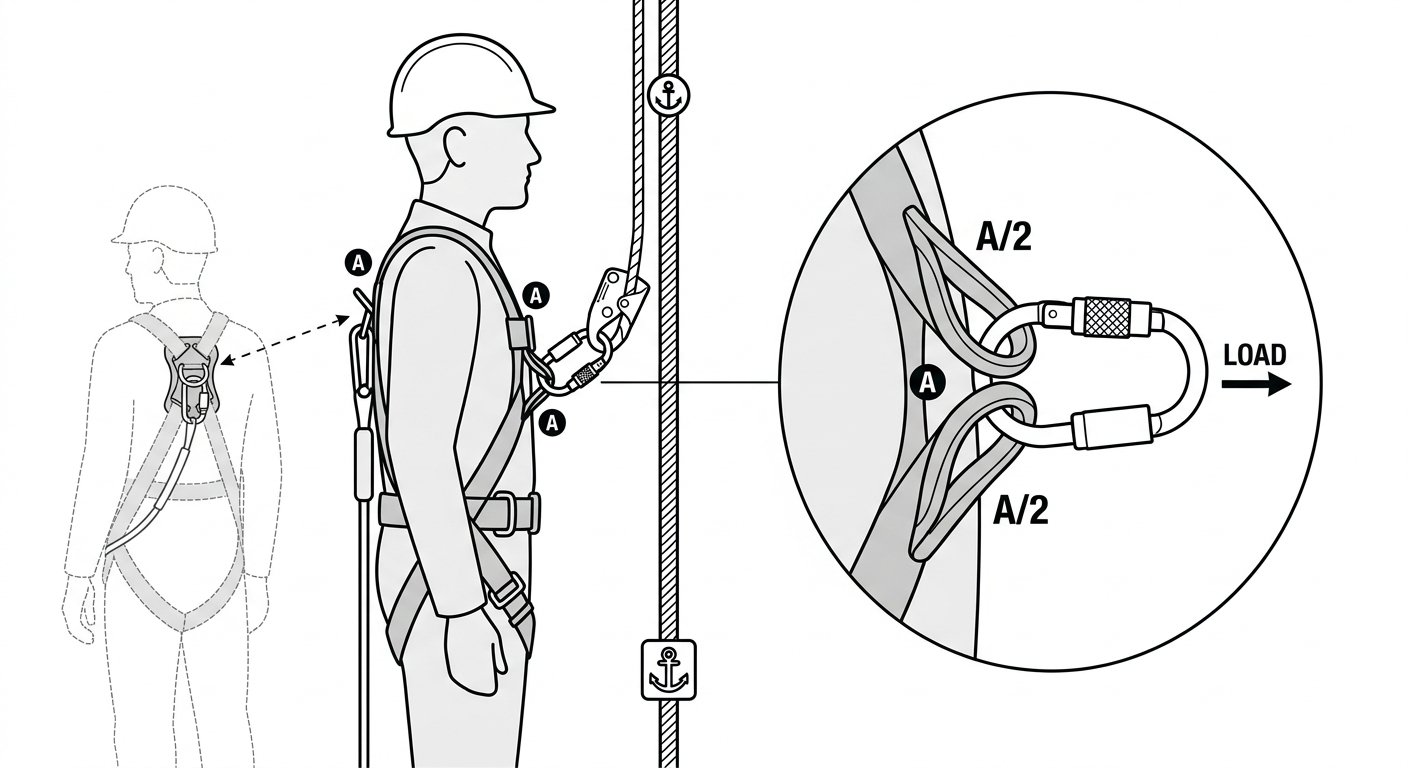
A rope grab — a guided-type fall arrester running on a vertical rope or a mobile back-up device on a safety line — only performs as tested if it is connected to the right point on the harness, by the right connector, with nothing added in between. Clip it to the wrong ring and the…
-
Which Harness for Which Use? A Selection Note for Fall Arrest, Positioning, Rope Access and Confined Space
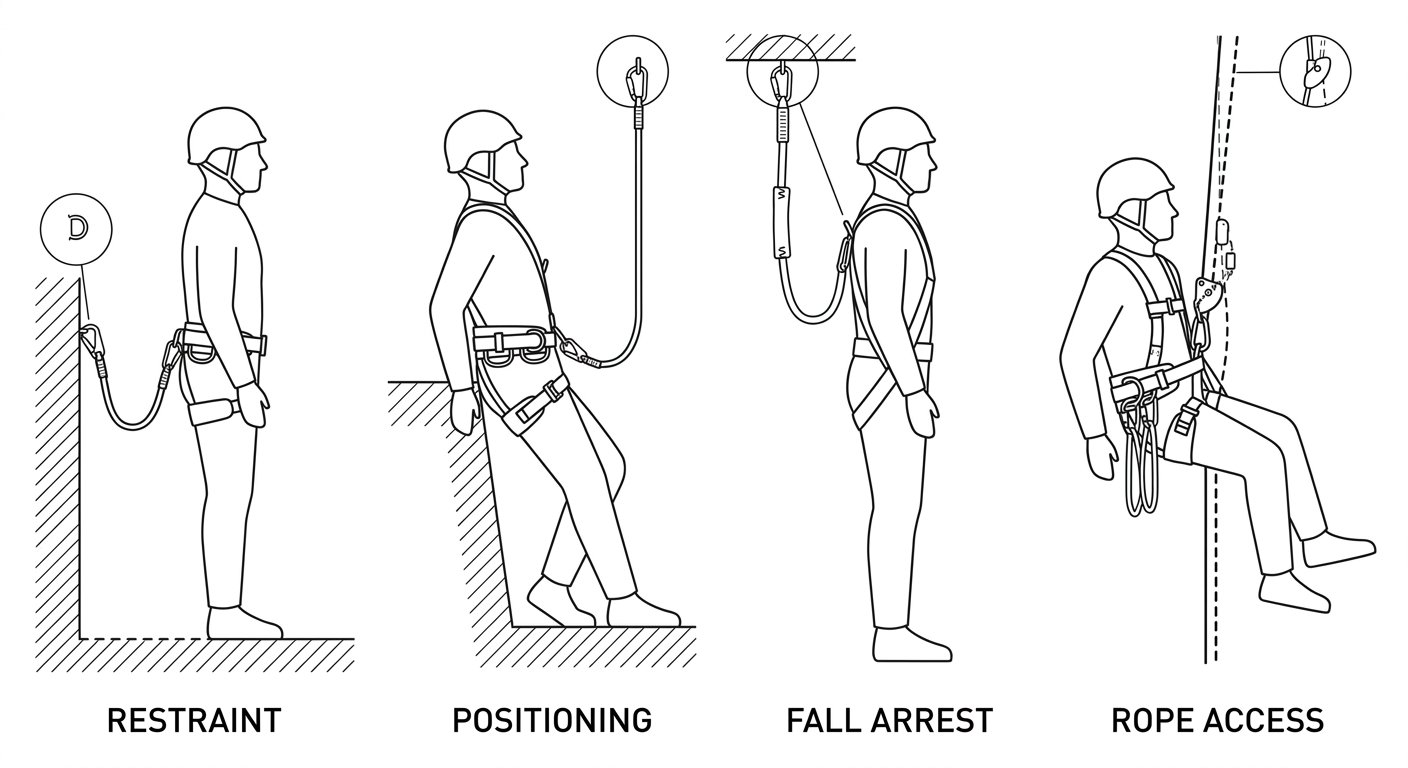
Picking a harness is not a comfort decision made in the stores cupboard — it decides what work the wearer can legally and safely do once they are on site. A harness that is correct for restraint at a roof edge may be useless for a tripod extraction from a manhole; a rope access sit…
-
Connecting a Fall-Arrest Lanyard to the Harness
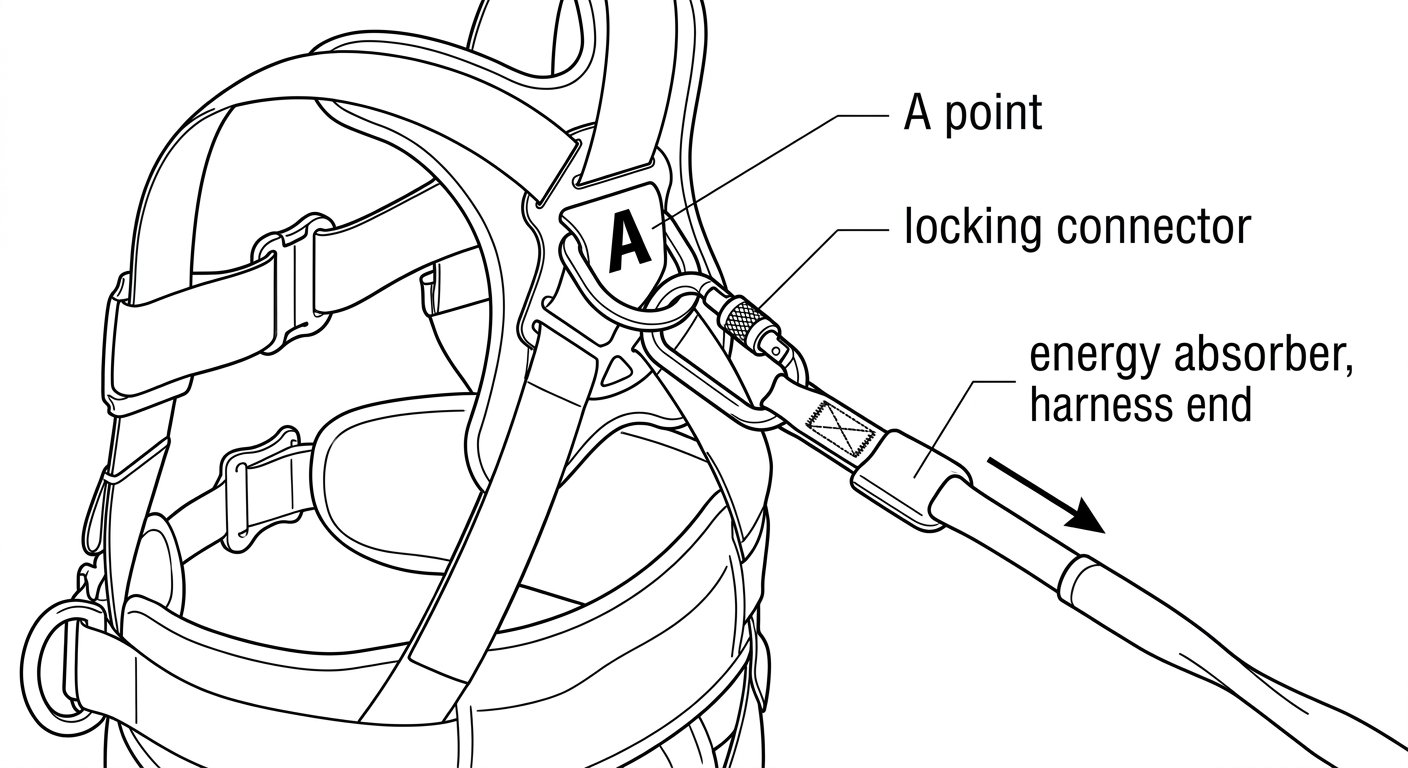
The connection between a lanyard and a harness is the one link in a fall-arrest system that the user makes and unmakes by hand, several times a shift, often in awkward positions and poor light. It is also the link most likely to fail silently: the system looks connected, the worker feels connected, but the…
-
Lanyard-End Connector for Fall Arrest: Gate Opening, Roll-Out and Correct Loading
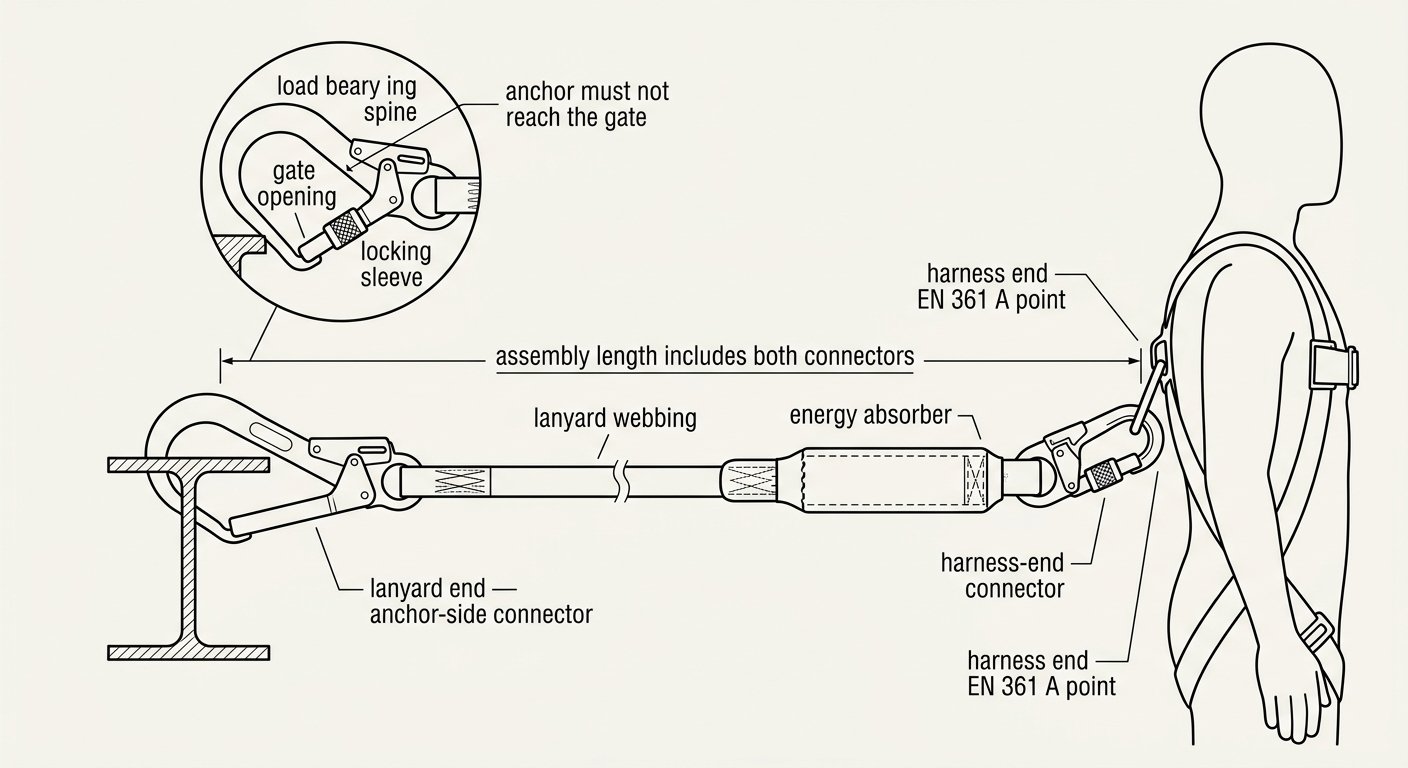
On a fall-arrest lanyard, the connector at the anchor end does more work than any other component in the assembly. It is the part that gets clipped and unclipped dozens of times a shift, the part that has to fit whatever structural member is actually available on site, and the part most likely to be…
-
Which Type of Fall-Arrest Lanyard to Choose: A Selection Note
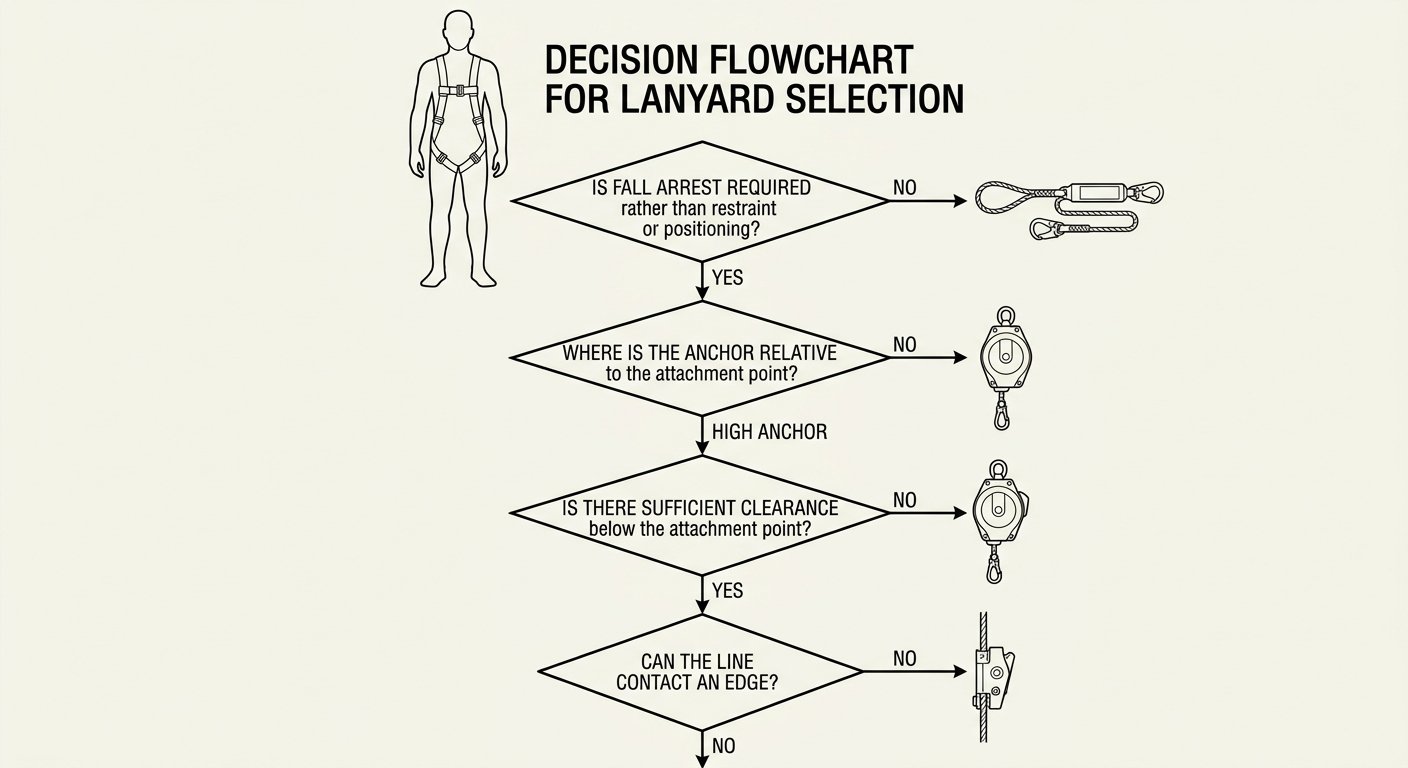
Choosing a fall-arrest lanyard is not a matter of preference or of what happens to be on the van. The choice is dictated by three site conditions that can be checked before anyone clips in: where the anchor sits relative to the harness attachment point, how much clear space there is below the worker, and…