
Latest posts
-
Atmospheric Testing Before Entry: Sequence, Remote Sampling and What Stops the Job
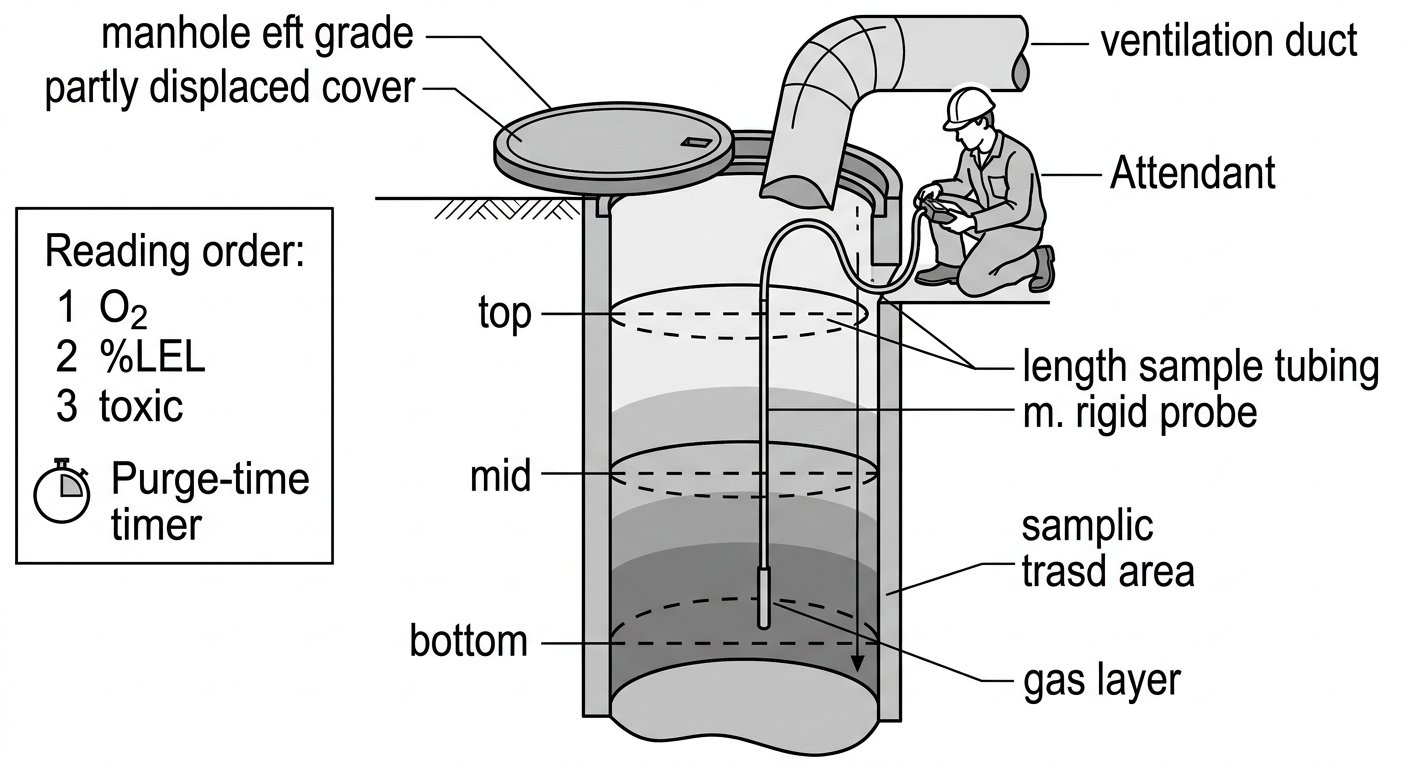
A confined space can look, smell and sound completely normal and still be lethal on the first breath. The pre-entry atmospheric test is the only step in the entry sequence that tells the team what is actually inside the space before anyone commits a body to it. Done properly, it takes a few minutes and…
-
General Principles for Work at Height: The Order of Decisions Before You Rig
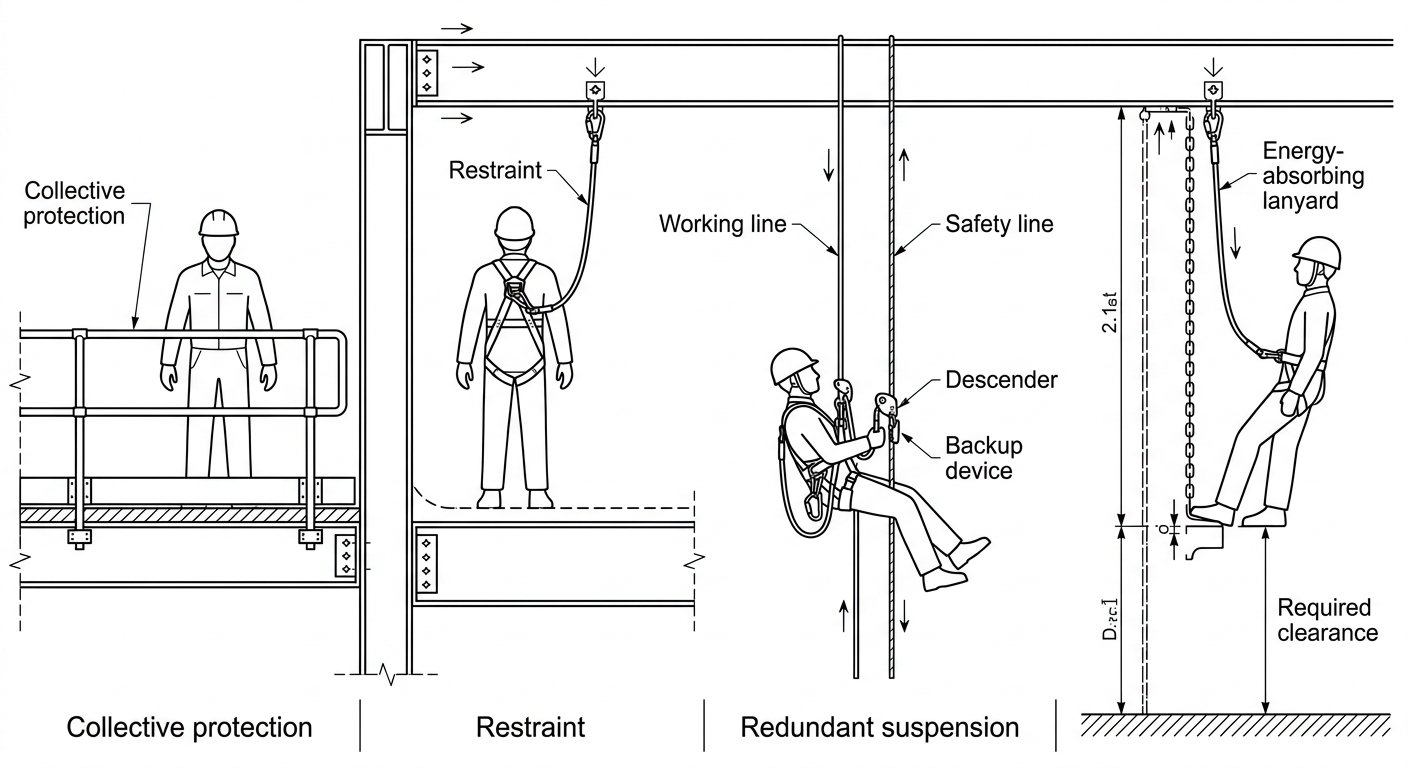
Most work-at-height failures are not equipment failures. They are ordering failures: someone chose a harness before checking whether the anchor could sit overhead, or chose a lanyard before measuring the clearance below the work position, or planned the access without planning the retrieval. The general principles for work at height exist to fix that order…
-
Harness Attachment Point Strength Ratings: What the Numbers Actually Cover
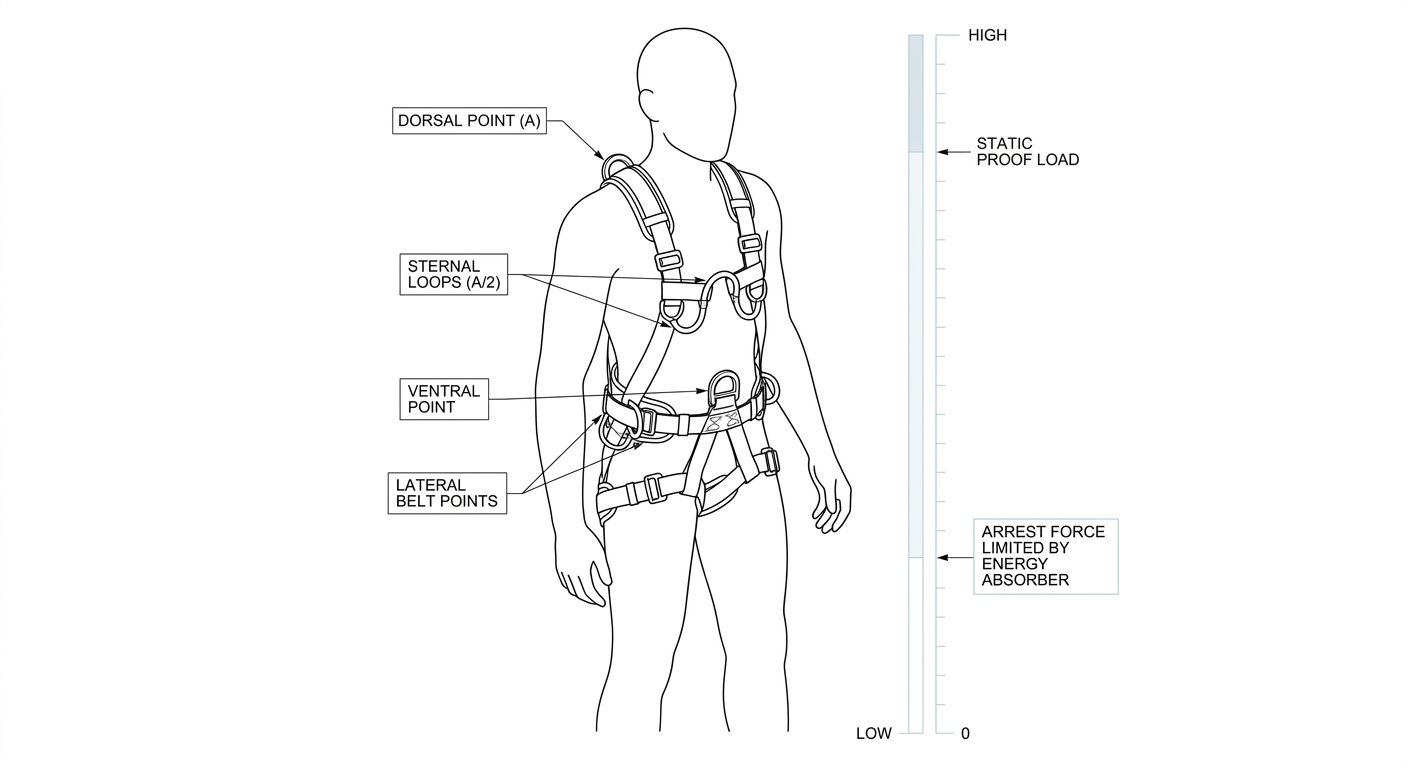
A harness attachment point is not simply a metal ring with a number stamped near it. It is a rated load path — webbing, stitching, adjusters and the ring or textile loop itself — that has been tested as an assembly. Understanding what those ratings mean, and where they stop applying, is the difference between…
-
Helmet Standards: EN 397 and EN 12492
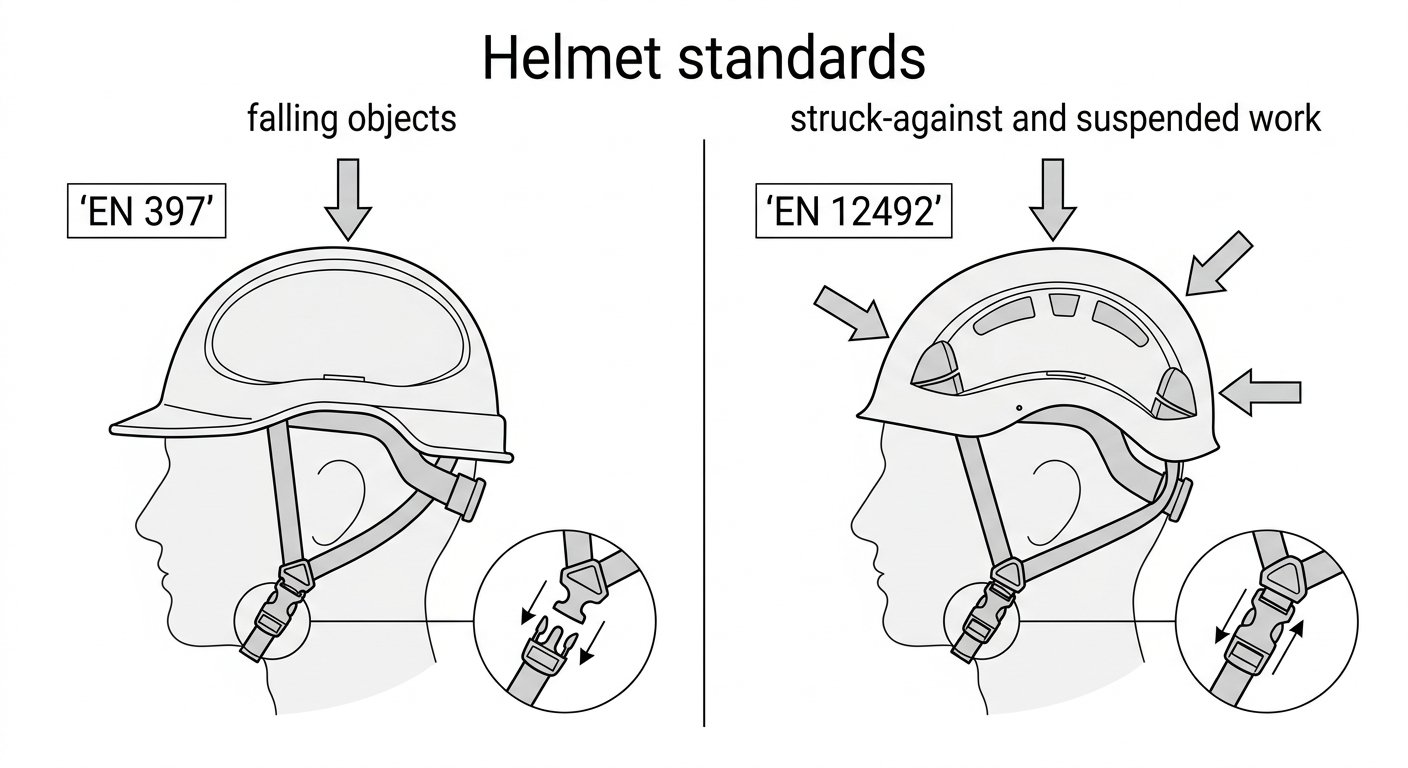
Two helmet standards dominate rope access and confined space work in Europe, and they were written for different accidents. EN 397 is an industrial safety helmet standard built around objects falling onto the head of someone standing below. EN 12492 is a mountaineering helmet standard built around a person who is moving, suspended, or falling…
-
Rope Grab Specifications and Rope Compatibility: Matching the Device to the Line
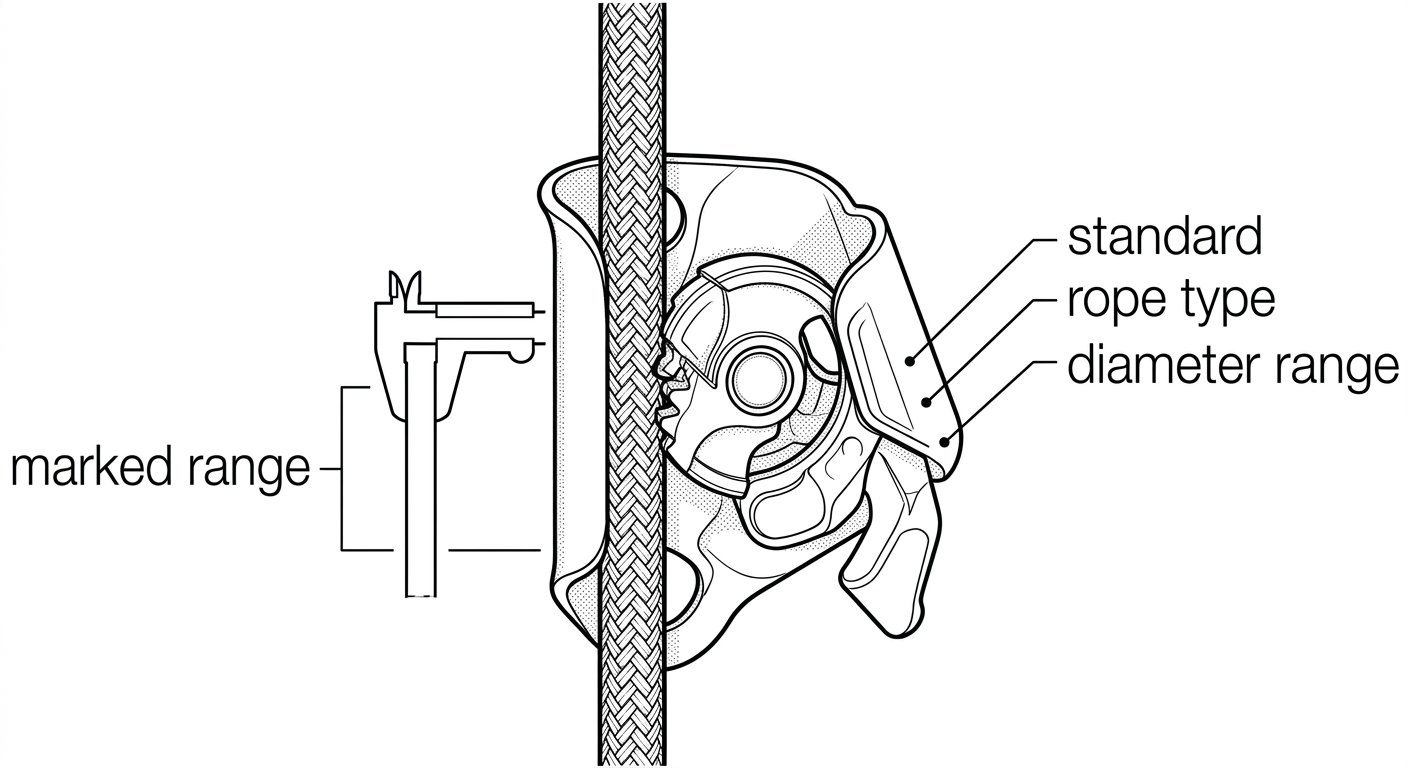
A rope grab is only as good as the rope it is sitting on. The device does not arrest a fall on its own – it does so by clamping a specific type of rope, of a specific diameter, in a specific condition. Put the same device on a line that is a millimetre too…
-
Descender Specifications and Working Loads: Reading the Numbers That Actually Limit the Job
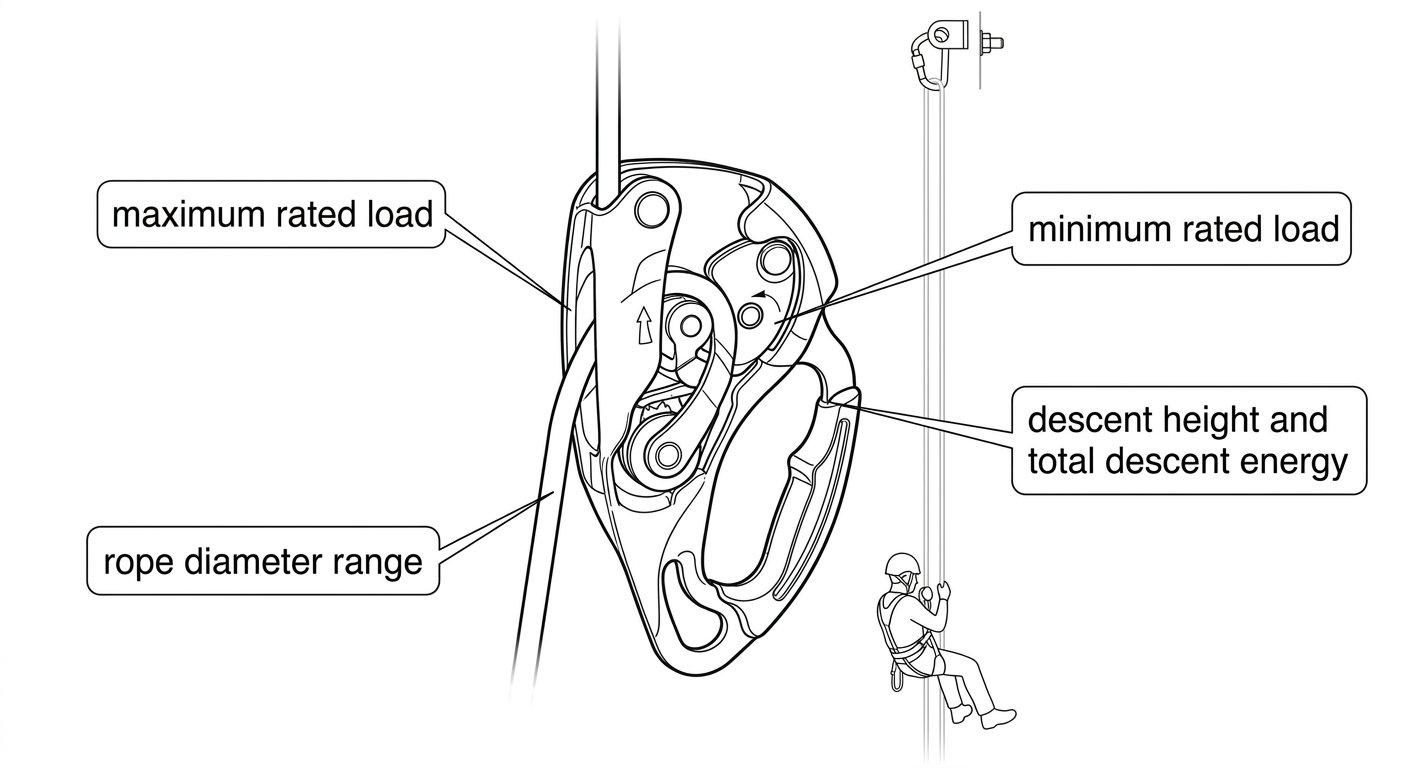
A descender is one of the few pieces of rope-access equipment whose marked numbers change what you are allowed to do on the day. The rated load decides whether one person or two can go down on it. The rope diameter range decides which line it may be threaded on. The descent-energy or descent-height limit…
-
Service Life and Retirement Criteria for Textiles: Age Limits, Condition Checks and When to Cut the Sling
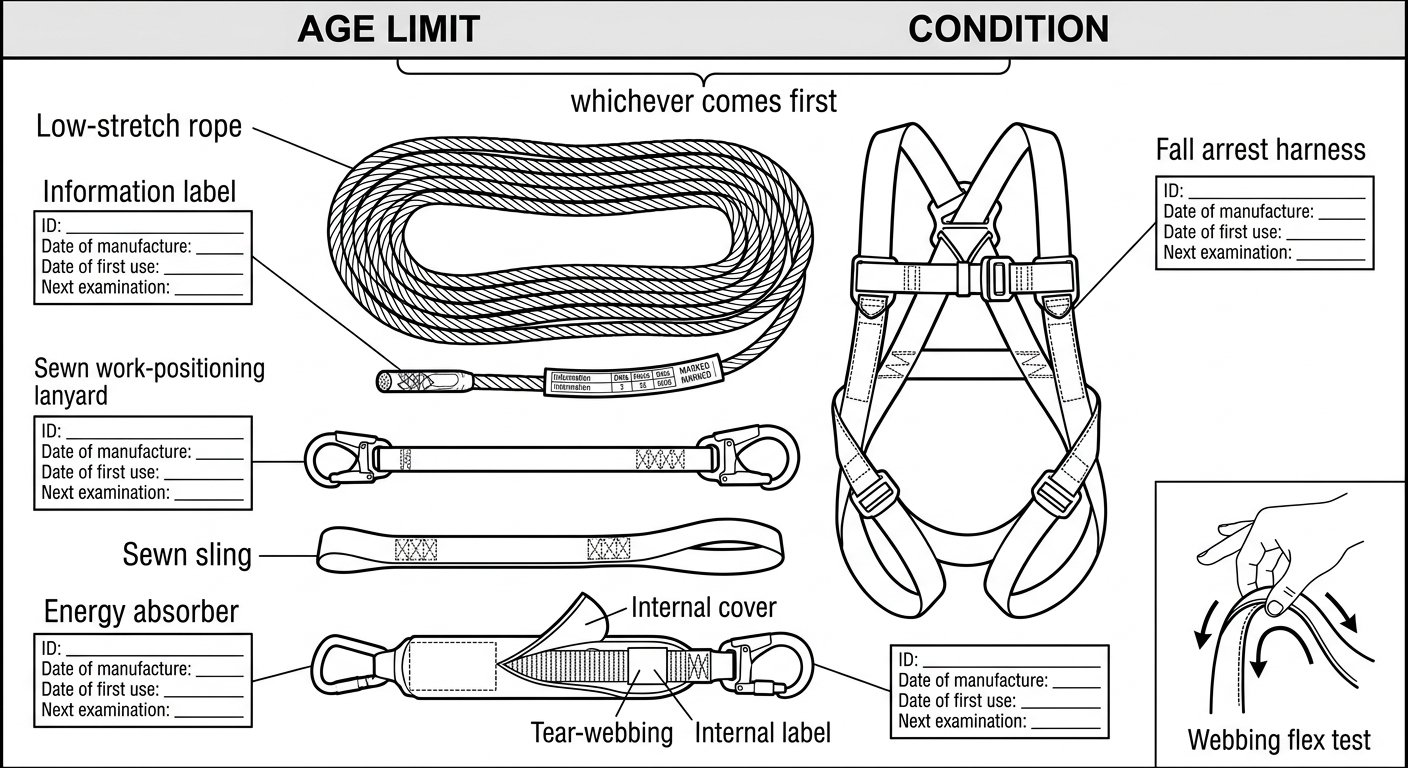
Every textile item in a rope-access or confined-space kit — rope, harness, positioning belt, lanyard, energy absorber, sling, anchor strap, accessory cord — leaves service for one of three reasons: it reached the maximum service life declared by its manufacturer, an inspection found damage that meets a retirement criterion, or a single event happened to…
-
Washing a Low-Stretch Rope Before First Use
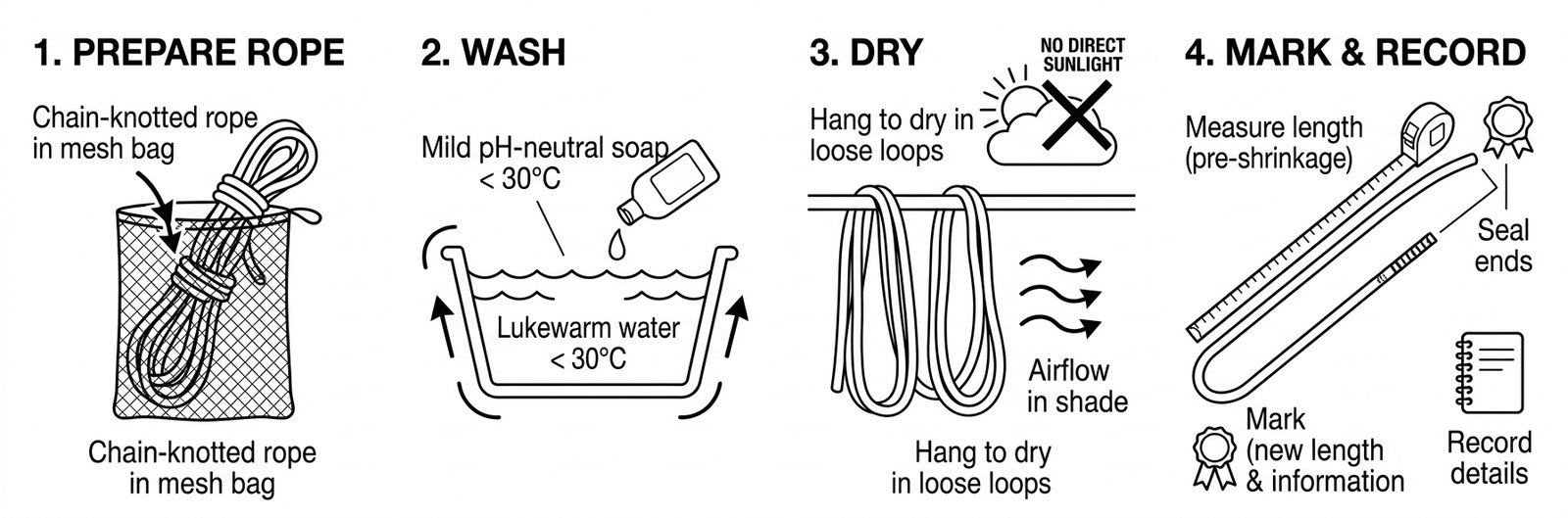
A new low-stretch (semi-static) kernmantle rope does not arrive in the state it will spend the rest of its working life in. It carries residual processing lubricants and fibre dust from spinning and braiding, its sheath is slick, and its length is not yet stable: the first thorough wetting shrinks it. Washing the rope before…
-
Performance of New Versus Used Ropes: Slip, Stretch, Diameter and Friction
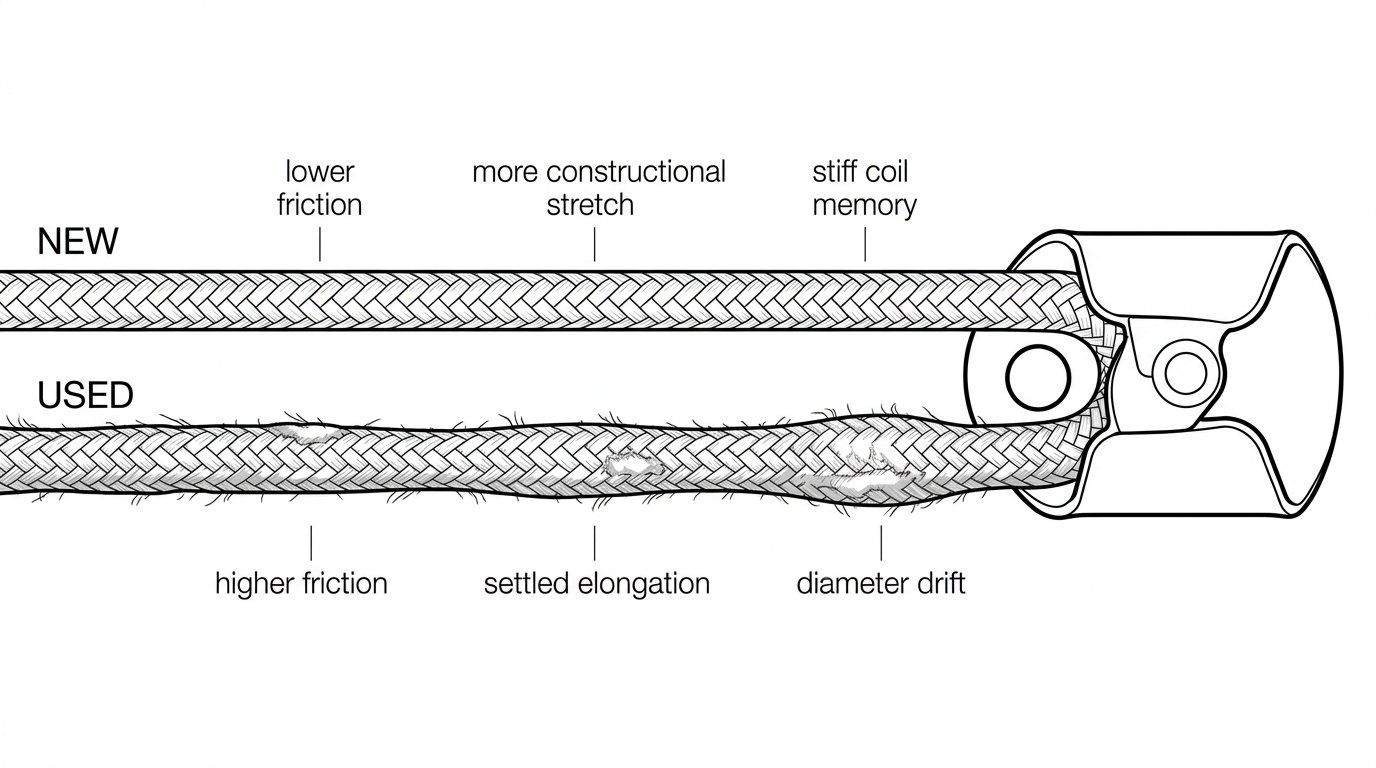
A rope that has been in service for a season does not behave like the one that came out of the bag last week, and the difference shows up in the places that matter most: how fast a descender runs, how far the rope stretches before the load is taken, whether a rope grab bites…
-
Using Pulleys With Small-Diameter Rope or Cord: Sheave Fit, Jamming and System Compatibility
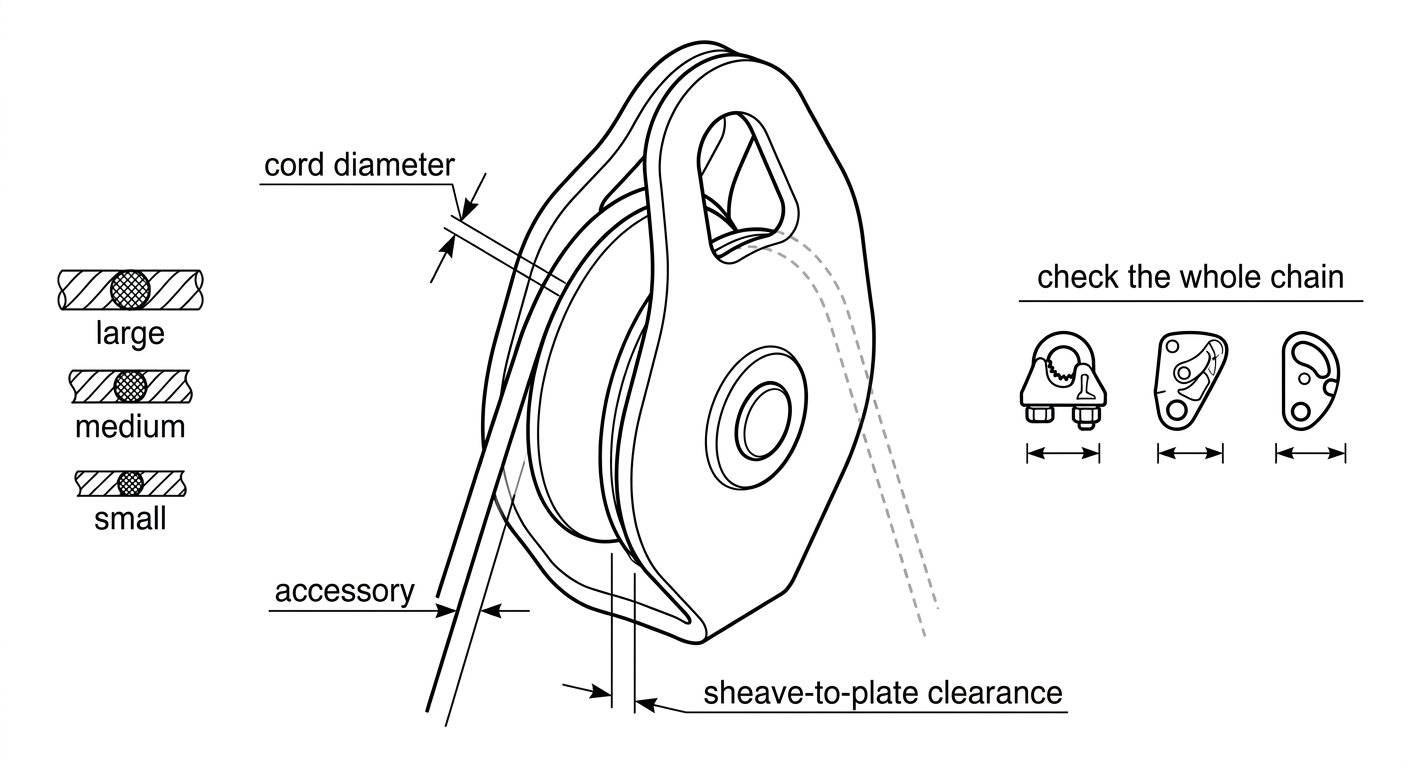
Small cord is convenient. It coils tight, it weighs nothing, and a 100 m spool of 6 mm accessory cord takes up less pack space than 30 m of 11 mm low-stretch rope. That convenience is exactly why it ends up threaded through pulleys that were never designed for it — tool-hoist lines through a…