Safety / Tips and Tricks / Roofing and work at height
Activity 02 · Roofing
Edge Protection Systems: Guardrails, Netting and Personal Fall Protection Compared
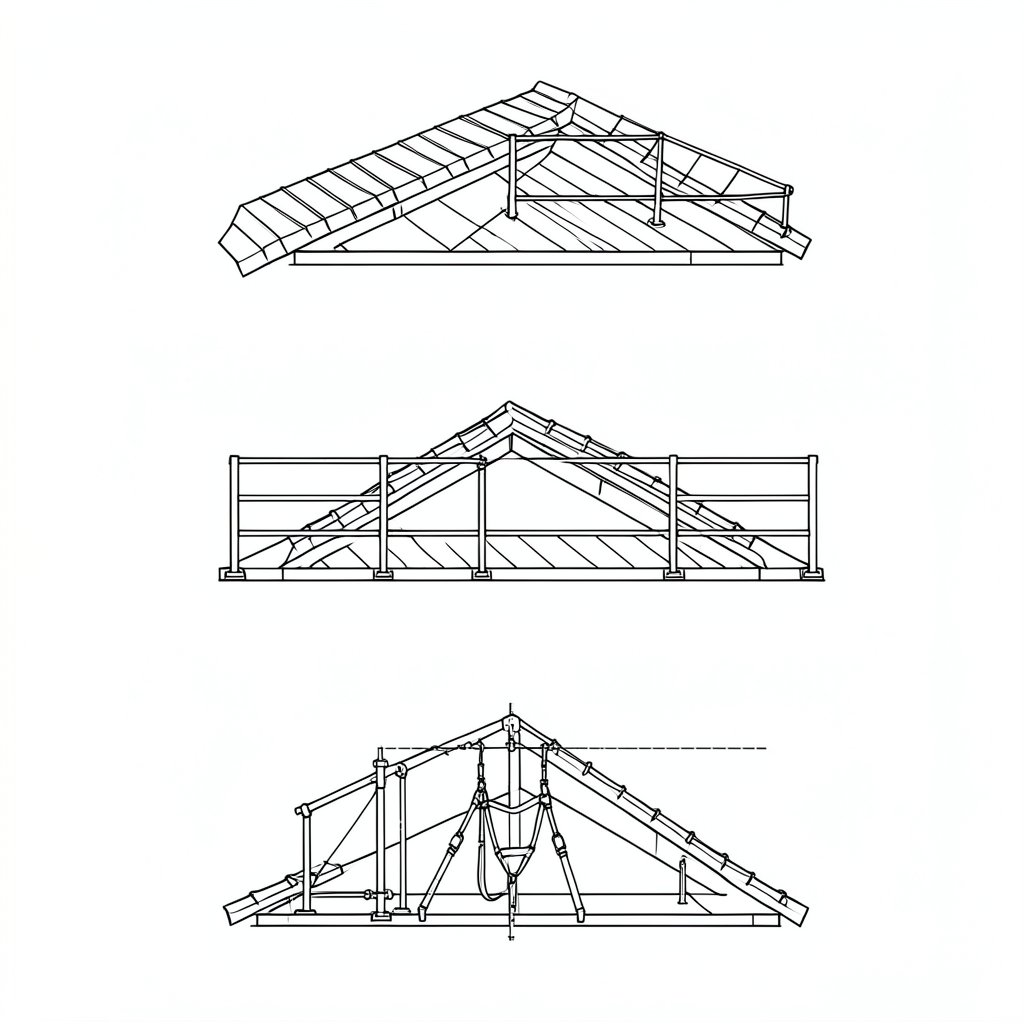
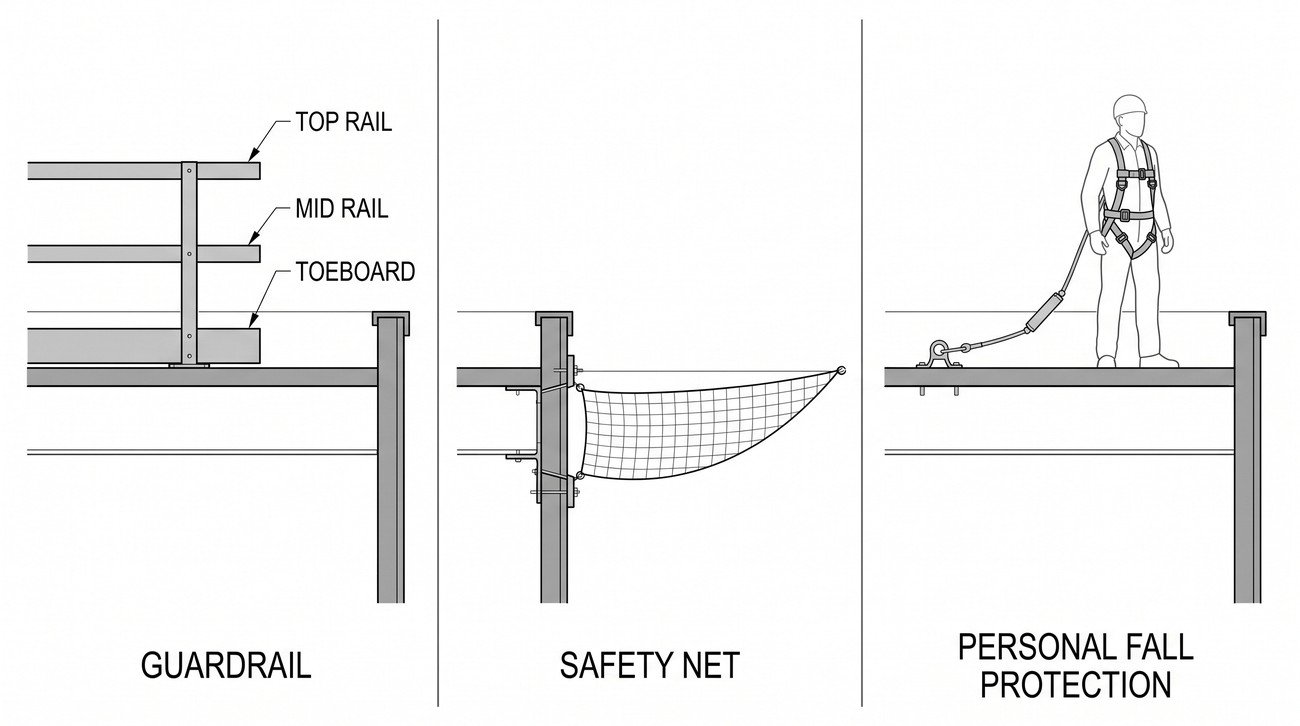
Three fundamentally different approaches protect a roof edge, and they sit in a clear hierarchy: collective protection that works for everyone without any action on their part, collective protection that catches a fall after it starts, and personal protection that depends on each individual using it correctly. Understanding where each one fits changes how a roof-work plan should be built.
Guardrails: the preferred collective control
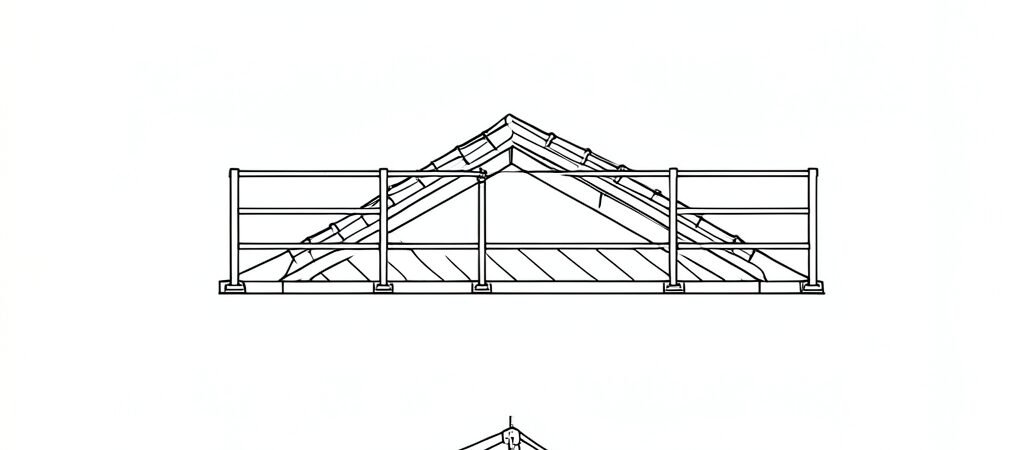
A properly specified guardrail system — top rail, mid rail and toe board, at the correct heights — prevents a fall from occurring at all, and it protects everyone on the roof without requiring any individual action, training or equipment check at the point of use. This makes guardrails the preferred control wherever the roof and the task allow them, particularly for work areas accessed by multiple people or over extended periods, since the protection does not depend on consistent correct behaviour from every individual who crosses the area.
Guardrails need their own installation competence: correct height, adequate fixing into the structure, and a system rated for the loads it may realistically see, including someone falling against it rather than just leaning on it.
Safety netting: catching rather than preventing
Netting positioned below a working area catches a fall rather than preventing it, which places it a step down the hierarchy from guardrails but still above personal fall protection in terms of protecting multiple workers without individual reliance. Netting suits roof structures under construction, where a permanent edge does not yet exist for guardrails to attach to, or large open roof areas where the fall risk is not confined to a single edge. Correct rigging — tension, fixing points and clearance below the net — is critical; netting rigged too loosely or too close to the surface below can fail to prevent a serious injury even though it technically “caught” the fall.
Personal fall protection: the individually-dependent layer
A full body harness meeting EN 361, connected via a lanyard and anchor system, protects only the person using it, and only if they select the right configuration, inspect their equipment, clip in correctly and maintain that connection throughout the task. This makes it the most flexible option — it can be set up for almost any roof configuration — but also the least forgiving of a single lapse, since there is no collective backup if one person’s connection is wrong.
Personal fall protection is the right choice where collective measures genuinely cannot be installed: short-duration access, roof geometries that do not support guardrails or netting, or tasks that move across the roof faster than a fixed collective system could reasonably follow.
Choosing between them
The selection should start from the top of the hierarchy and only move down where the option above is genuinely not achievable, not from convenience or familiarity with a particular method. A roof accessed regularly for maintenance justifies the investment in permanent guardrails; a one-off short task on an awkward roof section may only be practical with personal fall protection. The task and the roof decide the answer, not a default habit.
For the anchor points personal fall protection depends on, see selecting a roof anchor system.
Common errors
1Defaulting to personal fall protection because it is the equipment already on hand, without checking whether guardrails were actually achievable.
2Rigging safety netting with inadequate tension or clearance below it.
3Installing guardrails without confirming the fixing points can take the load of an actual fall against them, not just a lean.
4Treating personal fall protection as equally protective as a collective system for a multi-person, extended-duration task.
Frequently asked questions
Why are guardrails preferred over personal fall protection where both are possible?
Guardrails prevent a fall from occurring at all and protect everyone on the roof without requiring individual training, equipment checks or correct use at the point of access, unlike personal fall protection which depends on each person using it correctly.
What is the main risk with safety netting if it is not rigged correctly?
Netting rigged with inadequate tension or clearance below it can fail to prevent a serious injury even though it technically catches the fall, so correct rigging is as important as the netting's presence.
When is personal fall protection the right choice over collective measures?
Where guardrails or netting genuinely cannot be installed – short-duration access, roof geometries that do not support collective systems, or tasks moving across the roof faster than a fixed system could follow.
What should determine the choice between these three edge protection methods?
The task and the roof itself, starting from guardrails at the top of the hierarchy and only moving to netting or personal protection where the option above is genuinely not achievable.
Why is personal fall protection described as the least forgiving option?
It protects only the individual using it, and only if that person selects the right configuration, inspects their equipment and maintains the connection throughout – there is no collective backup for a single lapse.
Need this as a document you can issue? The template library gives you the risk assessments, permits and inspection logs in editable form — and employer plans cover a whole team with completion records.