Safety / Tips and Tricks / Rope access and confined space
Activity 01 · Rope access
Accompanied Descent Rescue: How the Manoeuvre Works and What the Equipment Has to Withstand
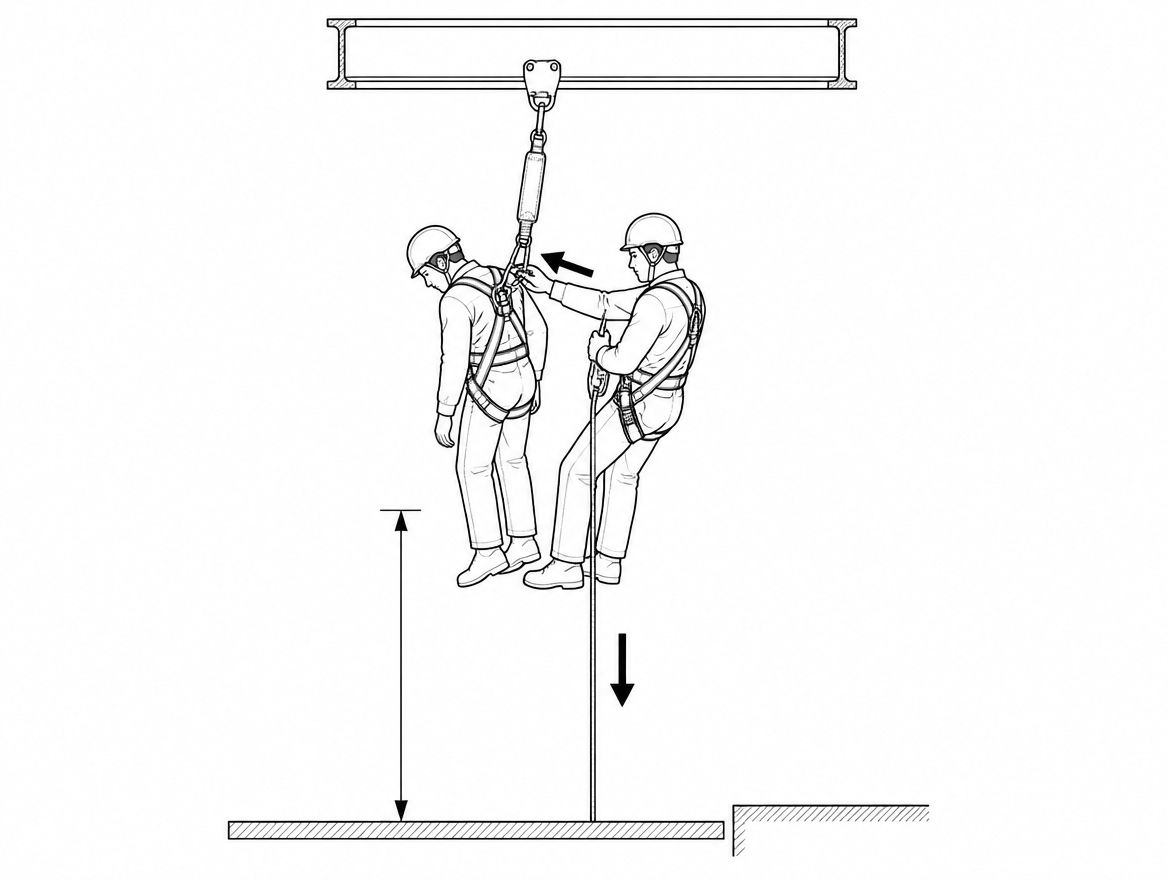
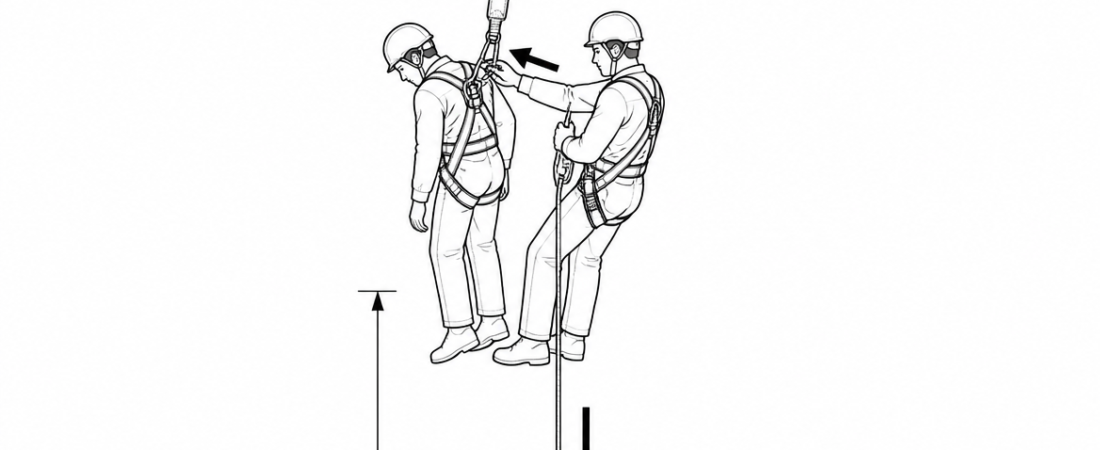
When a worker is suspended in a harness after a fall arrest, or is conscious but unable to descend under their own power, the rescue method that most often applies is an accompanied descent : a rescuer reaches the casualty, transfers the casualty's weight onto a rescue rope system, connects the casualty directly to their own harness, and descends with them under control to a place of safety. It is the workhorse technique for towers, masts, wind turbine nacelles and external ladders, façade and roof edges, silos and confined vertical spaces — anywhere a raising system is impractical and a straight lower from above cannot be set up quickly.
The manoeuvre is simple to describe and unforgiving in the details. Almost everything that goes wrong with it comes from one of three places: equipment that was only ever rated for one person, a casualty attachment that leaves the airway or the legs in a bad position, or a team that has read the method but never performed it against a clock.
What accompanied descent rescue is, and what it is not
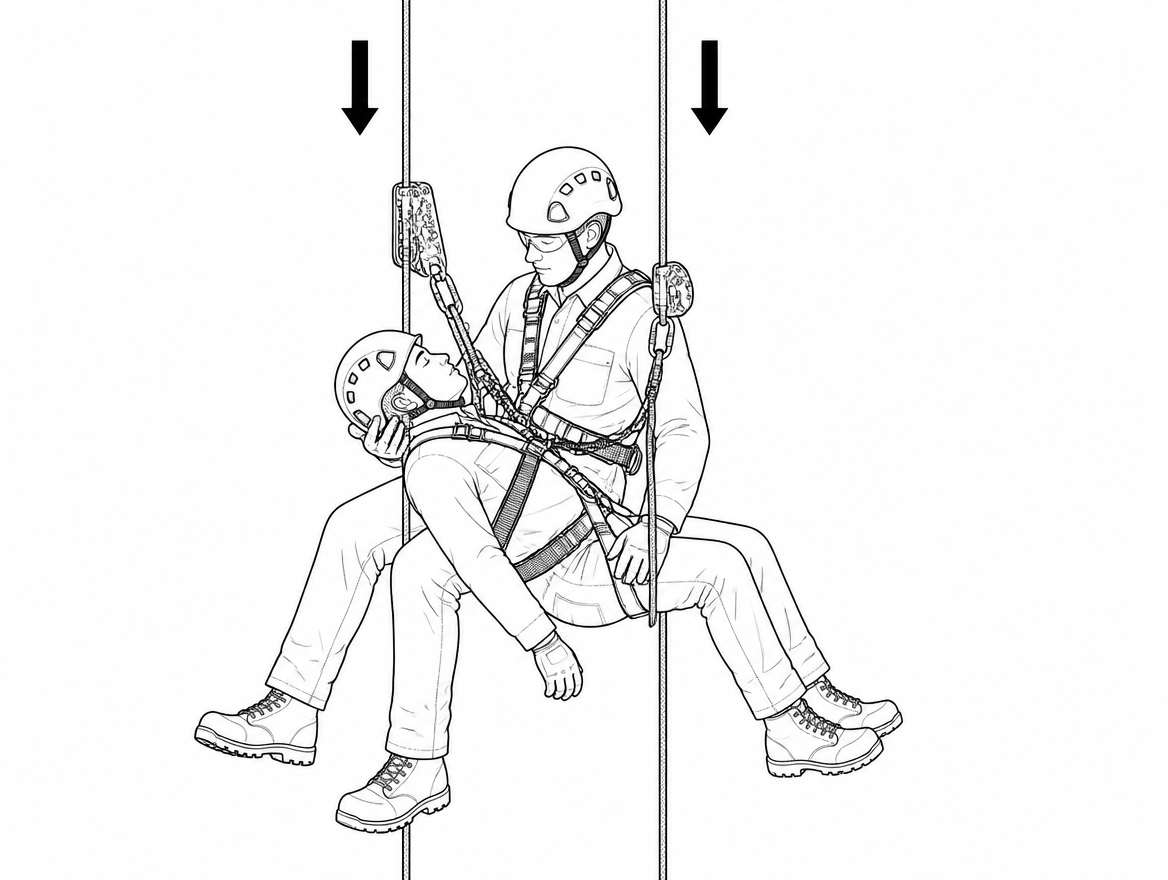
In an accompanied descent, the rescuer is on the descent line and the casualty is suspended from the rescuer. The rescuer controls the rate of descent from the rope, sees the casualty throughout, and can manage obstructions, edges and the landing.
It is distinct from two other methods that are often confused with it:
- Controlled lowering from above. The casualty descends alone on a rope controlled by an operator at the anchor. Faster to rig if the operator already has access to the anchor, but nobody is beside the casualty to clear obstructions, support the head, or free a snagged lanyard.
- Assisted raising. The casualty is lifted, typically with a rescue lifting device conforming to EN 1496, often integrated with a fall arrest block. Appropriate where the casualty must clear an edge or a hatch and the vertical distance is short.
Rescue systems as a whole sit under EN 363, which describes how the individual components combine into a functioning personal fall protection or rescue system. Accompanied descent is a rescue system in that sense — not a working-at-height system pressed into service, and not a set of loose components assembled on the day.
The two-person load is the design problem
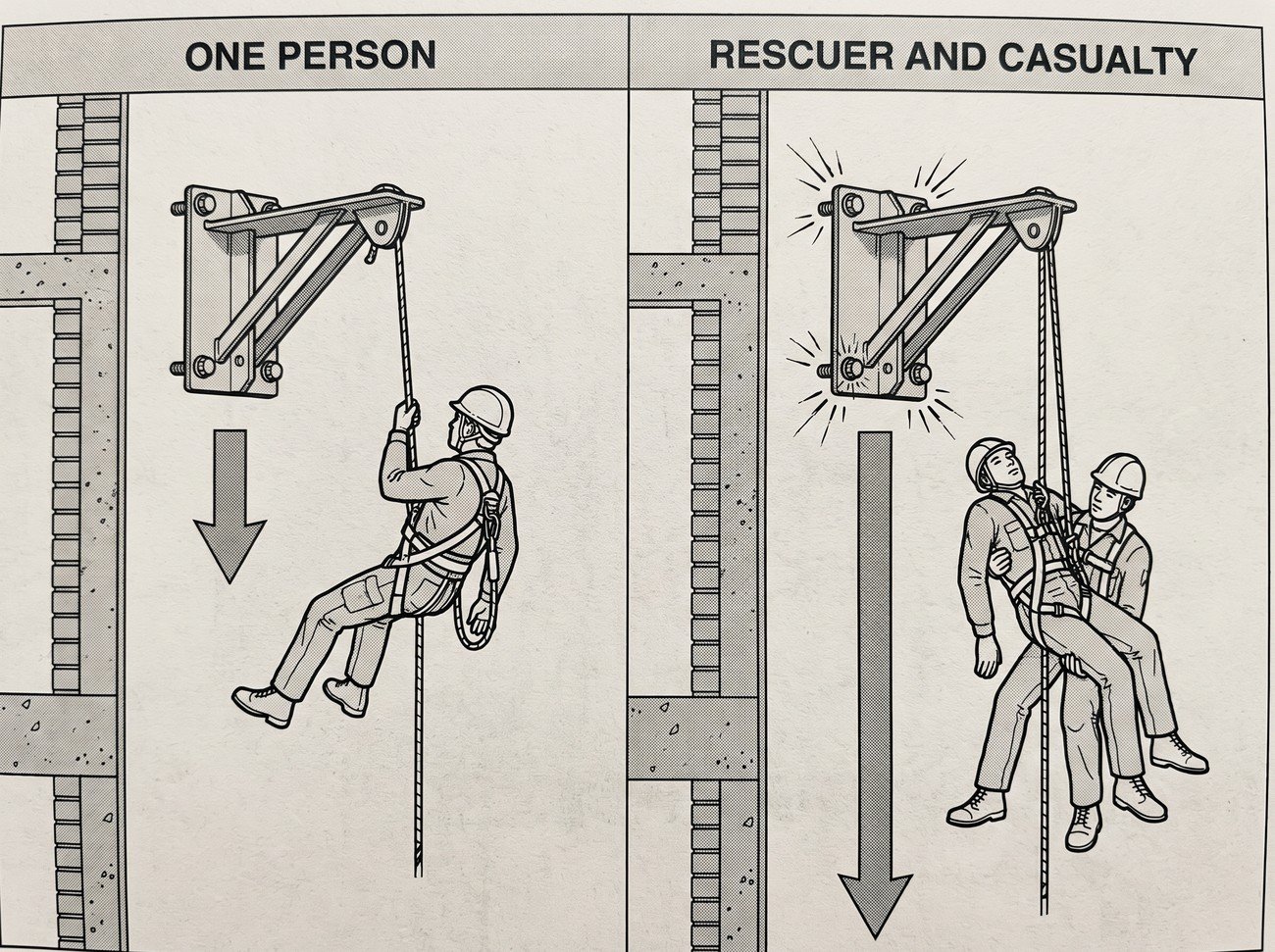
The rescuer plus the casualty plus their tools, PPE and any adhering water, ice or product can easily exceed 200 kg. Almost every certification a crew handles day to day is written around a single person.
Descender device
The controlling device should be a descender device for rescue conforming to EN 341. EN 341 classifies devices (Classes A to D) by the total descent energy they can handle — in effect, mass multiplied by descent height multiplied by the number of descents — and each device is marked with its rated load range and maximum permitted descent height. Two figures in the instructions for use decide whether a device is suitable for accompanied descent at all: the maximum rated load, and whether the manufacturer explicitly permits a two-person load.
A descender certified as a rope adjustment device for descent to EN 12841 Type C is designed around single-person rope access work. Some products carry both certifications and state a higher rescue load; many do not. The certification on the shell does not answer the question — the instructions for use do.
Anchor
EN 795 covers anchor devices in Types A to E, but it tests them for use by one person. Where an anchor device will hold two people simultaneously, the reference point is CEN/TS 16415, the technical specification for anchor devices used by more than one person at the same time. Structural anchors that are part of the building or plant should be verified by calculation for the combined load, not assumed adequate because a single worker has used them for years.
Rope, connectors and backup
- Rope: low-stretch kernmantle rope to EN 1891, Type A for rescue and general access loads, in a diameter the descender’s instructions list as compatible. Descender performance is diameter-dependent; a rope 1 mm outside the stated range changes the braking behaviour.
- Connectors: locking connectors to EN 362, of a class appropriate to the attachment (for example a screwgate or triple-action gate that cannot be opened by rope movement or by contact with the casualty).
- Backup: a second, independent line with a backup device to EN 12841 Type A, on a separate anchor point where the structure allows. As with the descender, the backup device’s rated load must cover the combined mass.
- Edge protection: rope protectors or a rope-friendly edge roller at every point where the loaded rope crosses steelwork, a parapet, glazing bead or cut sheet metal. A two-person load presses the rope into an edge with roughly double the force of a single user.
Harnesses and the casualty attachment
The rescuer works from a full body harness to EN 361, generally combined with a sit harness or low attachment point to EN 813 for suspended work, since a work positioning belt to EN 358 is not intended to hold a suspended load. The casualty is normally taken on their existing EN 361 harness. Where a casualty must be recovered in a supported, near-upright posture, a rescue harness to EN 1497 or a rescue loop to EN 1498 is the purpose-designed option, and both are worth pre-positioning on sites where unconscious recovery from a confined vertical space is foreseeable.
The connection between the two people — a short adjustable link or dedicated rescue sling from the rescuer’s harness to the casualty’s sternal or dorsal attachment — sets the whole geometry of the descent. Too long, and the casualty hangs below the rescuer’s feet, out of reach, with the head unsupported and no way to manage a landing. Correctly adjusted, the casualty’s chest sits just below the rescuer’s, close enough that the rescuer can check breathing, support the head, and take the casualty’s feet onto the ground first.
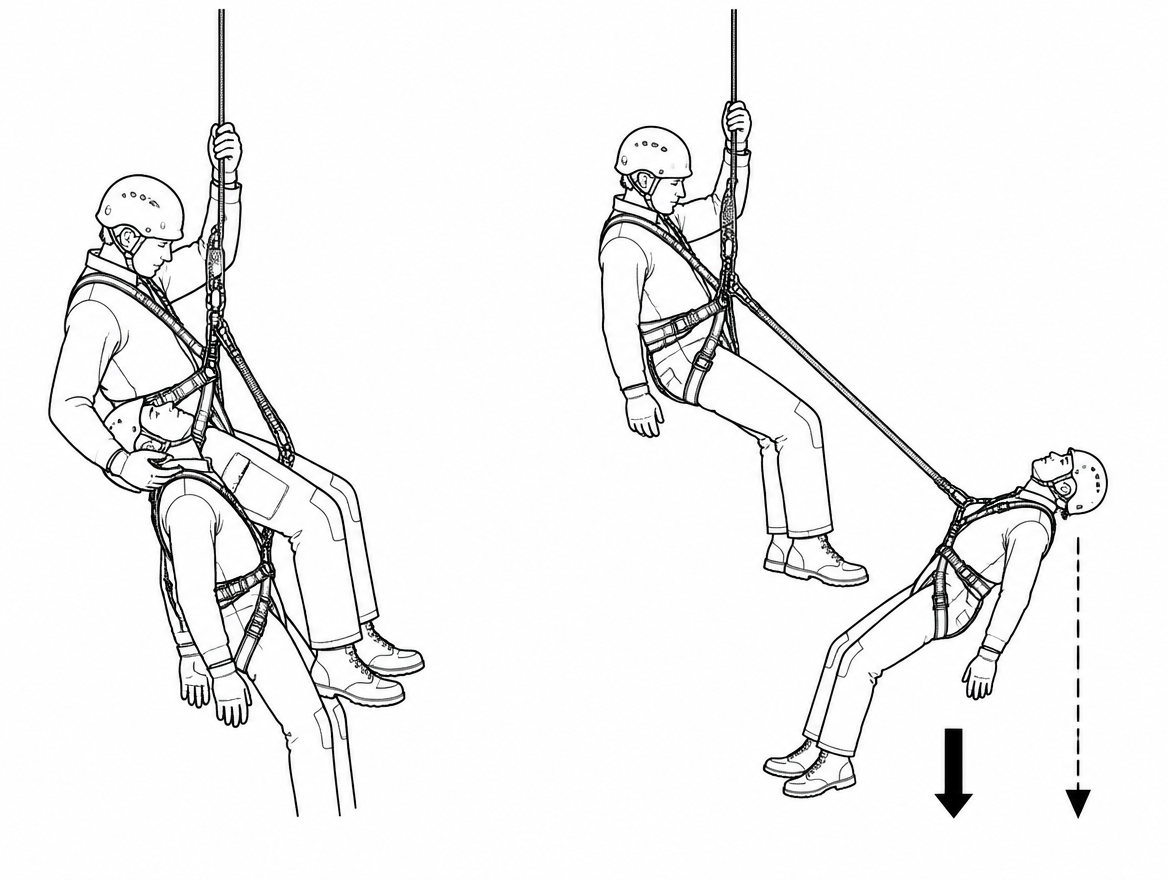
Sequence of the manoeuvre
The following is the general order of operations. It does not replace the manufacturer’s instructions for the specific descender and backup device, nor site-specific method statements.
- Confirm the descent path and the landing. Obstructions, live conductors, hot surfaces, moving plant, and a clear area at ground level with a person controlling it.
- Rig the descent line and the backup line to anchors verified for a two-person load, with edge protection in place before the ropes are loaded.
- Reach the casualty and get secured first. The rescuer is fully attached to the descent and backup systems, hands free, before touching the casualty. A rescuer who is not independently secured has converted a one-casualty incident into a two-casualty incident.
- Assess the casualty. Responsiveness, airway, breathing, obvious entrapment, and whether the harness is loaded correctly or has ridden up.
- Connect the casualty to the rescuer’s harness with the rescue link, adjusted short. Verify gate closure and that the link is loaded along its major axis.
- Transfer the load. Take the casualty’s weight onto the rescue system — raising slightly with the descender or a short haul if needed — until the casualty’s lanyard or fall arrest device is visibly slack.
- Release the casualty from the original system. Only after the transfer is confirmed and the slack is visible. A deployed energy absorber or an arrested fall arrest block is now damaged goods; it is withdrawn from service, not re-used.
- Descend at a controlled rate, within the descender’s stated speed and descent-height limits, protecting the casualty from the structure and keeping the head supported.
- Land the casualty feet-first and lower them onto their back, with the rescuer taking the weight, before disconnecting.
- Hand over. A clear account of what happened, how long the casualty was suspended, and what equipment has been removed from service.
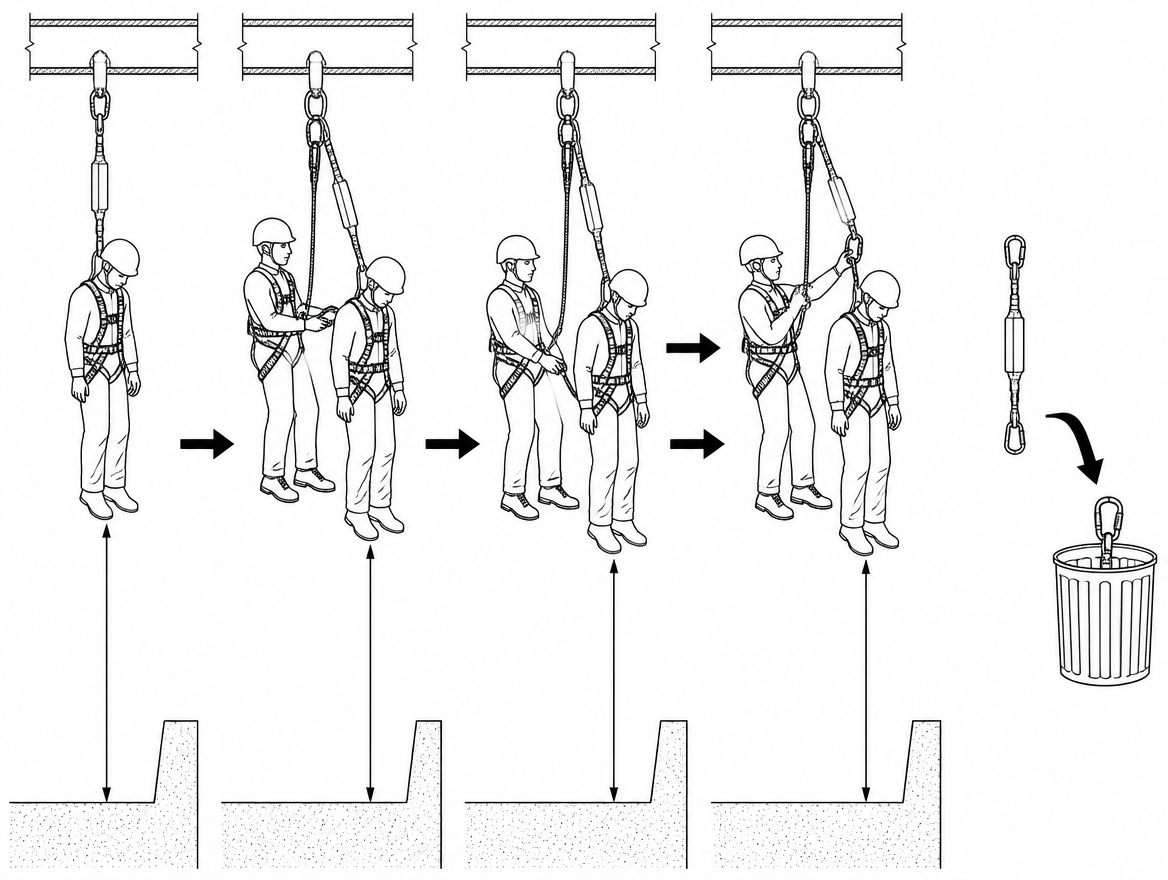
Suspension time and casualty handling on the ground
Prolonged motionless suspension in a harness is associated with orthostatic intolerance — suspension syncope — and there is no published “safe” suspension duration that a rescue plan can rely on. The practical conclusion is that the plan is judged on how quickly it delivers the casualty to the ground, which is why timed drills matter more than the written procedure’s completeness.
Post-rescue handling has changed, and older training material still circulates. The long-standing advice to keep a rescued casualty sitting upright to avoid “rescue death” was reviewed by HSE research (Research Report RR708) and was not supported by the evidence; the recommendation is to lay the casualty down and treat them as any other collapsed casualty, with medical assessment arranged. Site first-aid arrangements and rescue briefings should reflect the current position rather than the older precaution.
Casualty condition also decides whether accompanied descent is the right method at all. A casualty with a suspected spinal injury, significant entrapment, or one who cannot be brought into a supported posture may need a different approach and specialist attendance — the rescue plan should say who makes that call and how they are contacted.
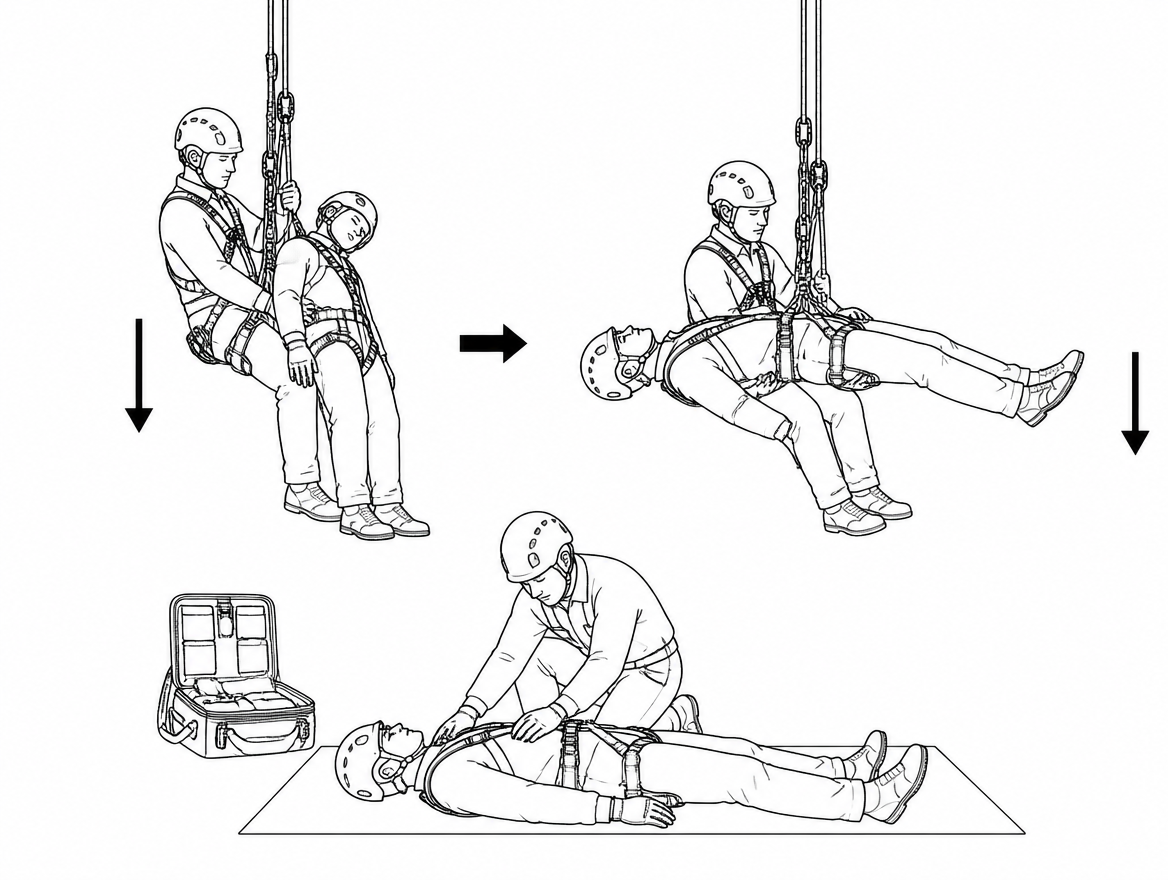
Where accompanied descent belongs in the rescue plan
ISO 45001 requires organisations to establish and test processes to prepare for and respond to potential emergencies (clause 8.2) and to ensure the competence of the people involved (clause 7.2). For work at height, a rescue plan that satisfies that in practice generally covers:
- Which method applies at each identified work position — self-rescue, assisted raising, lowering from above, or accompanied descent — rather than a single generic statement.
- Where the rescue kit is stored, who holds the key, and how long it takes to bring it to the work position.
- The verified anchor points available for a two-person load at that position.
- Named, currently trained rescuers on shift, with a minimum number below which the task does not start.
- The means of raising the alarm from the work position, including where mobile coverage is unreliable.
- Realistic drill intervals with recorded times, using the actual structure and the actual kit — including at least one drill where the casualty is a dead weight rather than a cooperating colleague.
Inspection and record keeping
EN 365 sets out the general requirements for instructions for use, maintenance, periodic examination, repair and marking of personal fall protection equipment, including periodic examination by a competent person at intervals of no more than 12 months, more frequently where use, environment or the manufacturer’s instructions require it. Rescue kit that sits in a sealed bag for years is easy to overlook precisely because it is never used: descender braking surfaces, rope sheath condition at the points that always cross the edge, and connector gate action all need to be examined and recorded on schedule, not checked for the first time during an incident.
Pre-use checks belong to the rescuer, immediately before deployment: rope diameter matches the descender, device threaded correctly and function-tested under body weight, backup device running on the safety line, connectors locked, rescue link adjusted and within reach.
Concrete takeaway
Before an accompanied descent is written into any method statement, three documents should be on the table: the descender’s instructions for use (to confirm the permitted two-person load, compatible rope diameter, maximum descent height and descent speed), the anchor documentation or structural calculation covering simultaneous use by two people, and the drill record showing how long the crew actually took on that structure. If any of the three is missing, the plan has not yet been verified — it has only been described.
Next step: review the rescue section of the risk assessment for each work position where a suspended casualty is foreseeable, and confirm that the method named there matches the anchors and the descender that are physically on site.
Frequently asked questions
What is an accompanied descent rescue?
It is a rescue in which the rescuer reaches the casualty, transfers the casualty's weight onto a rescue rope system, connects the casualty directly to their own harness, and descends with them under control to a place of safety. The rescuer is on the descent line, controls the rate of descent from the rope, sees the casualty throughout, and can manage obstructions, edges and the landing.
How does it differ from lowering from above or assisted raising?
In a controlled lowering from above, the casualty descends alone on a rope controlled by an operator at the anchor; it is faster to rig if the operator already has anchor access, but nobody is beside the casualty to clear obstructions, support the head or free a snagged lanyard. Assisted raising lifts the casualty, typically with a rescue lifting device conforming to EN 1496 often integrated with a fall arrest block, and suits cases where the casualty must clear an edge or hatch over a short vertical distance.
Why is the two-person load the central design problem?
The rescuer plus the casualty plus tools, PPE and any adhering water, ice or product can easily exceed 200 kg, yet almost every certification a crew handles day to day is written around a single person. Two figures in the instructions for use decide whether a descender is suitable at all: the maximum rated load, and whether the manufacturer explicitly permits a two-person load. The certification on the shell does not answer that question — the instructions for use do.
Is an anchor tested to EN 795 sufficient for two people?
No. EN 795 covers anchor devices in Types A to E but tests them for use by one person. Where an anchor device will hold two people simultaneously, the reference point is CEN/TS 16415, the technical specification for anchor devices used by more than one person at the same time. Structural anchors forming part of the building or plant should be verified by calculation for the combined load, not assumed adequate because a single worker has used them for years.
What rope, backup and edge protection does the article specify?
Low-stretch kernmantle rope to EN 1891, Type A for rescue and general access loads, in a diameter the descender's instructions list as compatible — descender performance is diameter-dependent, and a rope 1 mm outside the stated range changes the braking behaviour. Connectors should be locking types to EN 362 that cannot be opened by rope movement or contact with the casualty. The backup is a second, independent line with a device to EN 12841 Type A on a separate anchor point where the structure allows, rated for the combined mass, plus rope protectors or a rope-friendly edge roller wherever the loaded rope crosses steelwork, a parapet, glazing bead or cut sheet metal, since a two-person load presses the rope into an edge with roughly double the force of a single user.
Need this as a document you can issue? The template library gives you the risk assessments, permits and inspection logs in editable form — and employer plans cover a whole team with completion records.