
Latest posts
-
General Principles for Work at Height: The Order of Decisions Before You Rig
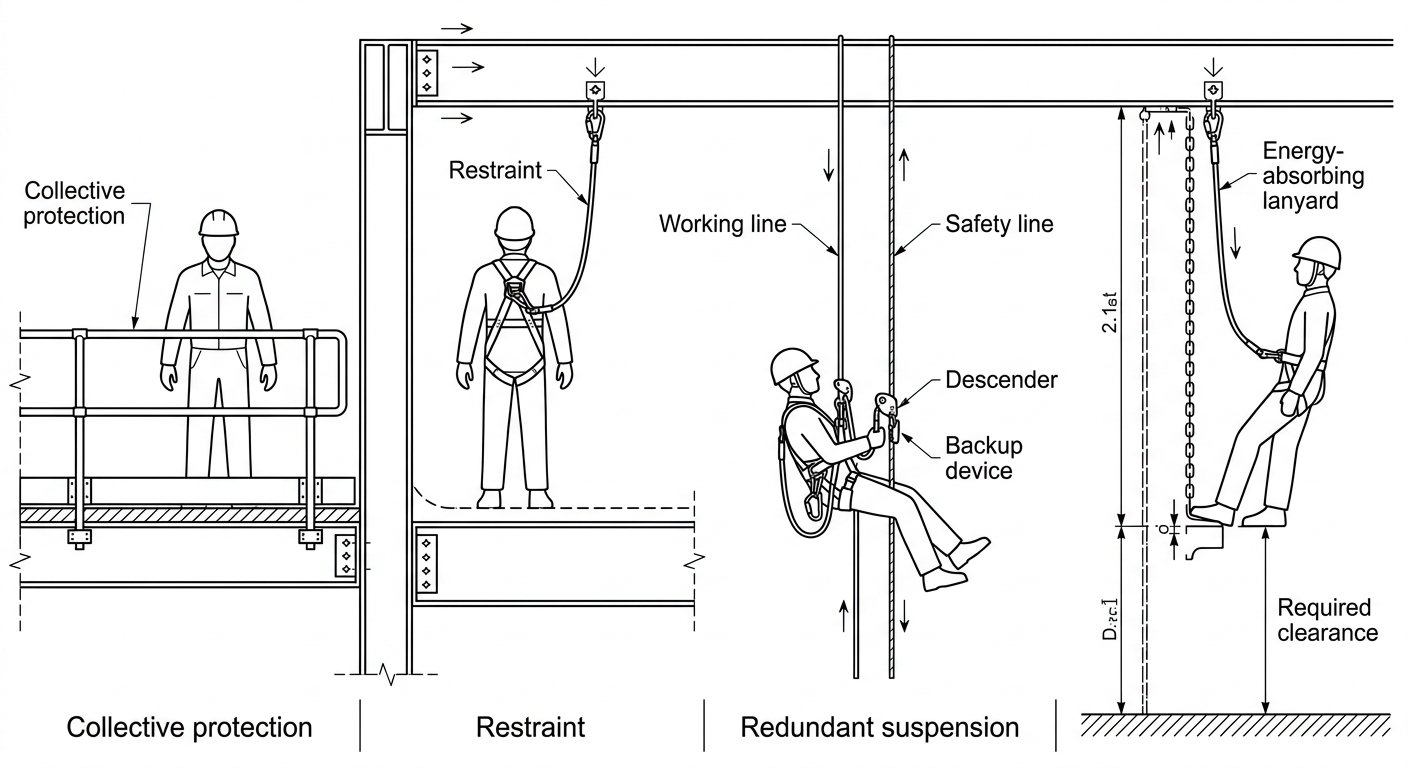
Most work-at-height failures are not equipment failures. They are ordering failures: someone chose a harness before checking whether the anchor could sit overhead, or chose a lanyard before measuring the clearance below the work position, or planned the access without planning the retrieval. The general principles for work at height exist to fix that order…
-
Energy Absorber Deployment Lengths: What They Mean and How They Change Your Clearance
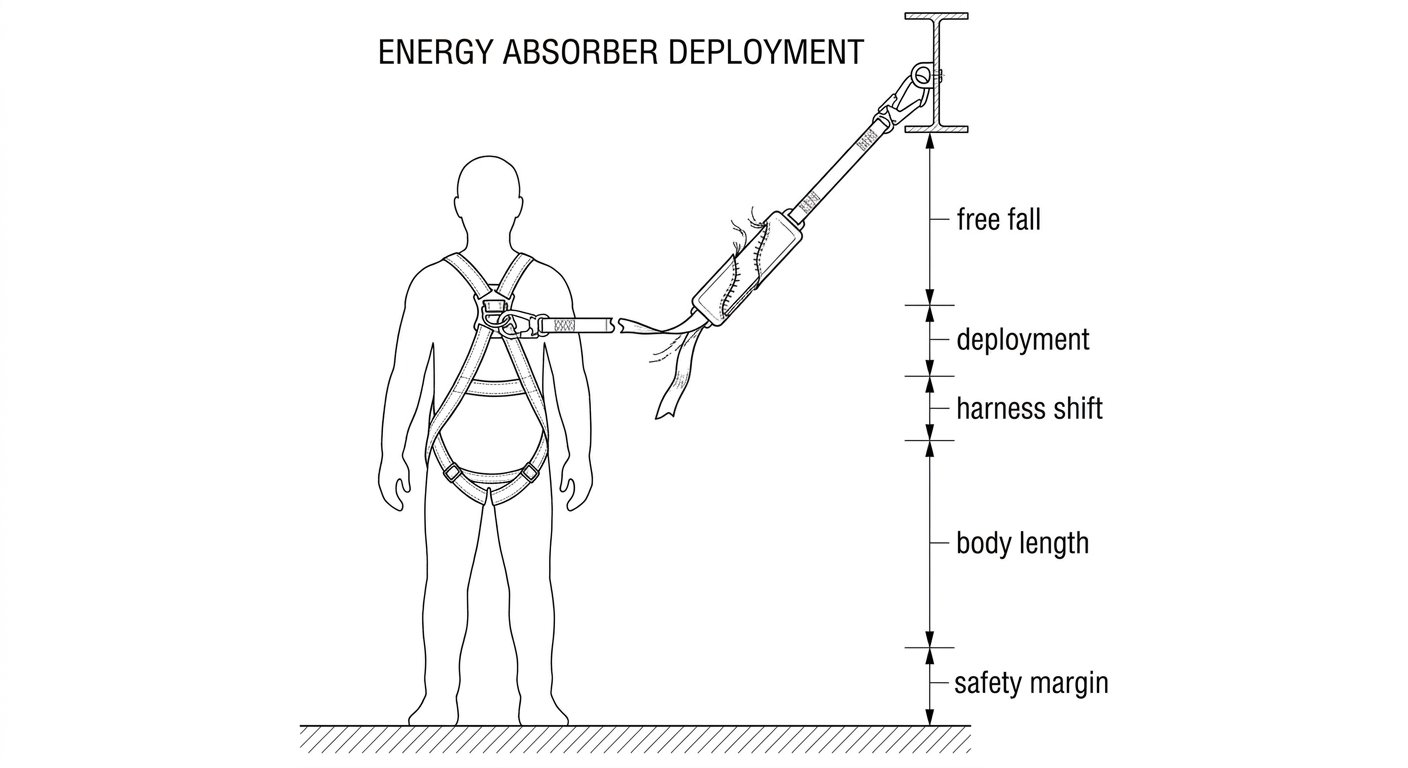
An energy absorber does its job by getting longer. That is the whole mechanism: stitching tears, webbing pays out, and the arrest force on the body is held down to a survivable level. The consequence for anyone planning work at height is that the lanyard length printed on the label is not the space the…
-
Helmet Standards: EN 397 and EN 12492
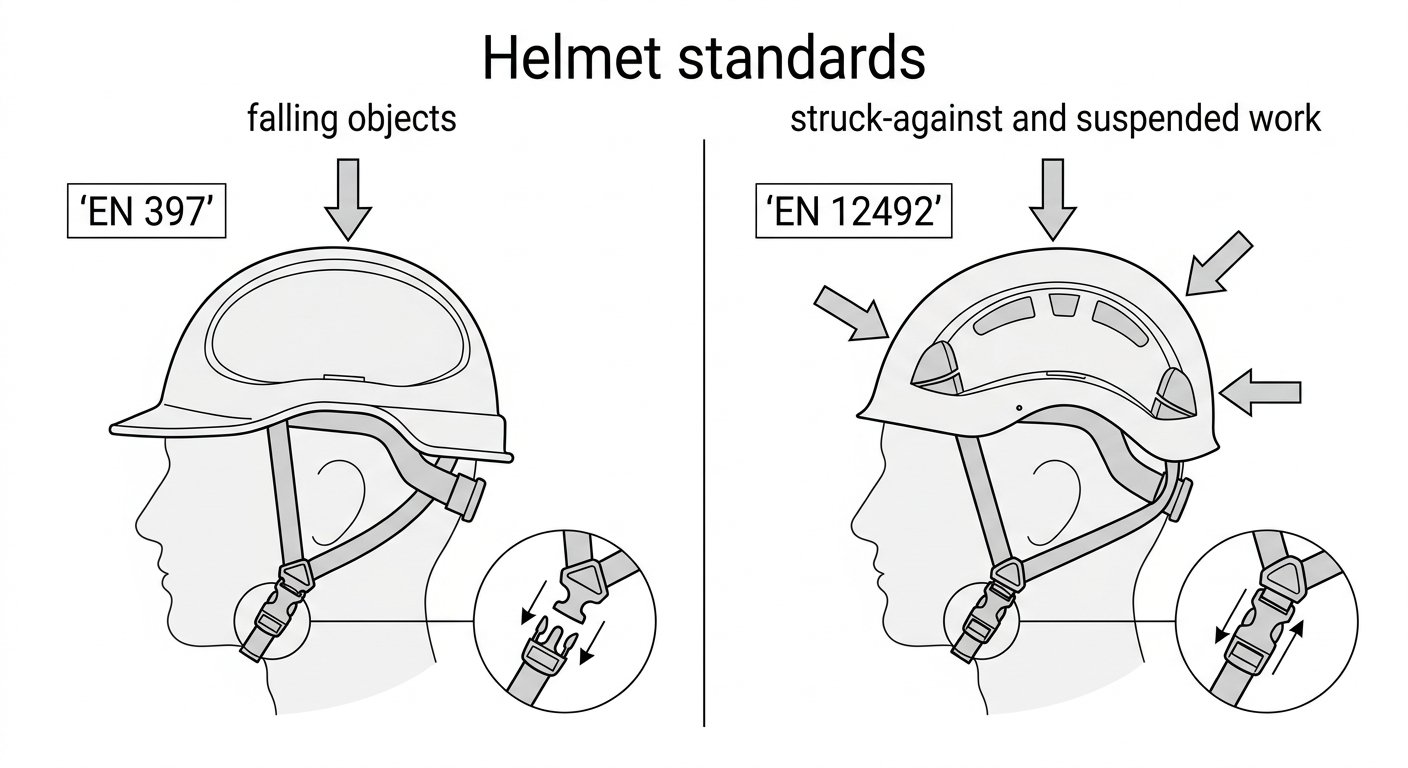
Two helmet standards dominate rope access and confined space work in Europe, and they were written for different accidents. EN 397 is an industrial safety helmet standard built around objects falling onto the head of someone standing below. EN 12492 is a mountaineering helmet standard built around a person who is moving, suspended, or falling…
-
Selecting a Rescue Kit for the Task
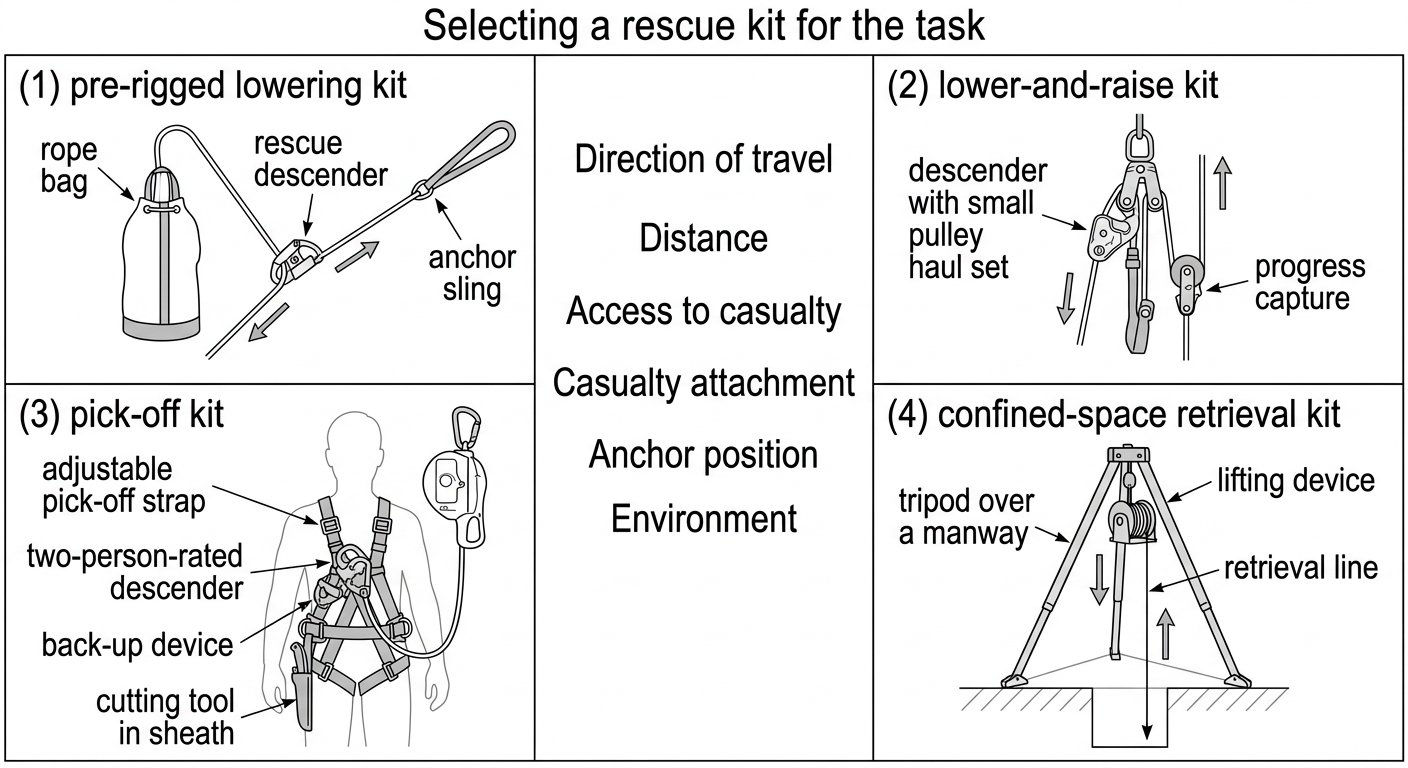
A rescue kit is only useful if it matches the rescue you have actually planned for. The most common failure is not equipment failure – it is a kit that can lower but not raise, a rope that is shorter than the drop, or a retrieval winch bolted to a tripod over a shaft that…
-
Choosing Connectors for Anchor Rigging: Shape, Closure and Correct Loading
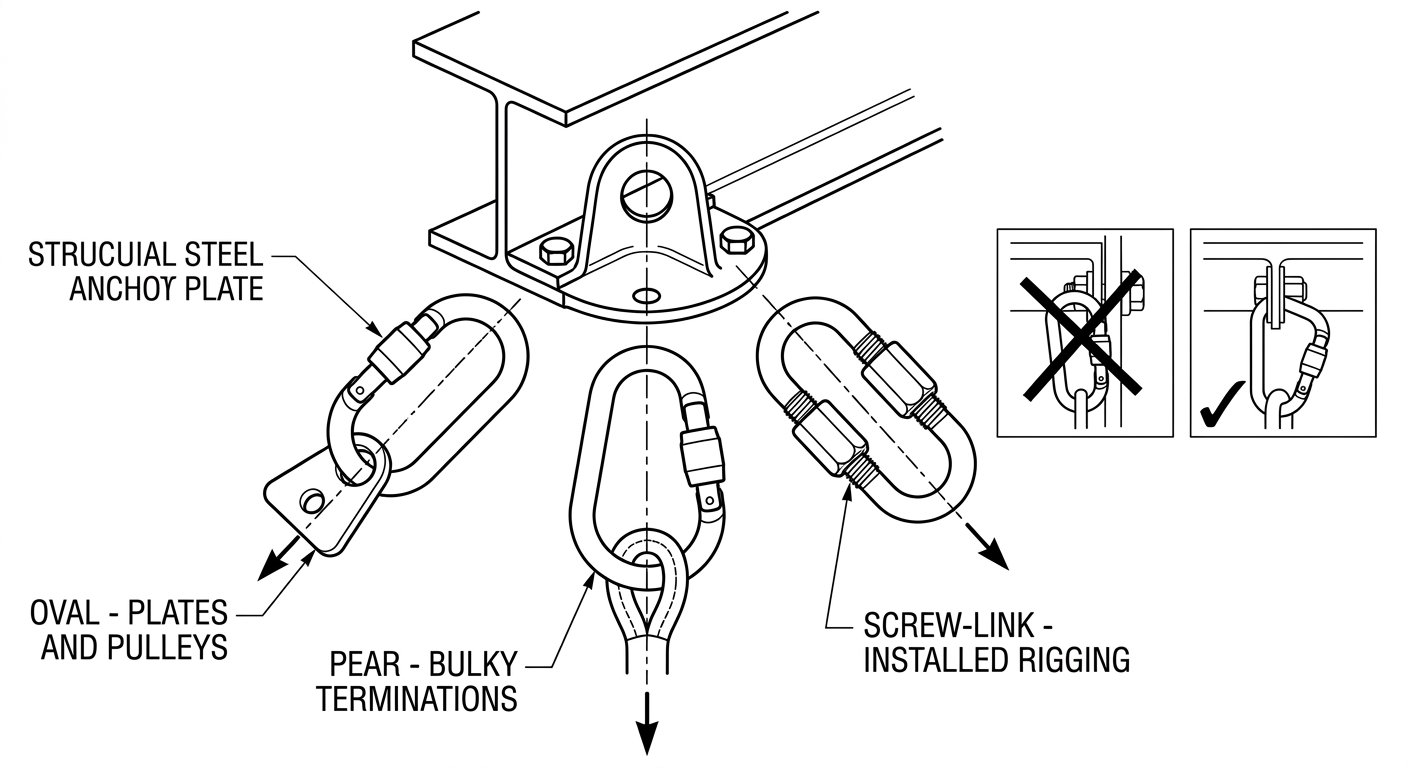
The connector at the anchor end of a system is the one most often chosen by whatever is left on the harness rack, and the one most exposed to being loaded in a way it was never designed for. Anchors are rarely as tidy as the pictures: a connector may end up on a wide…
-
Connecting a Fall-Arrest Lanyard to the Harness
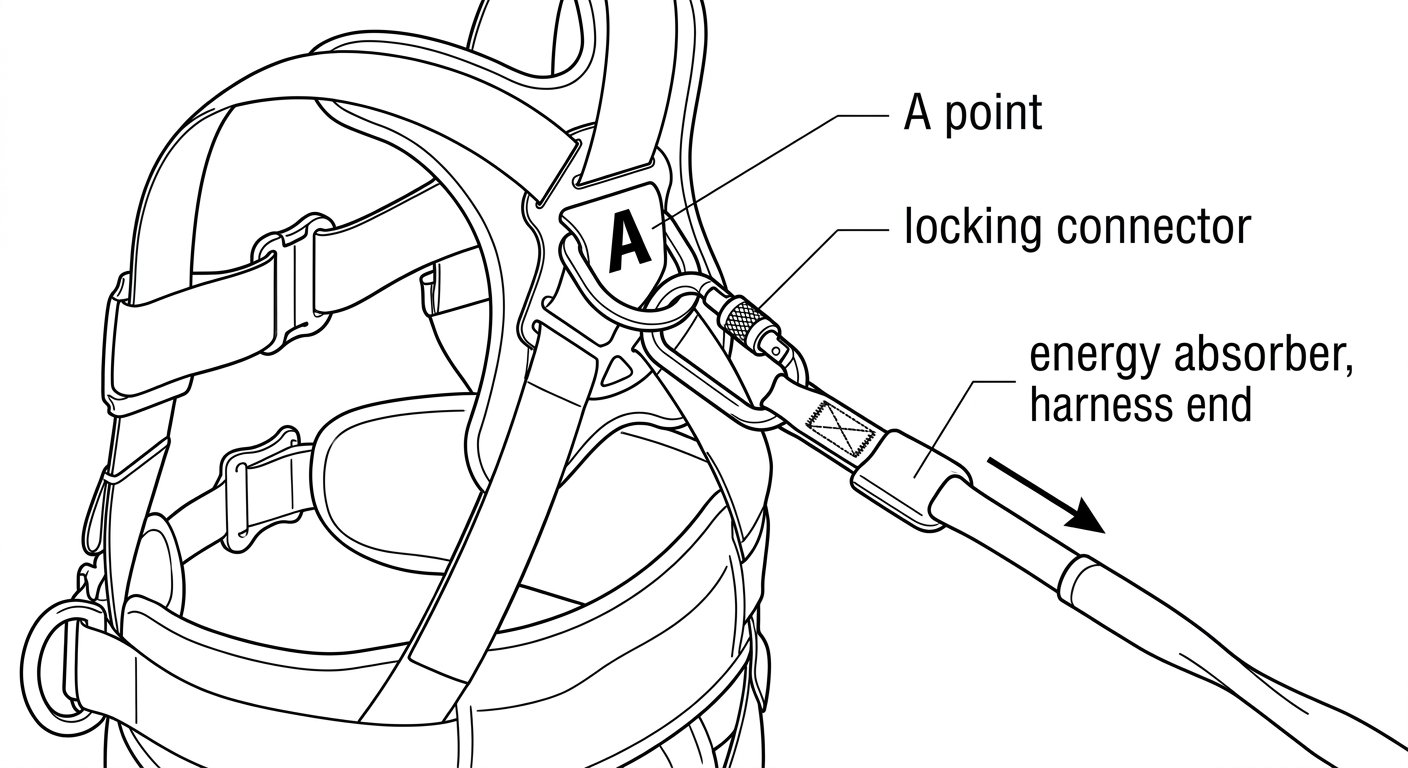
The connection between a lanyard and a harness is the one link in a fall-arrest system that the user makes and unmakes by hand, several times a shift, often in awkward positions and poor light. It is also the link most likely to fail silently: the system looks connected, the worker feels connected, but the…
-
Lanyard-End Connector for Fall Arrest: Gate Opening, Roll-Out and Correct Loading
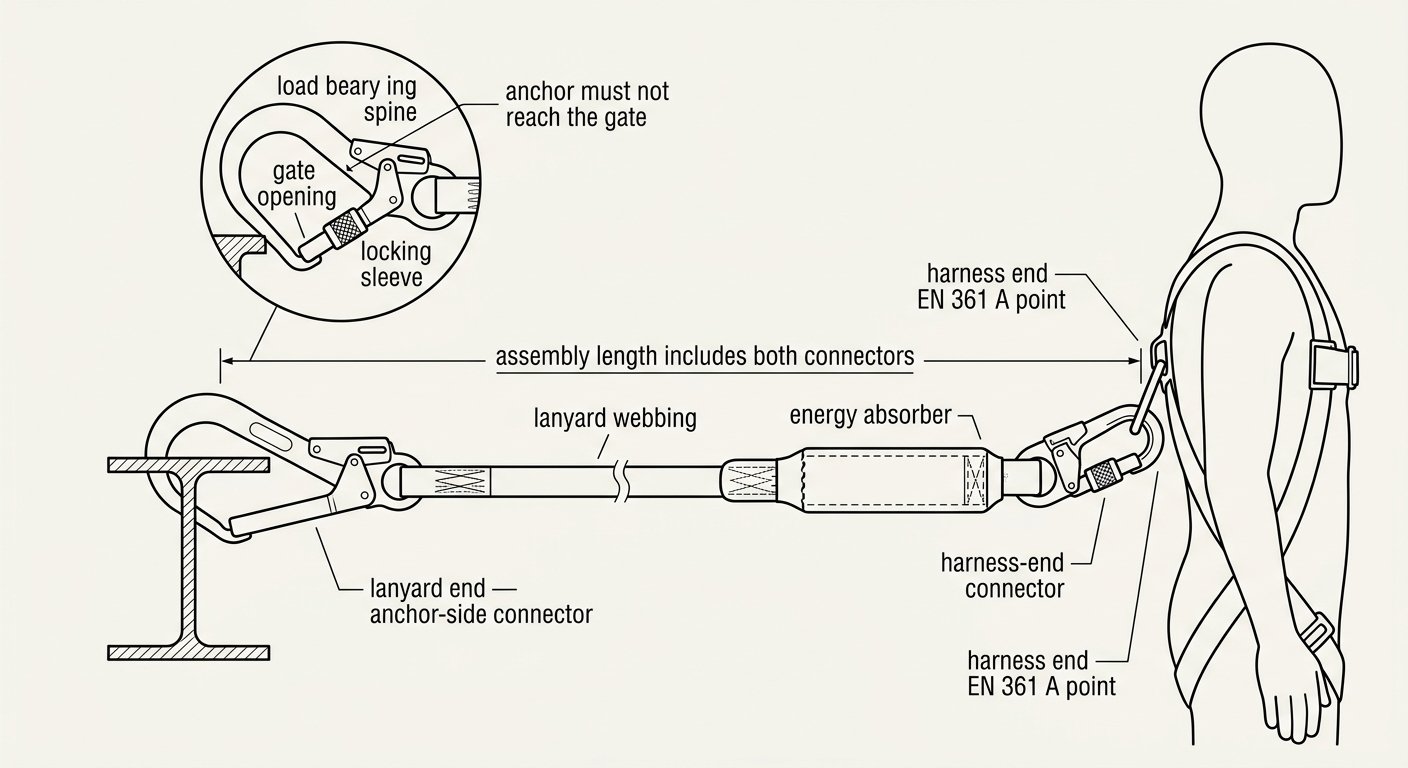
On a fall-arrest lanyard, the connector at the anchor end does more work than any other component in the assembly. It is the part that gets clipped and unclipped dozens of times a shift, the part that has to fit whatever structural member is actually available on site, and the part most likely to be…
-
Adjusting a Full Body Harness Correctly: Fit, Checks and Common Errors
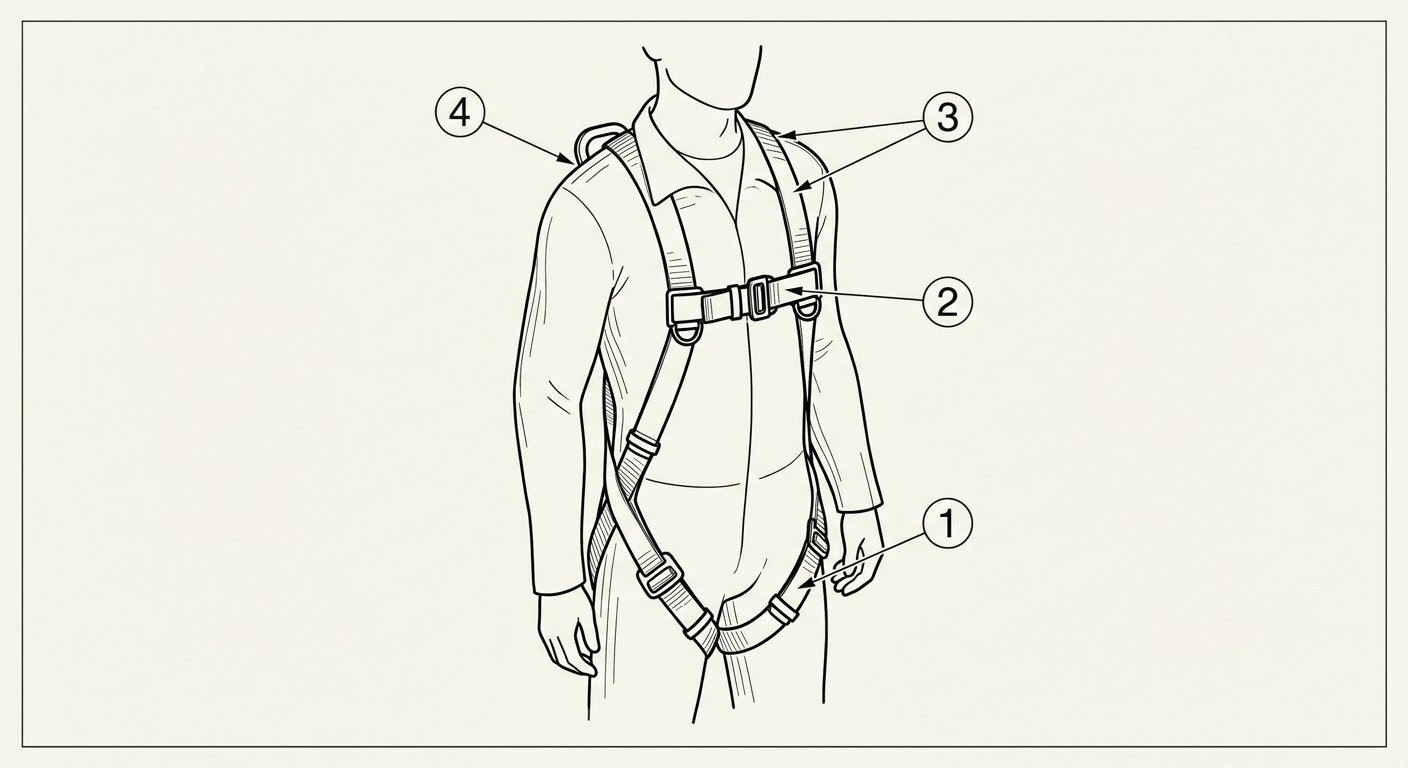
A full body harness only performs as designed if it is adjusted to the person wearing it. The same harness, on the same worker, can be either a functioning fall arrest system or a loose assembly of webbing that shifts under load, depending on five minutes of setup at the start of the shift. Adjustment…
-
Choosing a Connector for a Descender: Locking, Compatibility and Correct Loading
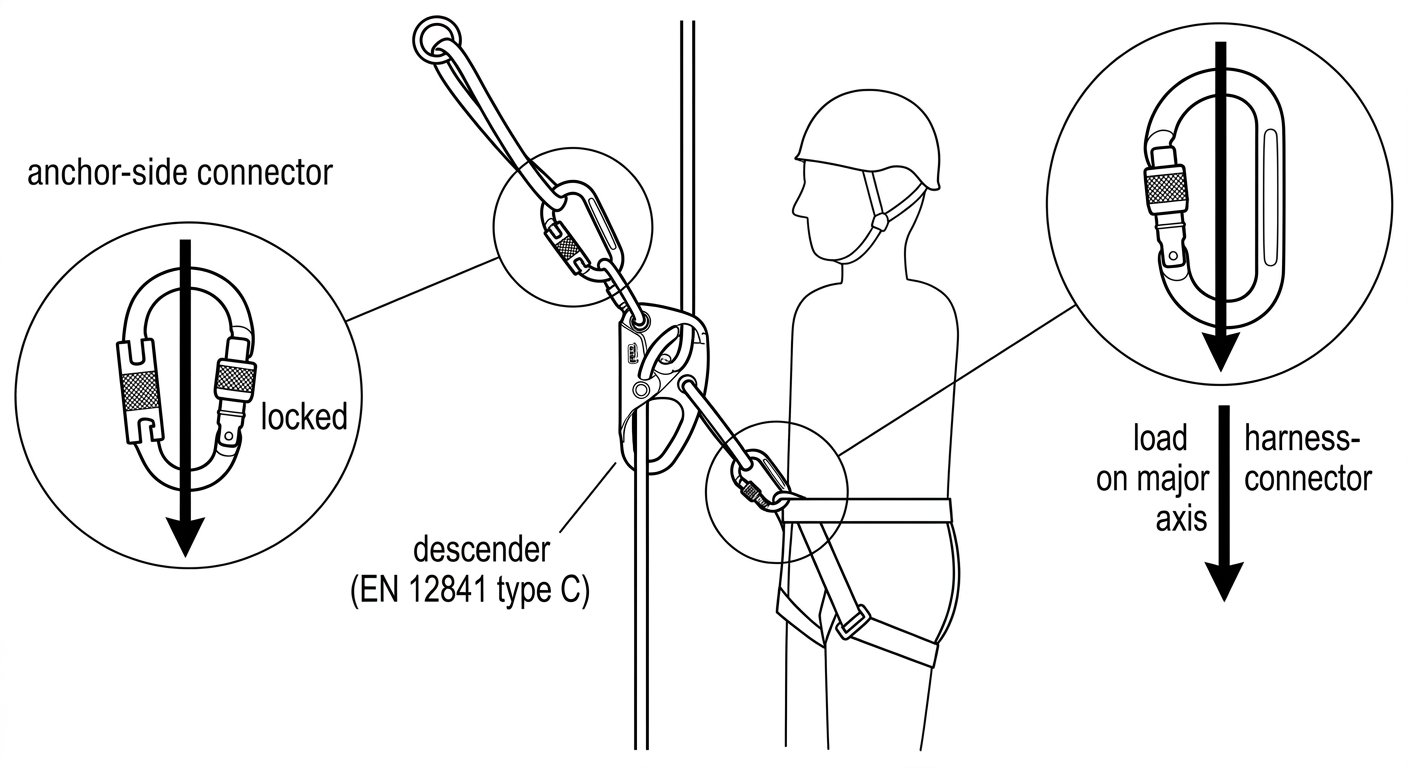
The connector between a descender and the harness is one of the smallest components in a rope access system and one of the least forgiving. It carries the operator’s full working load, it is handled dozens of times a shift, and it sits in a position where it can be rotated, pressed against a harness…