
Latest posts
-
Using Pulleys With Small-Diameter Rope or Cord: Sheave Fit, Jamming and System Compatibility
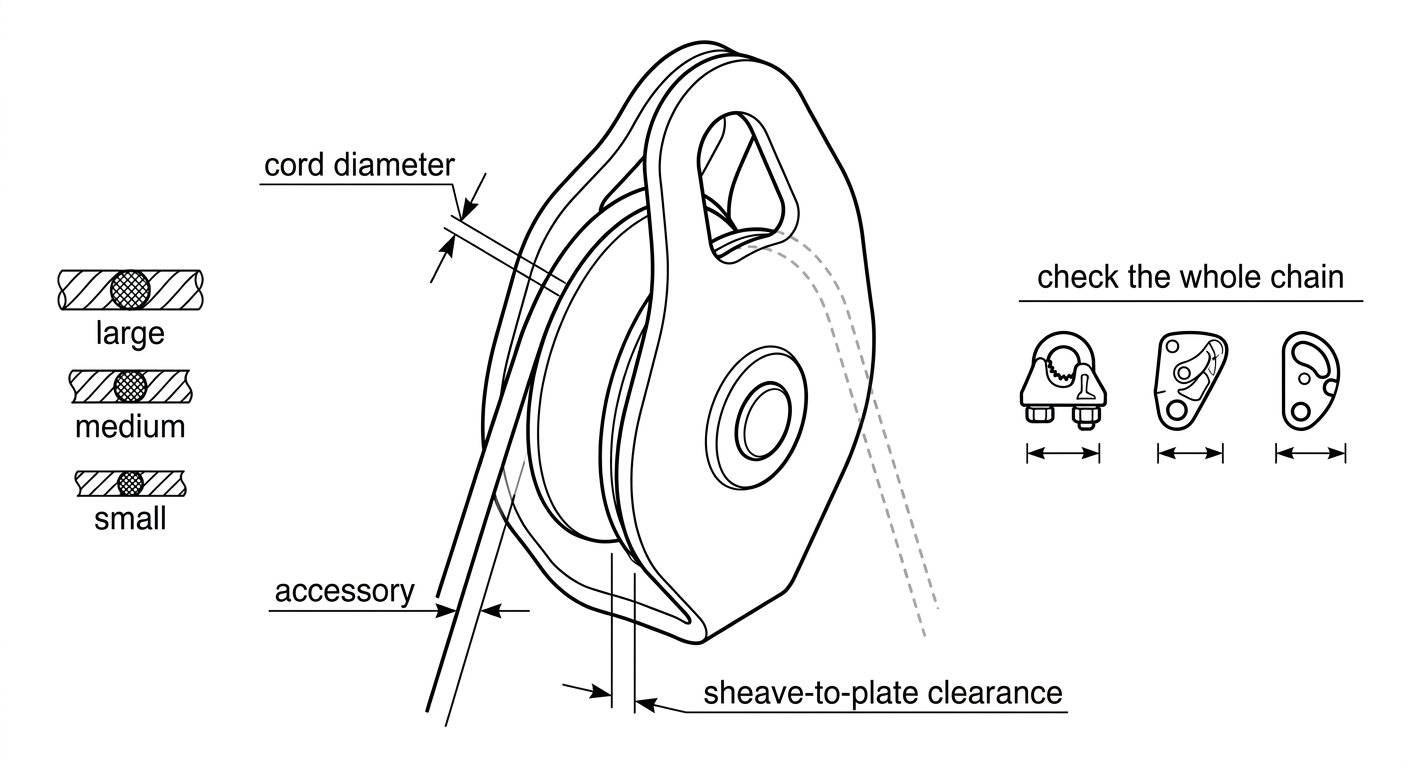
Small cord is convenient. It coils tight, it weighs nothing, and a 100 m spool of 6 mm accessory cord takes up less pack space than 30 m of 11 mm low-stretch rope. That convenience is exactly why it ends up threaded through pulleys that were never designed for it — tool-hoist lines through a…
-
Pulley Efficiency: What the Numbers Mean
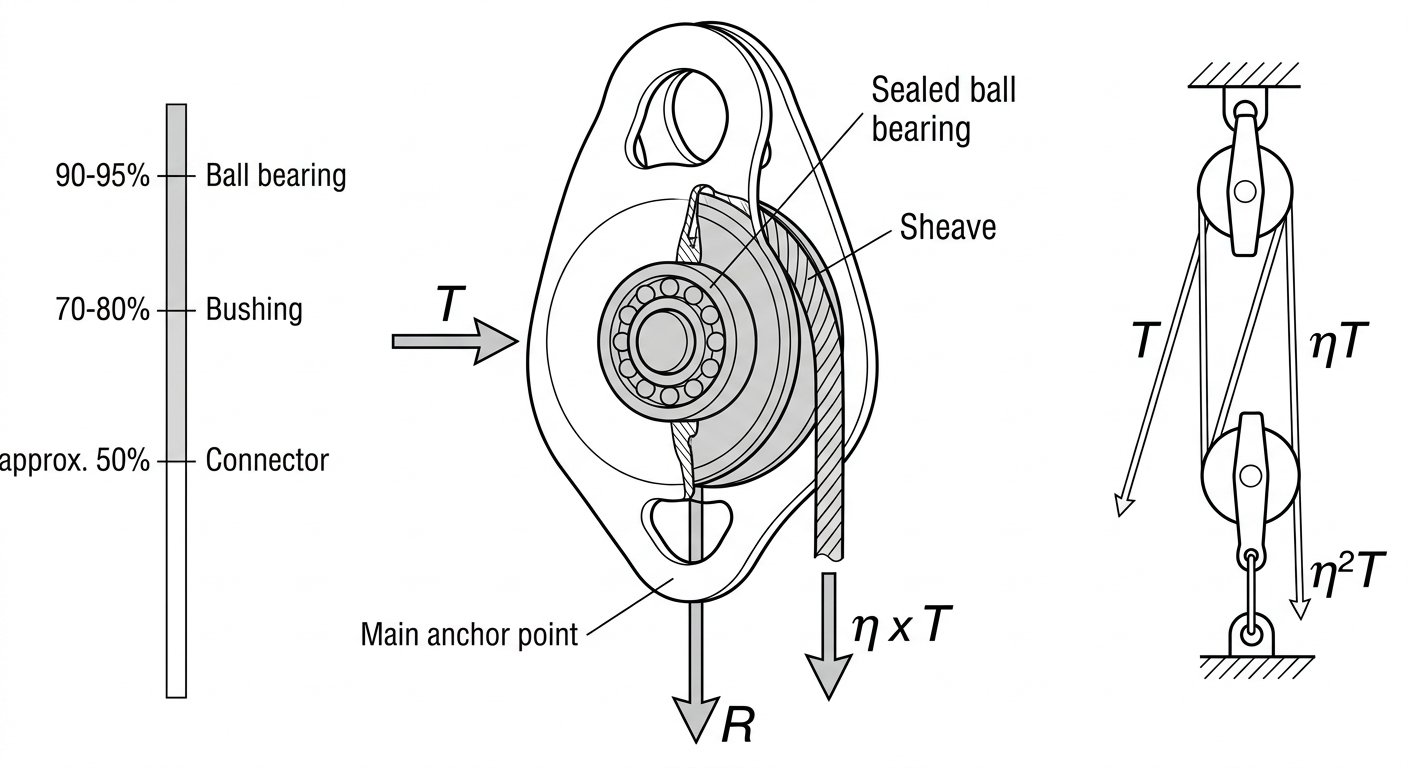
A pulley’s stated efficiency is not a marketing number — it changes the force a hauling team has to produce, the load the anchor actually sees, and whether a 4:1 on paper behaves like a 4:1 on the rope. On site the practical questions are simple: how much of the hauler’s effort reaches the load,…
-
Rope Diameter Limits on Descenders: Why the Marked Range Matters
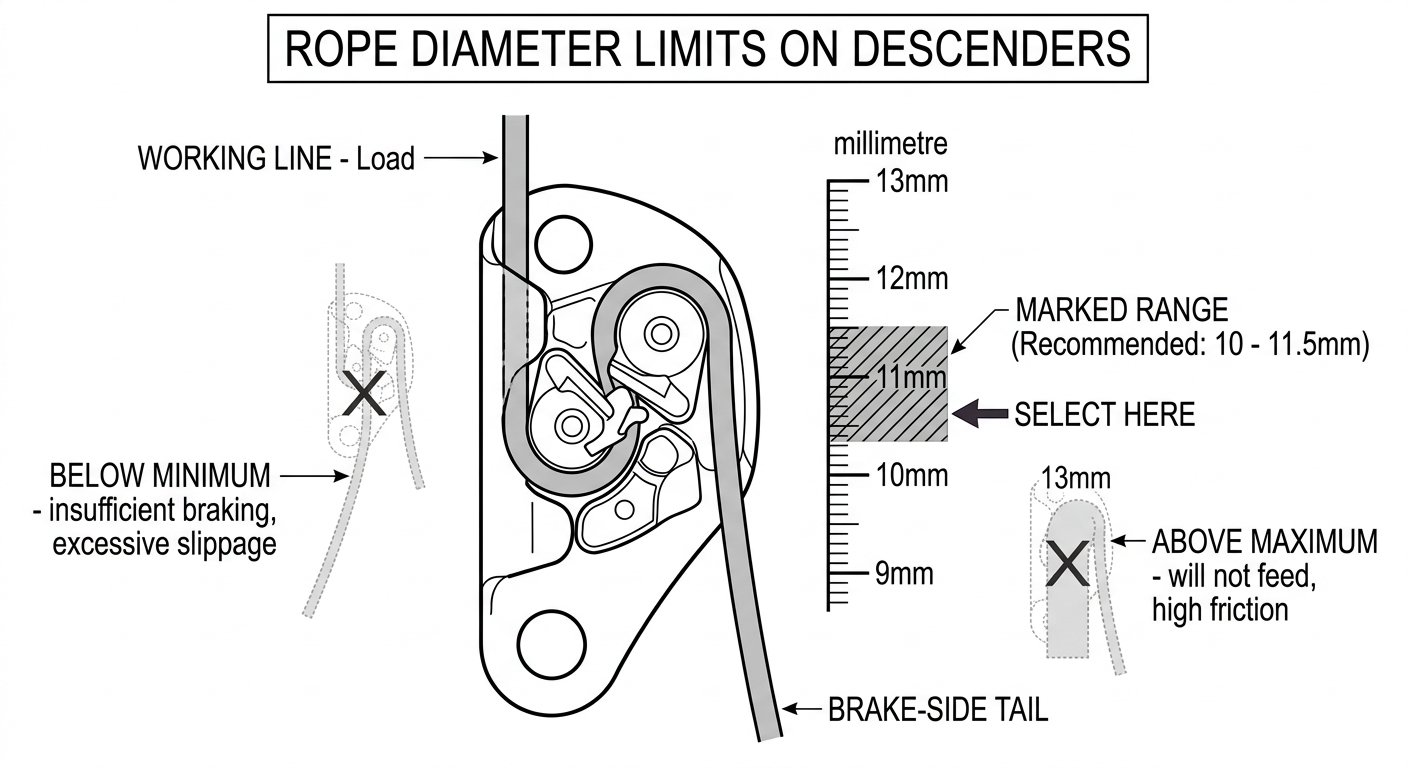
Every industrial descender carries a marked rope diameter range, and it is one of the few pieces of information on the device that directly governs whether the device will brake when a worker needs it to. Fit a rope thinner than the marked minimum and braking force drops, descent speed becomes hard to control and…
-
Selecting a Helmet for Confined Space Work: Retention, Profile and Compatibility
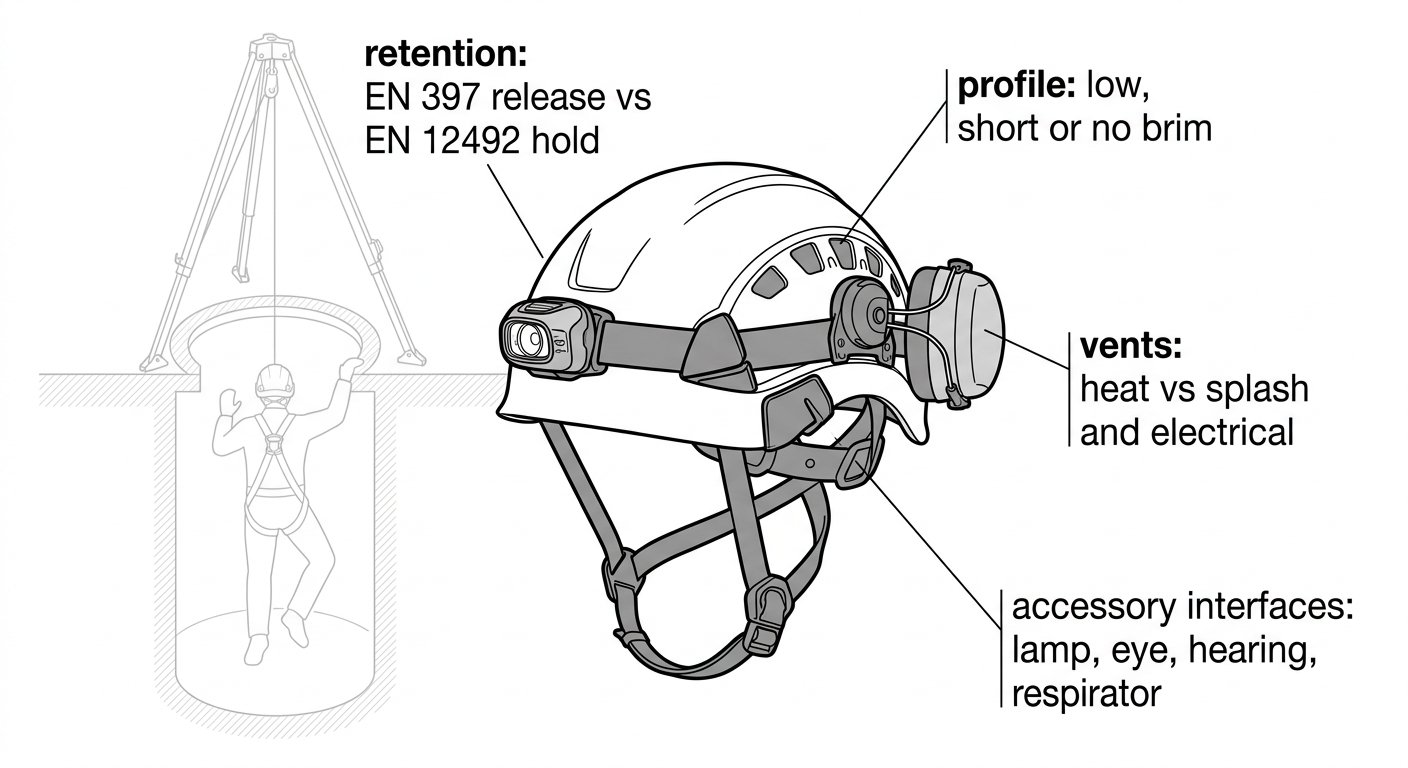
In a confined space, the head is exposed in ways it is not on an open work platform. The hazards are close and constant: fixed structure at head height, valve stems and flanges, a shaft above the worker down which tools and debris can fall, and — during vertical entry or work on rope —…
-
Which Harness for Which Use? A Selection Note for Fall Arrest, Positioning, Rope Access and Confined Space
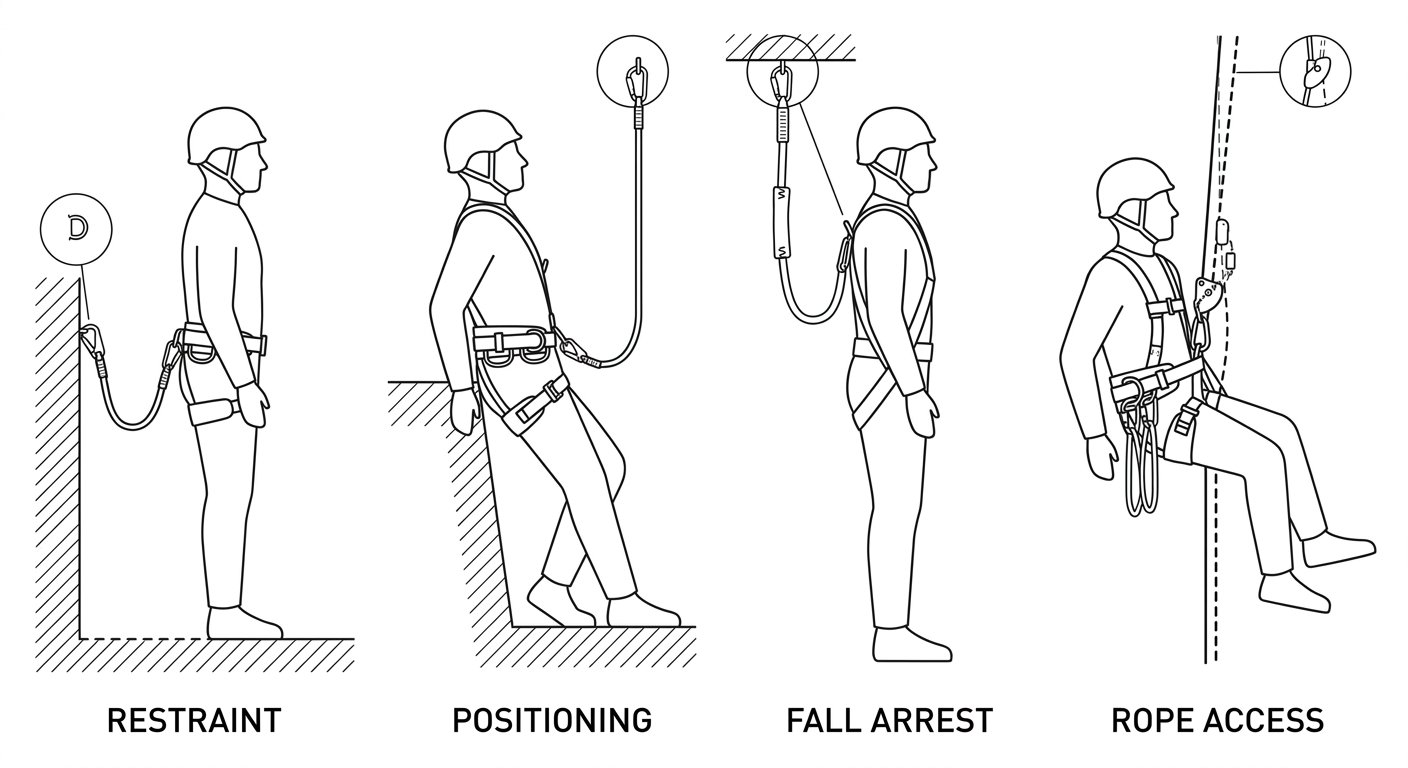
Picking a harness is not a comfort decision made in the stores cupboard — it decides what work the wearer can legally and safely do once they are on site. A harness that is correct for restraint at a roof edge may be useless for a tripod extraction from a manhole; a rope access sit…
-
Choosing Connectors for Anchor Rigging: Shape, Closure and Correct Loading
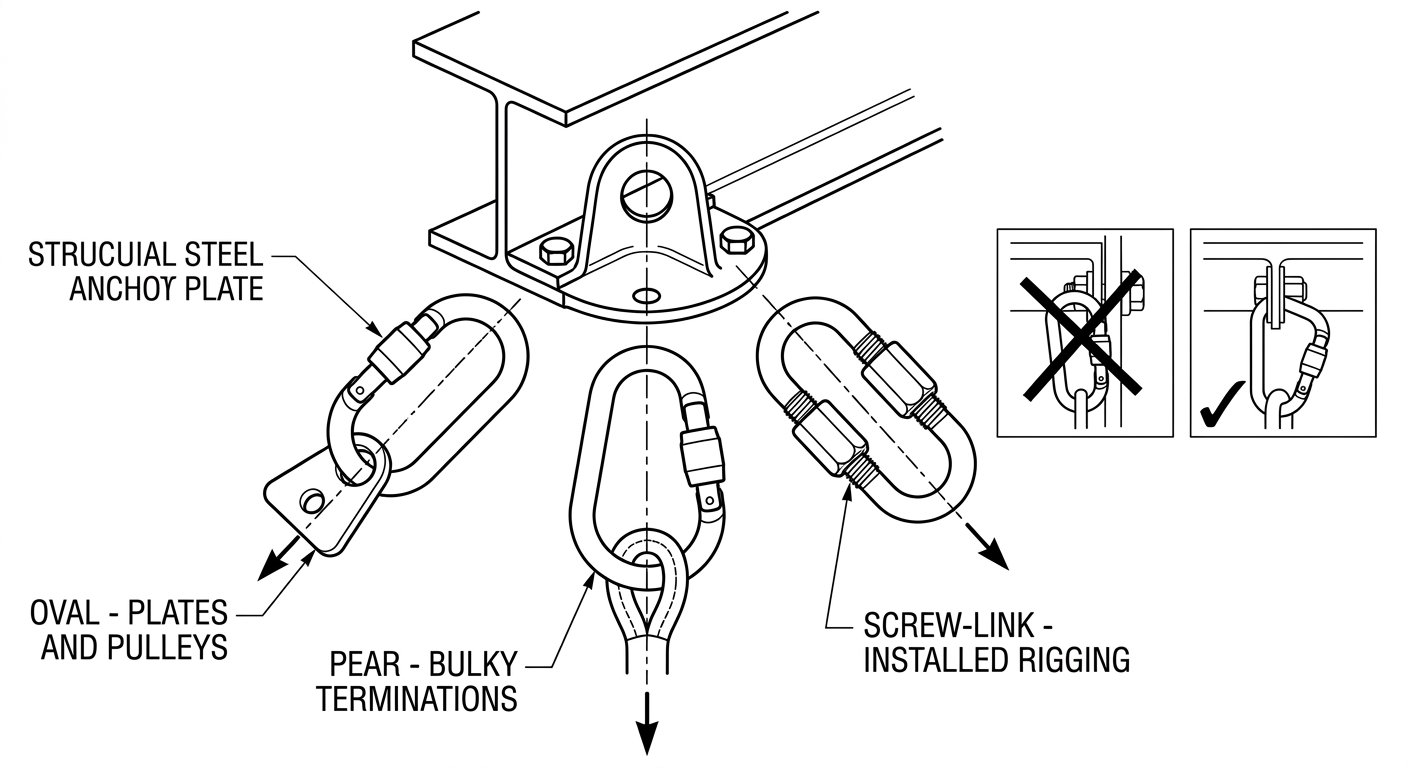
The connector at the anchor end of a system is the one most often chosen by whatever is left on the harness rack, and the one most exposed to being loaded in a way it was never designed for. Anchors are rarely as tidy as the pictures: a connector may end up on a wide…
-
Lanyard-End Connector for Work Positioning: Choosing and Loading the Anchor-Side Hook
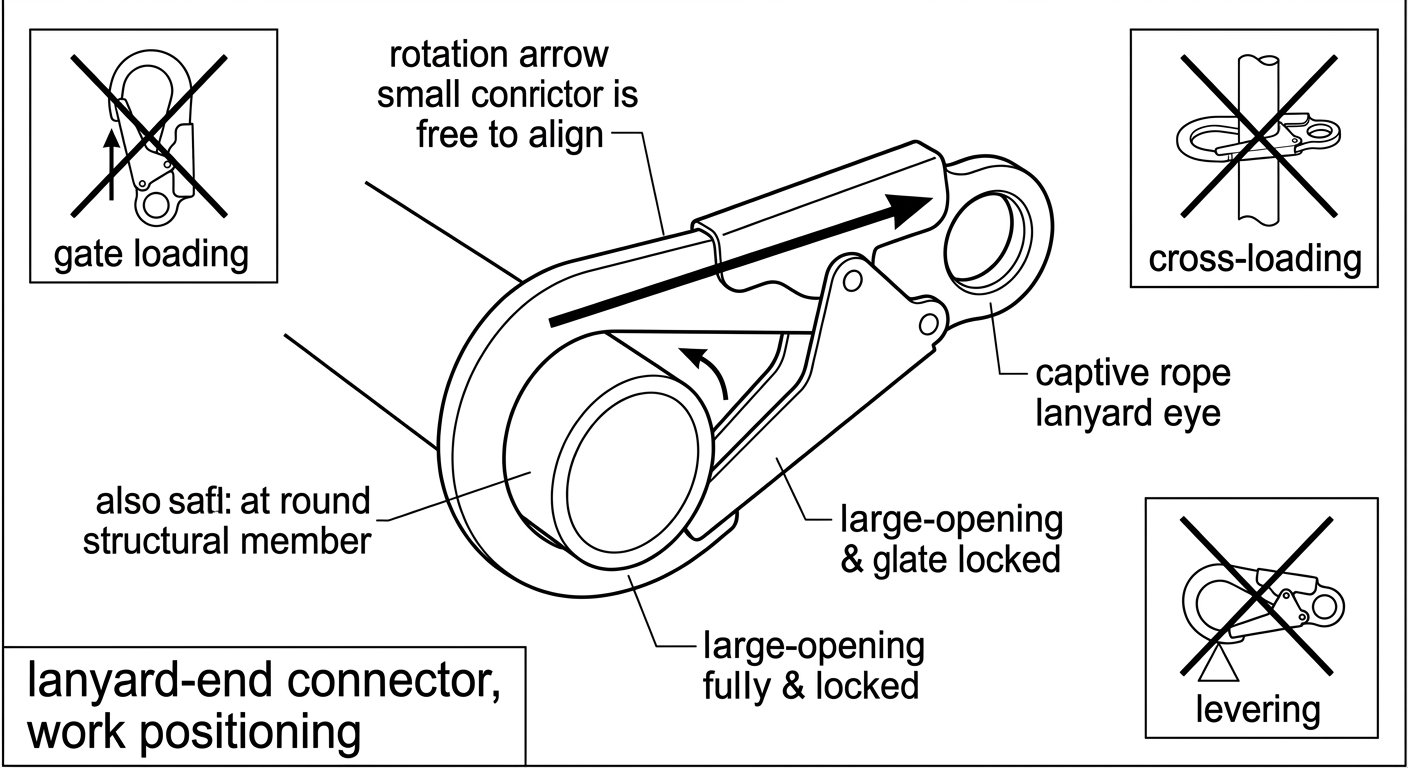
On an adjustable work positioning lanyard, the connector at the far end — the one that goes around the column, rung, pipe or scaffold tube — is the part of the system handled most and inspected least. It is opened and closed dozens of times a shift, frequently one-handed, frequently at arm’s length and out…
-
Connector Basics: Gates, Axes and Loading
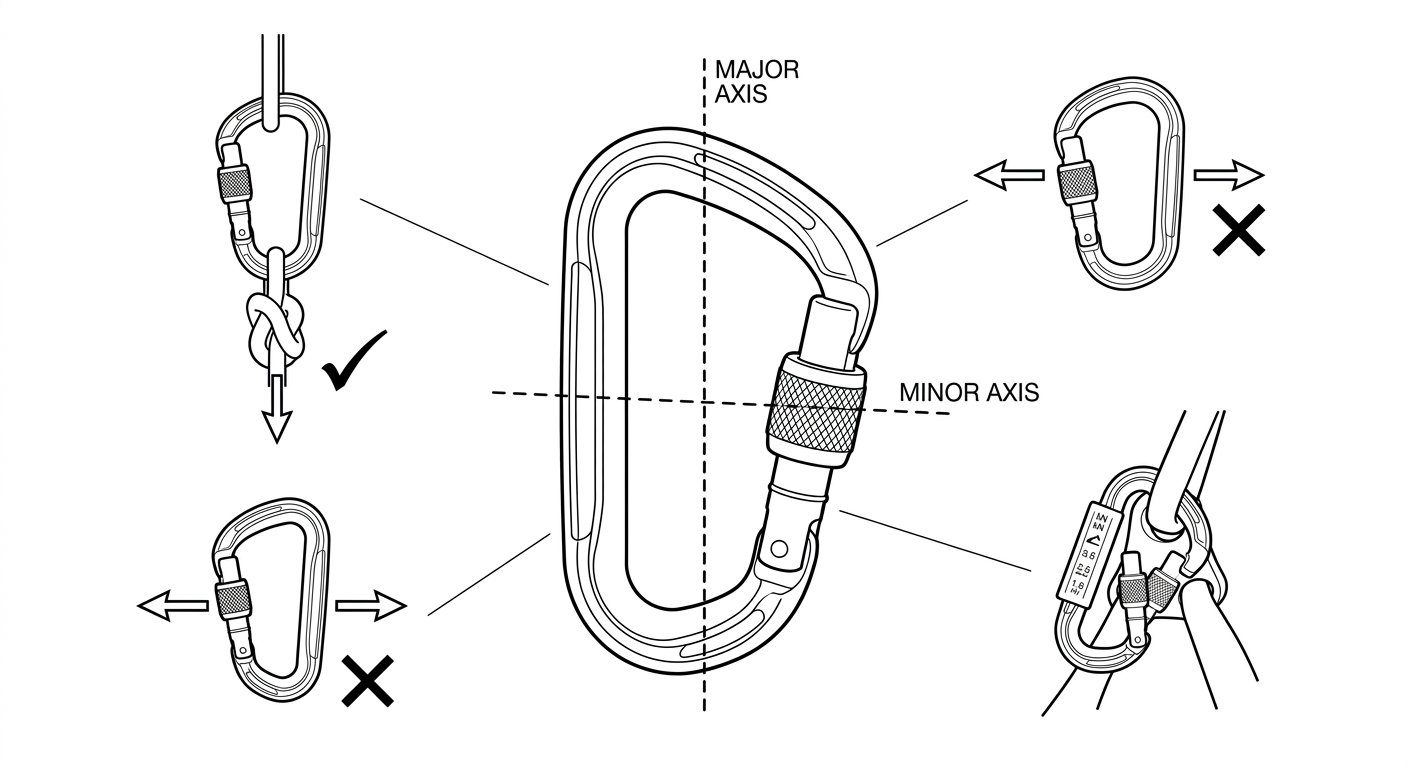
A connector is the smallest component in most rope-access and confined-space systems and the one most often loaded in a way it was never designed for. Every anchor, every lanyard, every descender and back-up device is attached through one, and the difference between a connector working at its rated strength and failing well below it…
-
Checking Connector Compatibility: A Field Method Before You Clip In
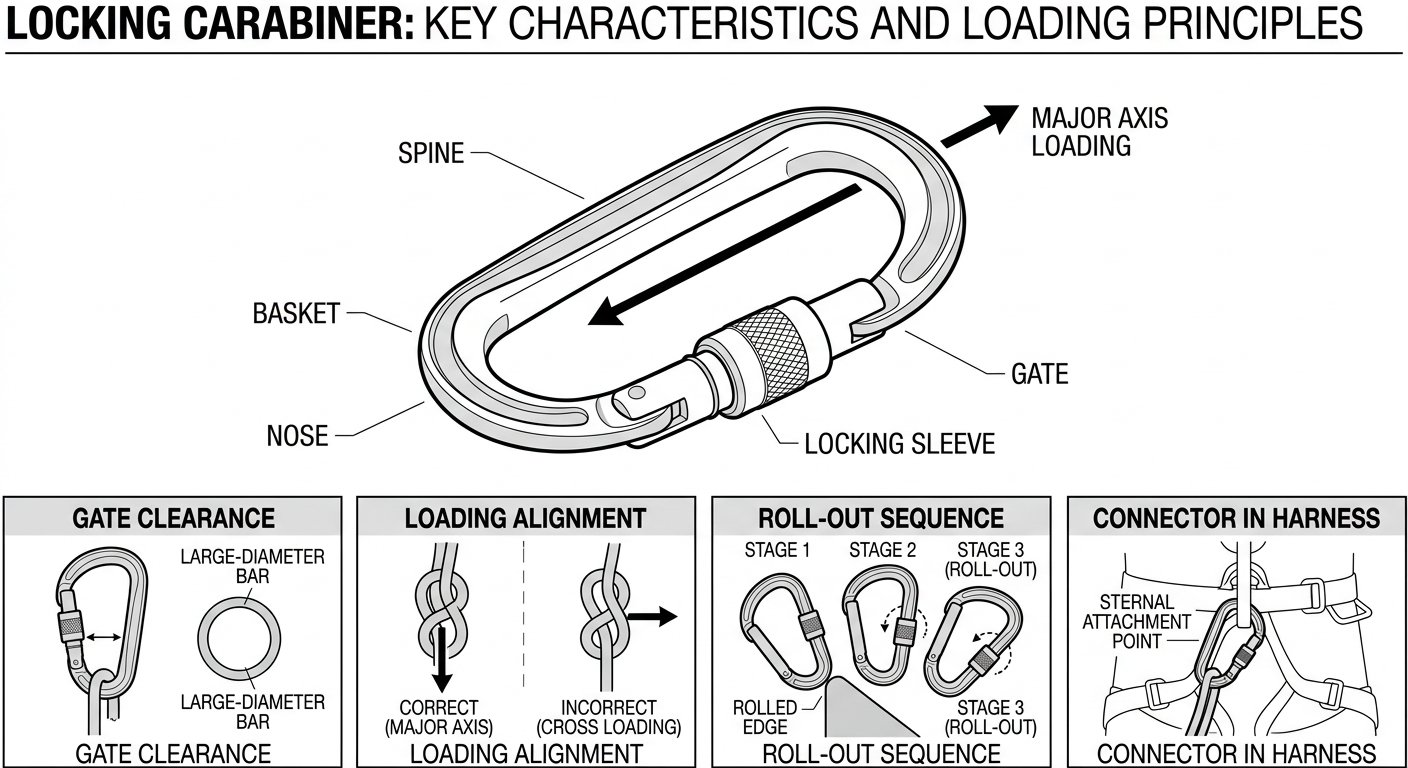
Most connector problems on site are not strength problems. A locking carabiner marked to EN 362 (Connectors for Fall Protection) has ample margin for the loads a rope access or confined-space system will generate — provided it is loaded along its major axis, with the gate closed and locked, against something it actually fits. Compatibility…
-
Connector Shapes and Where Each Belongs
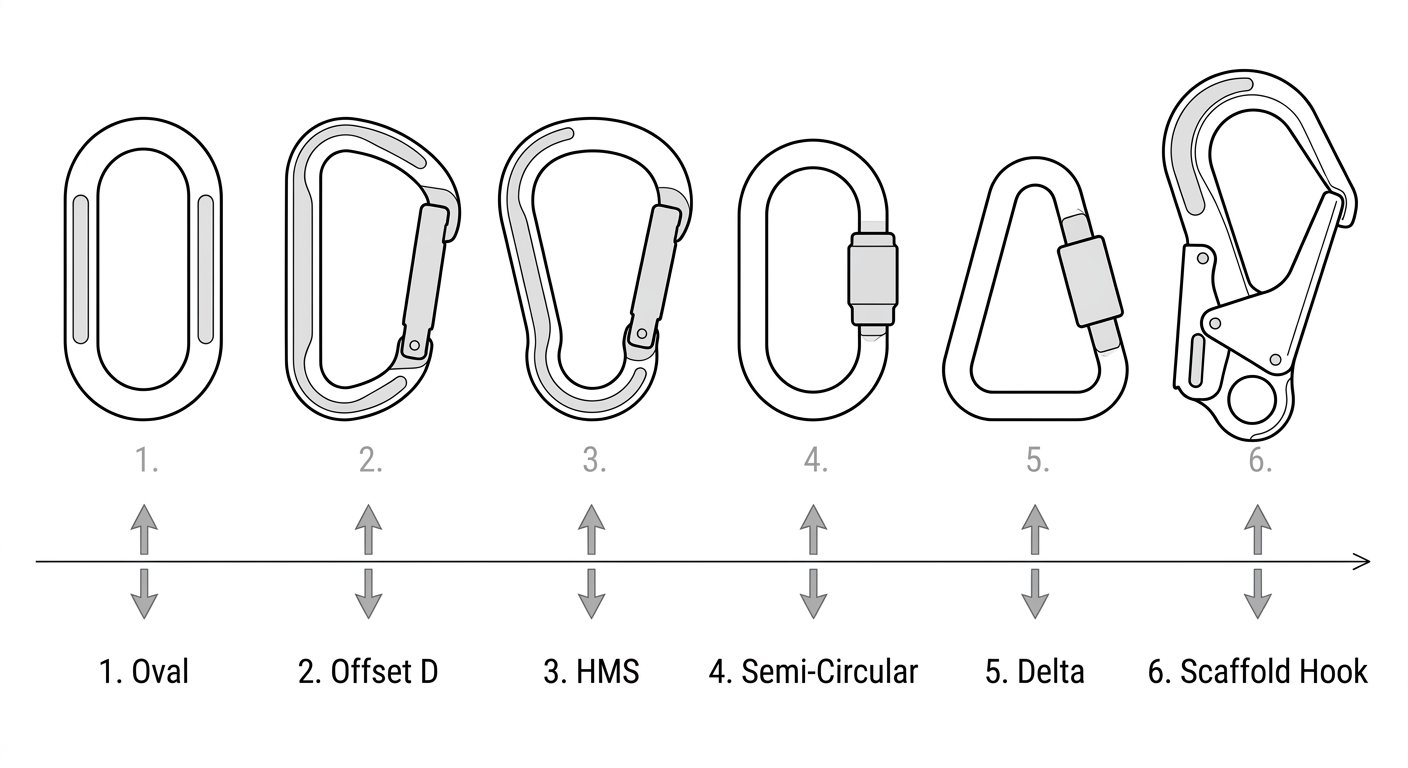
A connector’s shape is not cosmetic. It decides where the load sits inside the frame, whether an attached device stays aligned under load, how much room there is at the basket for a hitch or a second connection, and how easily the gate can be pressed against something it should never touch. Two connectors with…