
Latest posts
-
Reading the Markings on a Connector
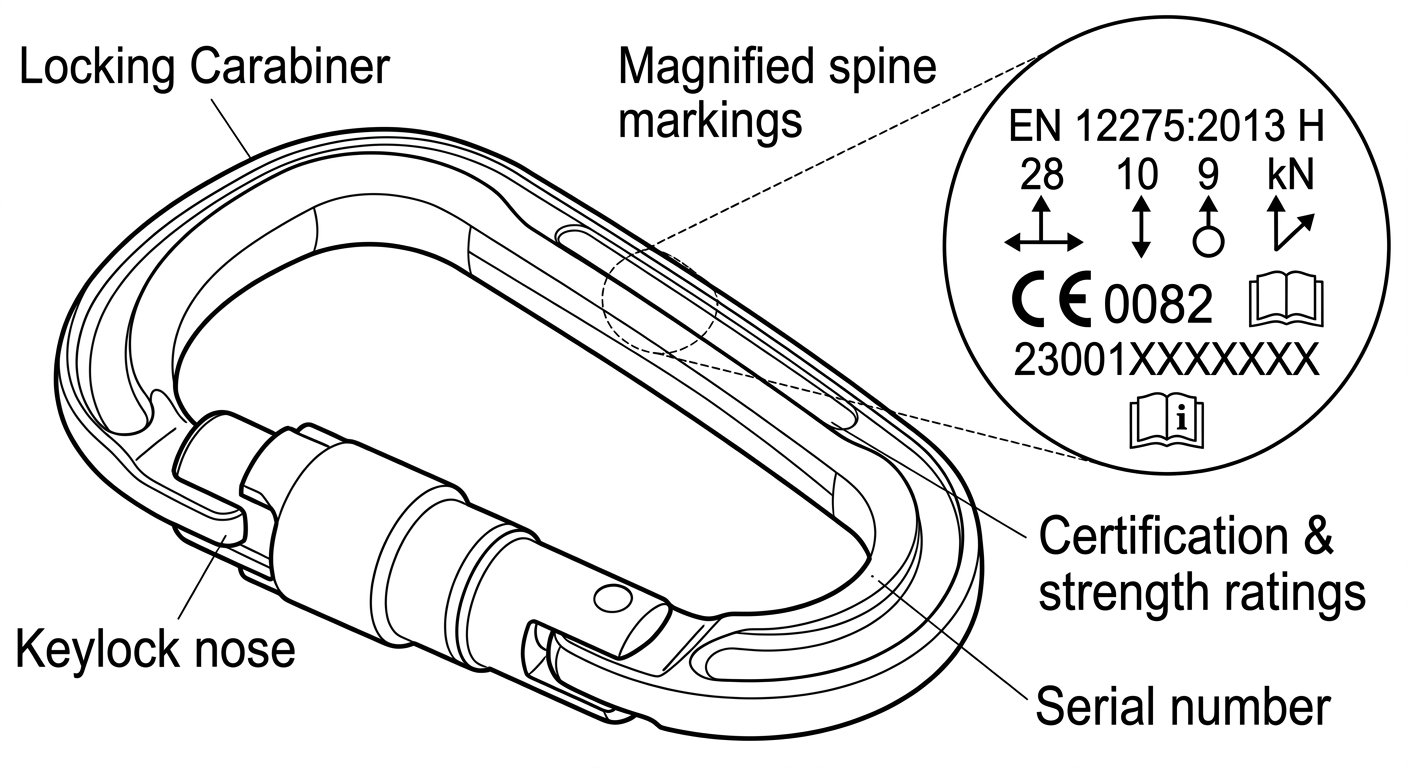
A connector that has been picked out of a kit bag tells you almost everything you need to know about whether it belongs in the system you are about to build — but only if you can read it. The letters, numbers and pictograms stamped or laser-etched into a carabiner body are not decoration or…
-
Choosing Connectors for Hauling and Pulleys
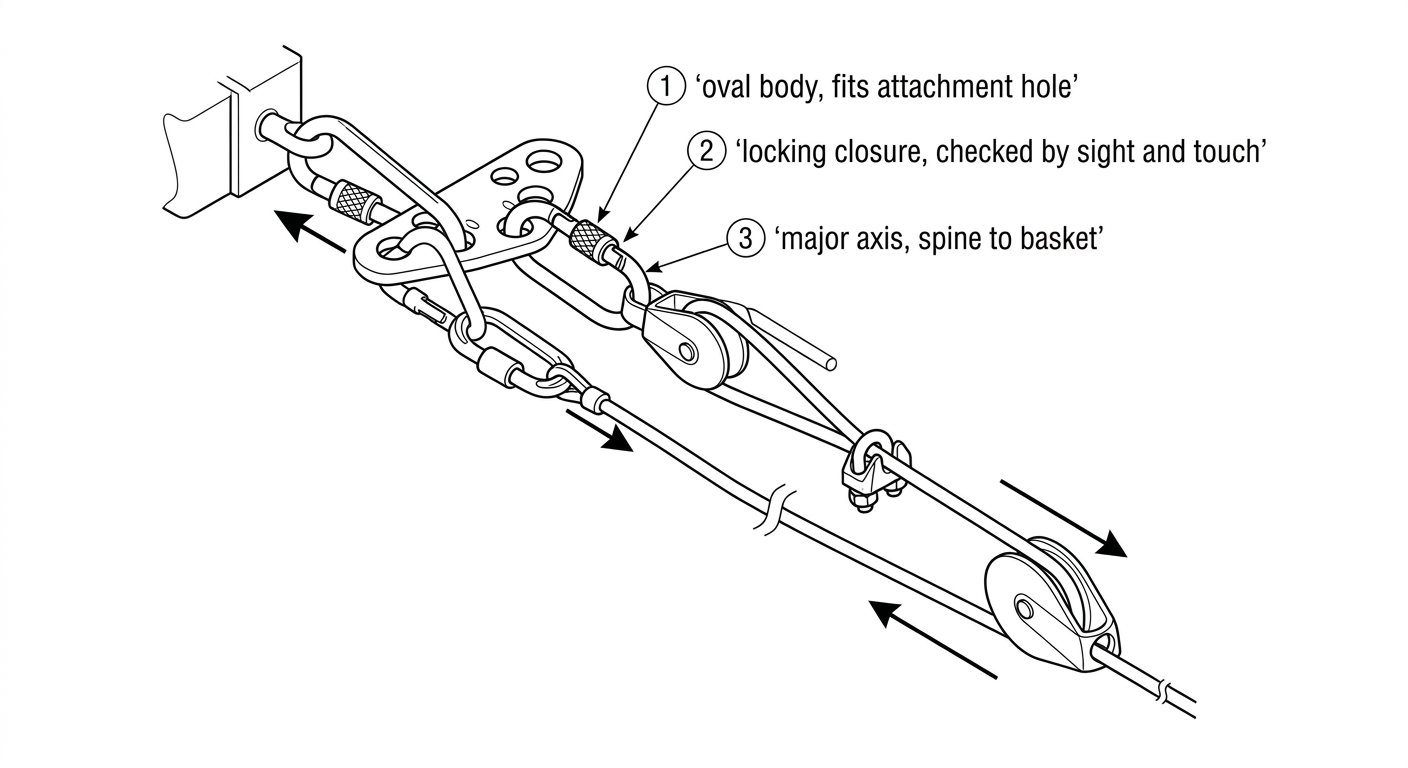
In a hauling system, the connector between the pulley and the anchor is one of the most heavily loaded components on the site. Mechanical advantage multiplies the force the haul team applies, redirects add vector loads on top of that, and every one of those forces passes through a single piece of hardware whose shape…
-
Choosing Connectors for Anchor Rigging: Shape, Closure and Correct Loading
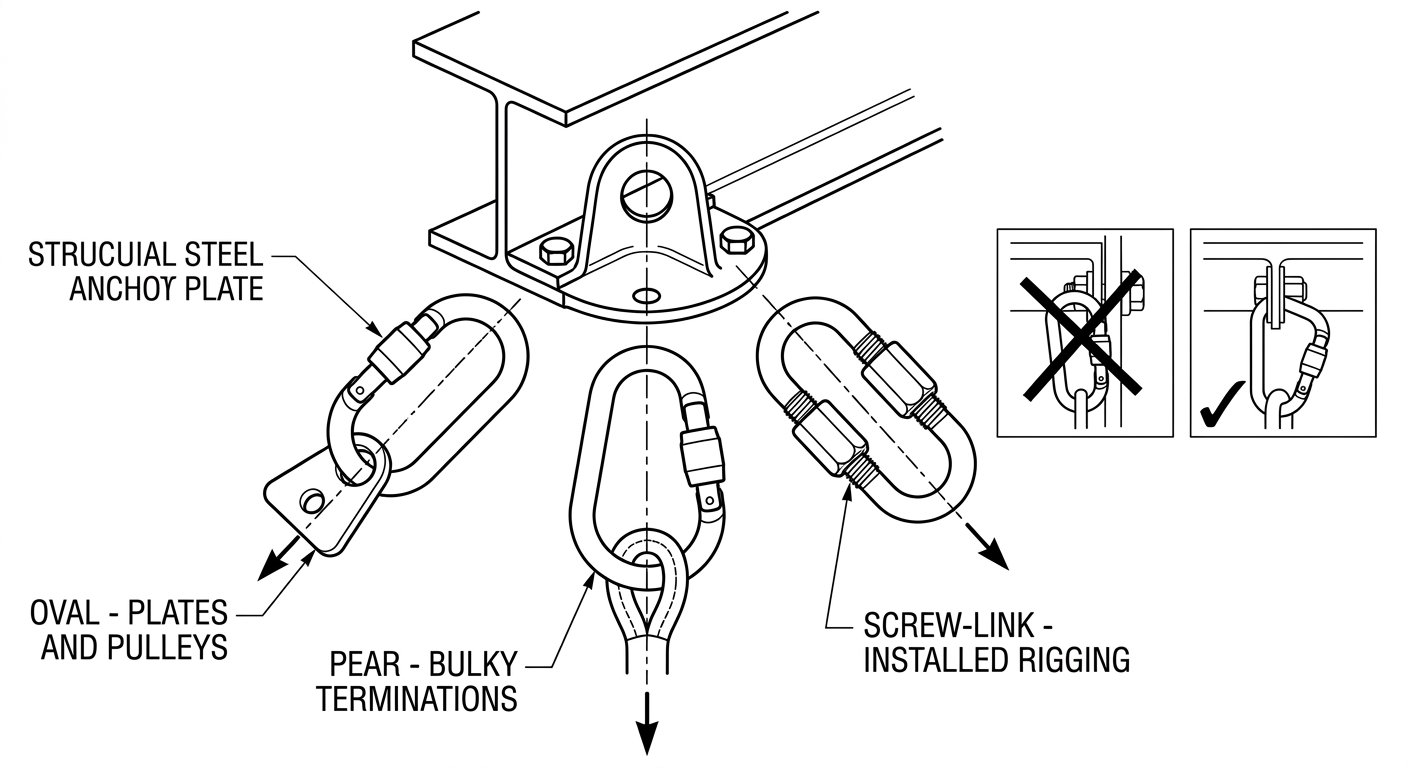
The connector at the anchor end of a system is the one most often chosen by whatever is left on the harness rack, and the one most exposed to being loaded in a way it was never designed for. Anchors are rarely as tidy as the pictures: a connector may end up on a wide…
-
Connecting a Fall-Arrest Lanyard to the Harness
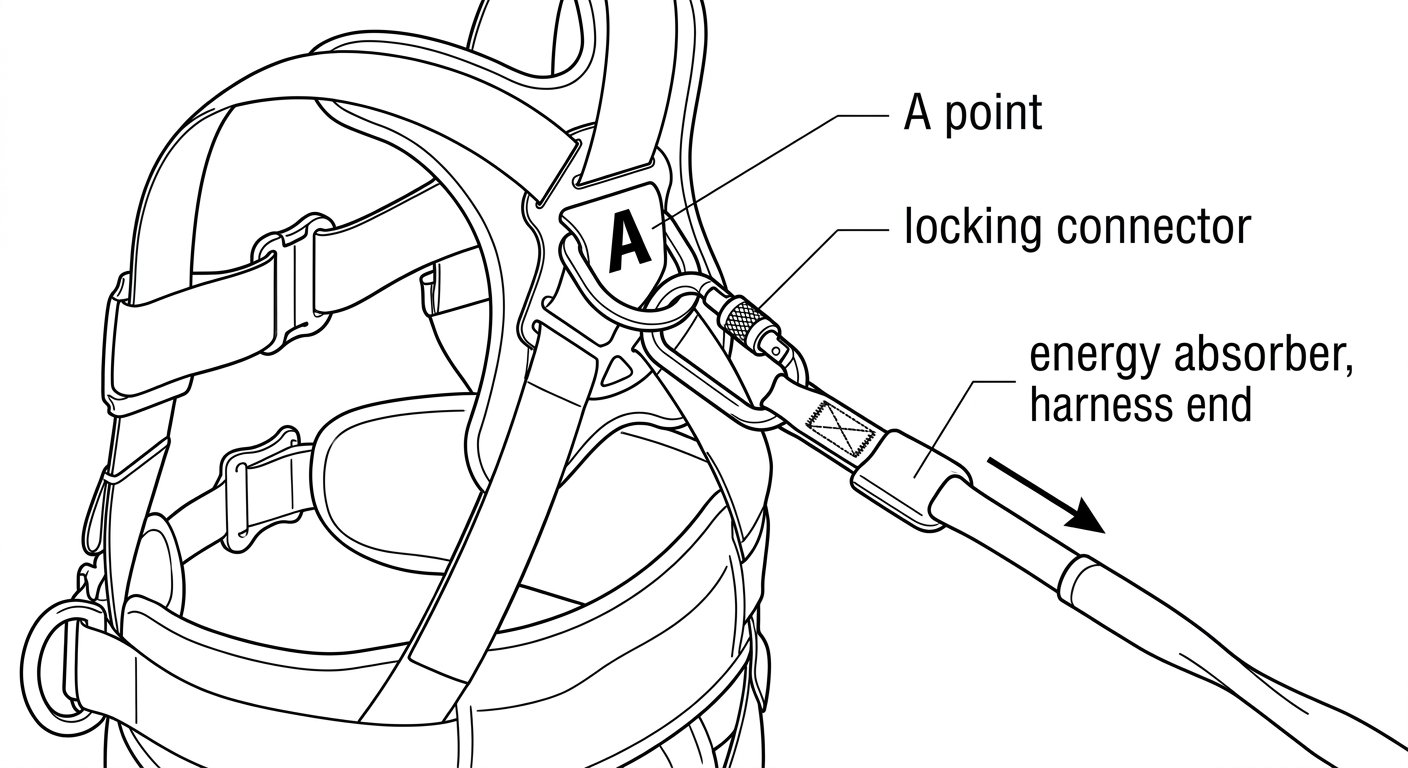
The connection between a lanyard and a harness is the one link in a fall-arrest system that the user makes and unmakes by hand, several times a shift, often in awkward positions and poor light. It is also the link most likely to fail silently: the system looks connected, the worker feels connected, but the…
-
Lanyard-End Connector for Fall Arrest: Gate Opening, Roll-Out and Correct Loading
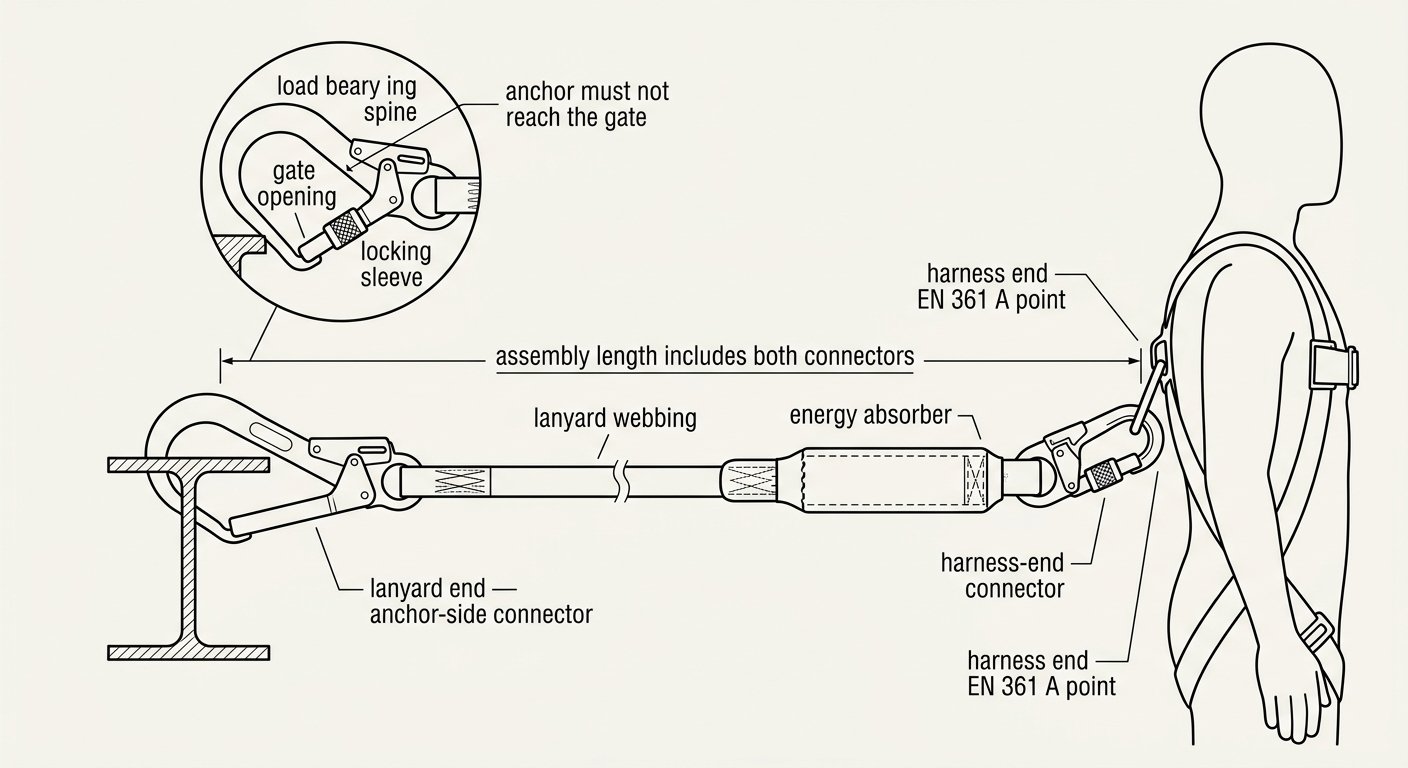
On a fall-arrest lanyard, the connector at the anchor end does more work than any other component in the assembly. It is the part that gets clipped and unclipped dozens of times a shift, the part that has to fit whatever structural member is actually available on site, and the part most likely to be…
-
Lanyard-End Connector for Work Positioning: Choosing and Loading the Anchor-Side Hook
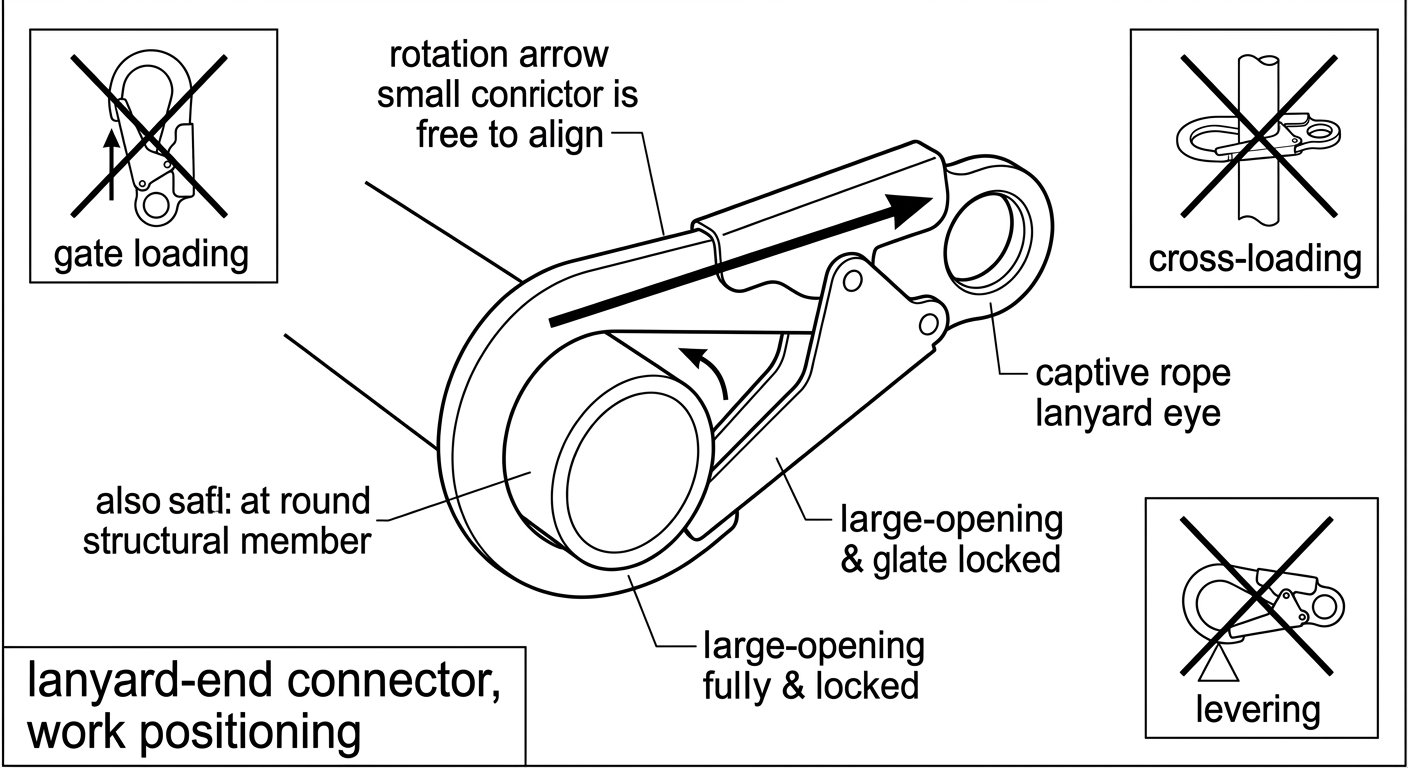
On an adjustable work positioning lanyard, the connector at the far end — the one that goes around the column, rung, pipe or scaffold tube — is the part of the system handled most and inspected least. It is opened and closed dozens of times a shift, frequently one-handed, frequently at arm’s length and out…
-
Connector Basics: Gates, Axes and Loading
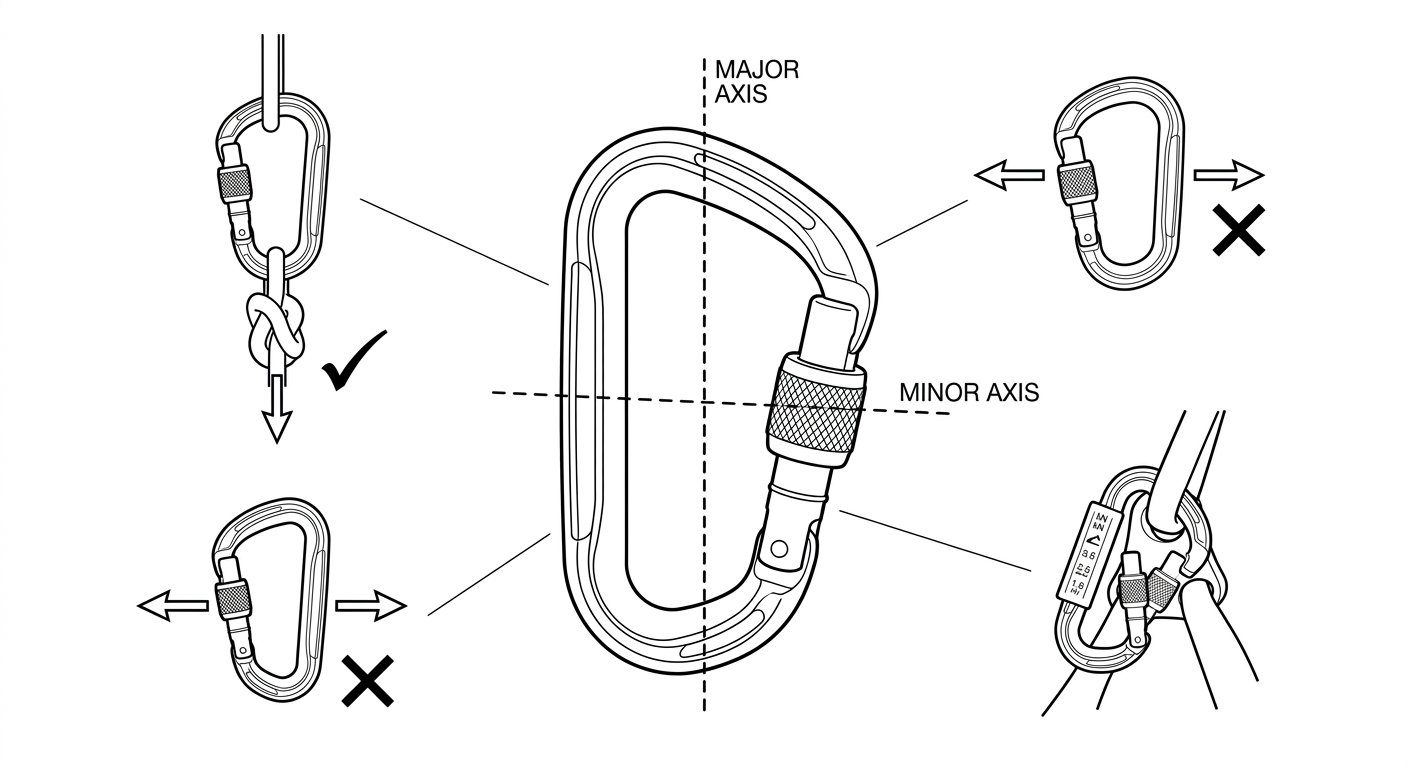
A connector is the smallest component in most rope-access and confined-space systems and the one most often loaded in a way it was never designed for. Every anchor, every lanyard, every descender and back-up device is attached through one, and the difference between a connector working at its rated strength and failing well below it…
-
Checking Connector Compatibility: A Field Method Before You Clip In
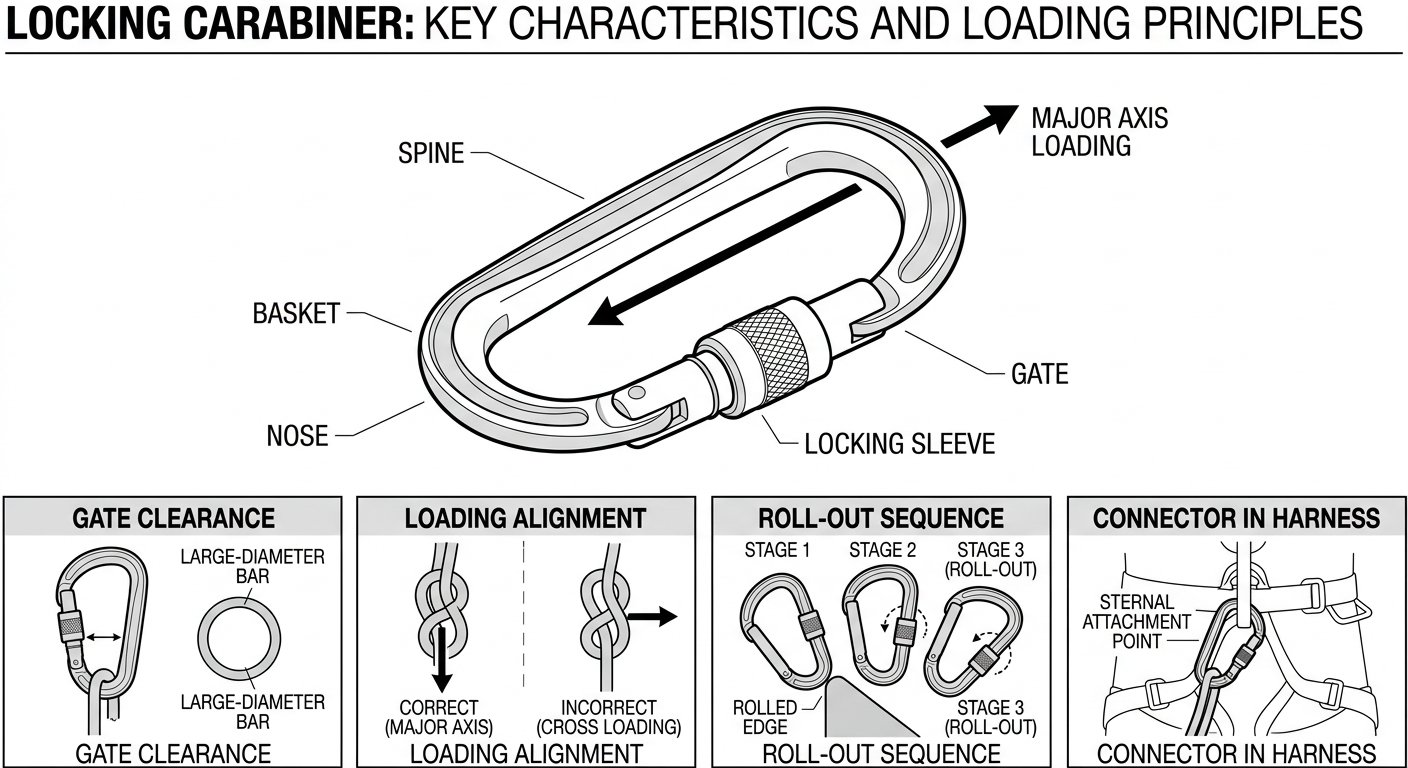
Most connector problems on site are not strength problems. A locking carabiner marked to EN 362 (Connectors for Fall Protection) has ample margin for the loads a rope access or confined-space system will generate — provided it is loaded along its major axis, with the gate closed and locked, against something it actually fits. Compatibility…
-
Connector Shapes and Where Each Belongs
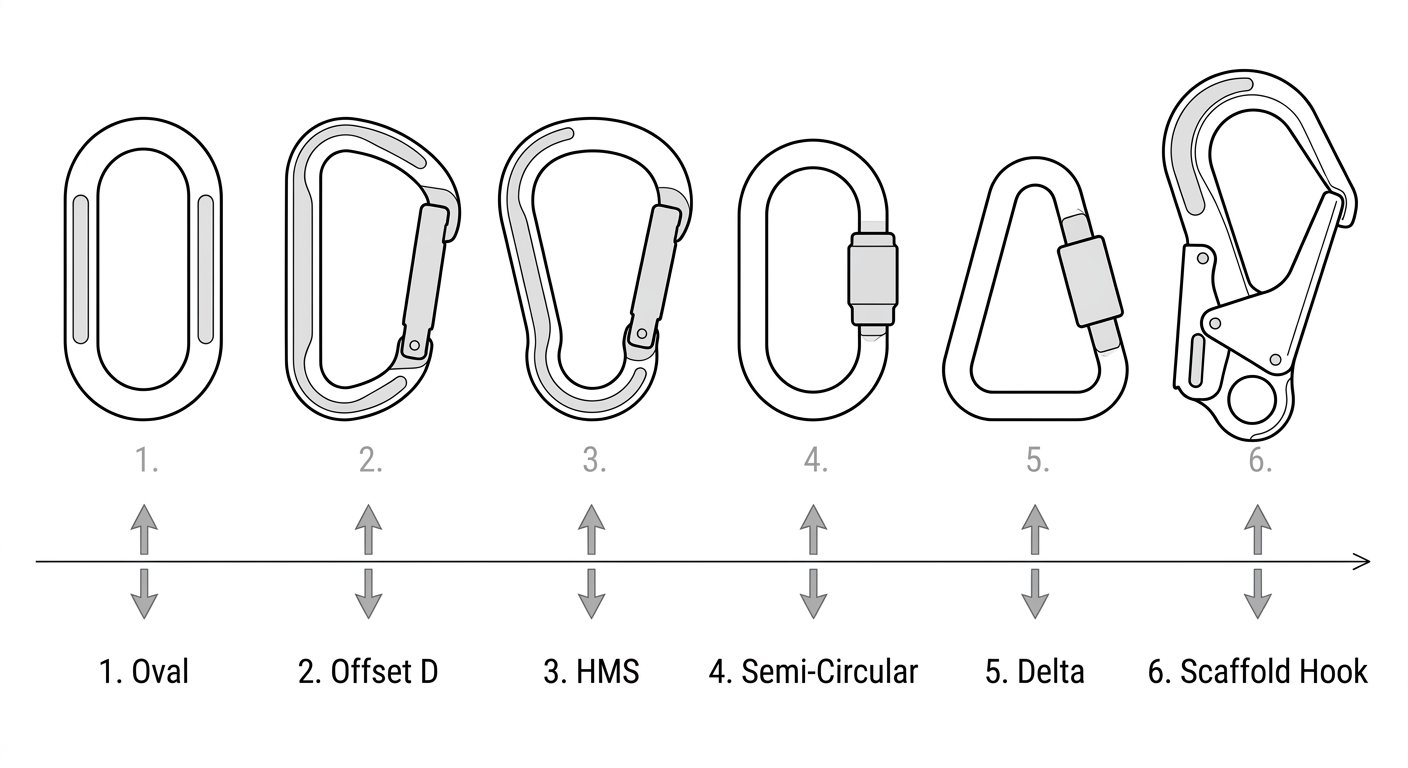
A connector’s shape is not cosmetic. It decides where the load sits inside the frame, whether an attached device stays aligned under load, how much room there is at the basket for a hitch or a second connection, and how easily the gate can be pressed against something it should never touch. Two connectors with…
-
Choosing a Connector for a Descender: Locking, Compatibility and Correct Loading
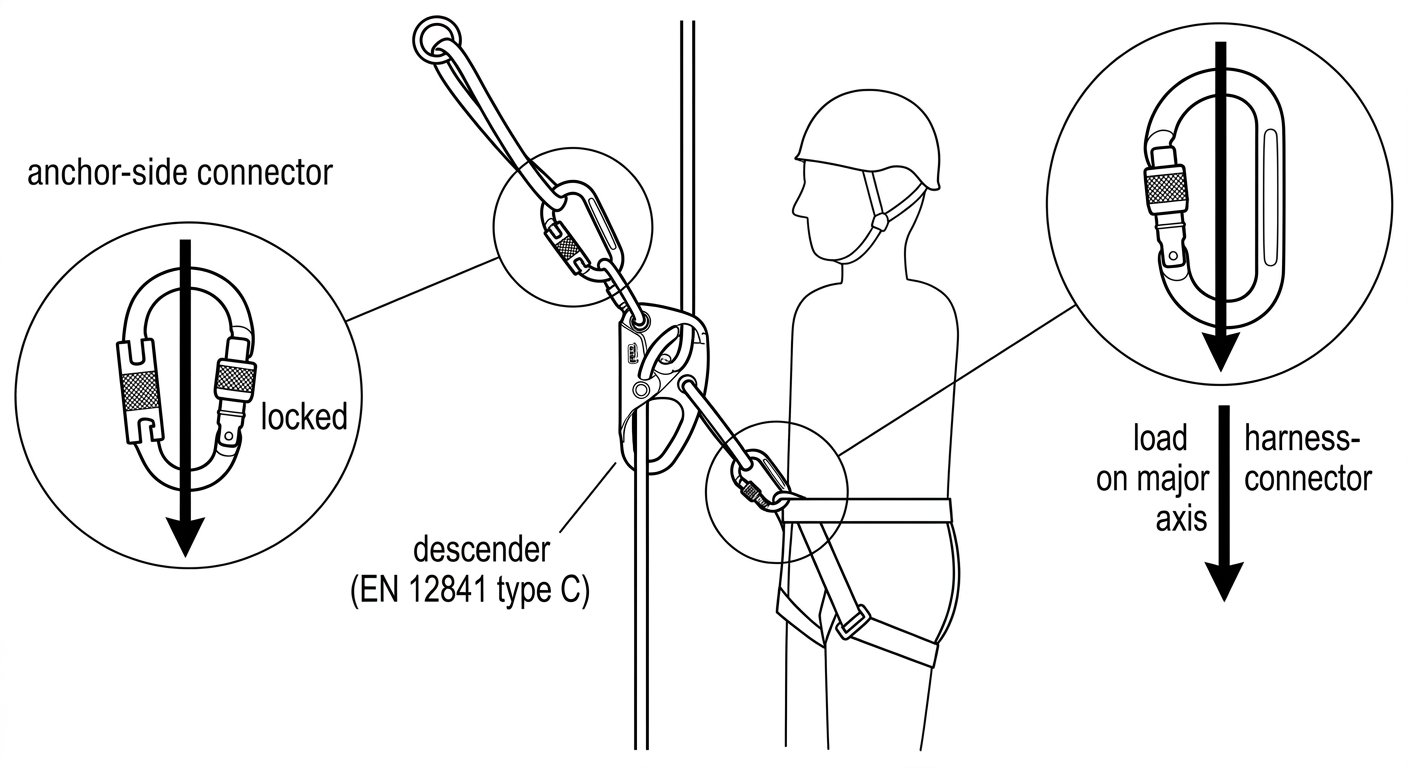
The connector between a descender and the harness is one of the smallest components in a rope access system and one of the least forgiving. It carries the operator’s full working load, it is handled dozens of times a shift, and it sits in a position where it can be rotated, pressed against a harness…