Safety / Tips and Tricks / Roofing and work at height
Activity 02 · Roofing
Safe Use of Mobile Elevated Work Platforms for Roof-Level Work
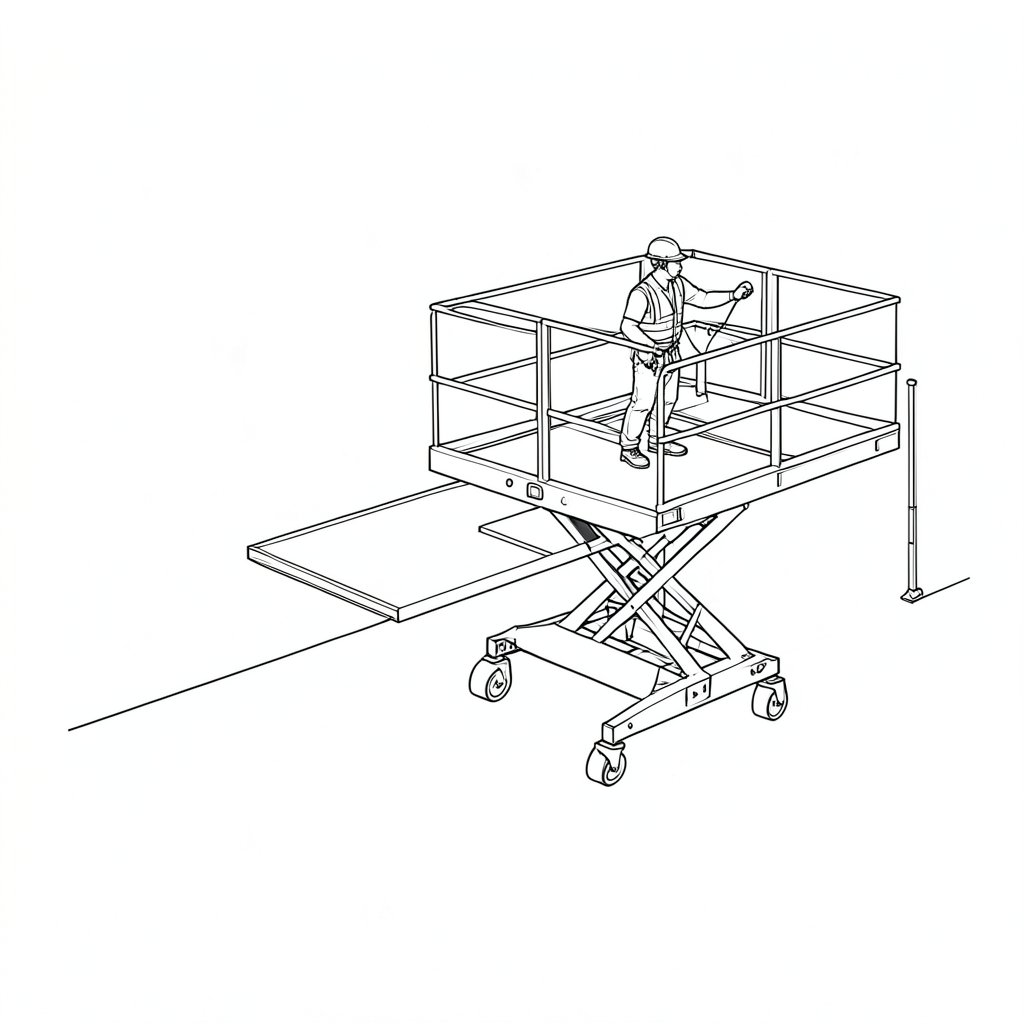
A mobile elevated work platform gives a worker a stable, enclosed working position at roof-edge height without the fall exposure a ladder or unprotected roof edge carries. That advantage only holds if the platform is set up, operated and used correctly — a MEWP used carelessly introduces its own hazards, from overturning to being struck by the structure it is working alongside.
What a MEWP changes about the fall-protection picture
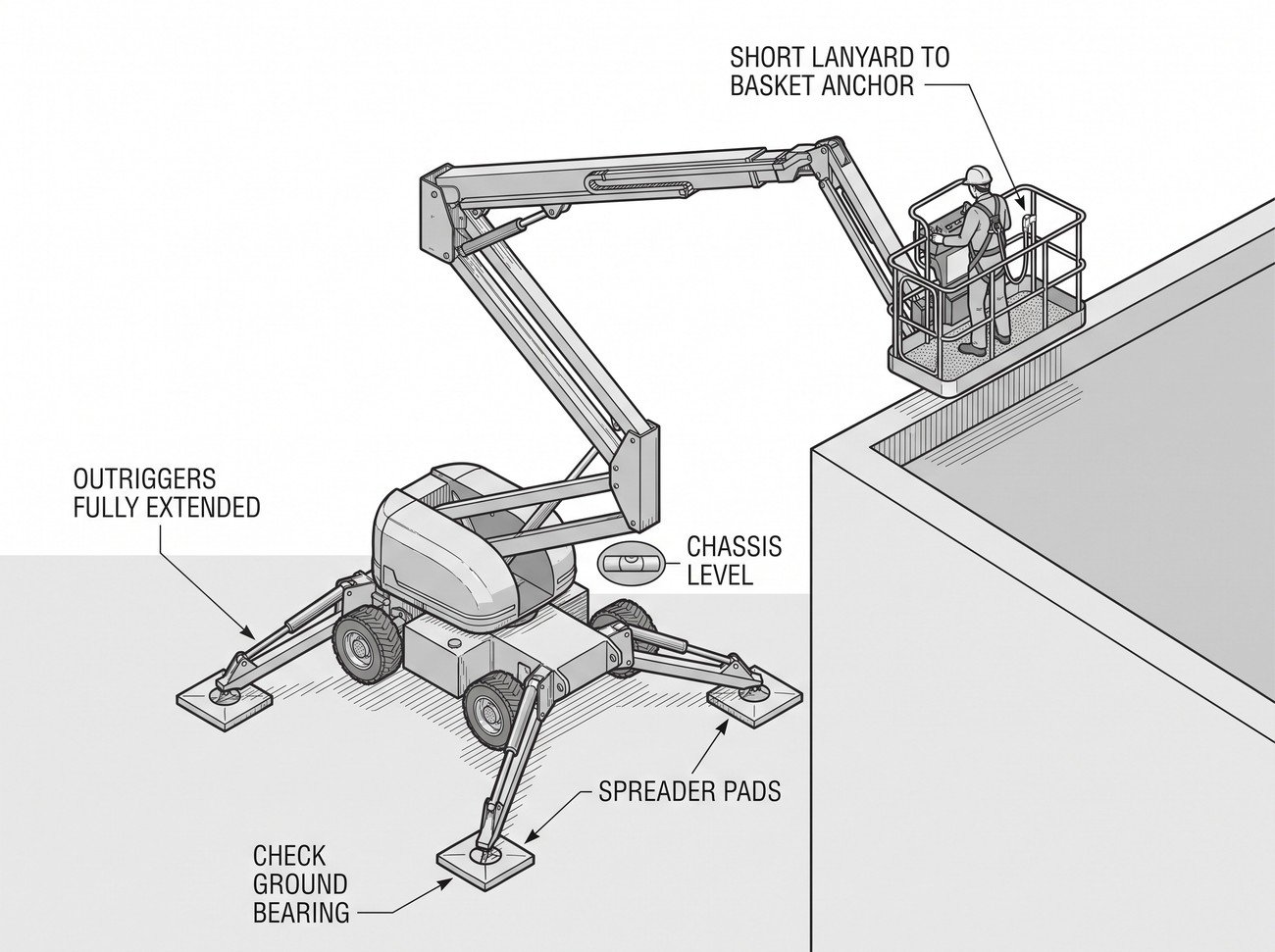
Inside a properly guarded platform basket, the guardrails themselves are usually the primary fall protection, functioning much like edge protection on the roof itself. Many operators are also required to wear a harness with a short restraint lanyard clipped to a manufacturer-designated anchor point inside the basket — not to arrest a fall from height, but specifically to prevent being thrown out of the basket during a sudden movement, a collision, or an unexpected tip. Where a harness is required, it should meet EN 361. Checking the platform manufacturer’s requirement on this point matters, since it varies by machine type and is not automatically the same as fall-arrest PPE used elsewhere.
Ground conditions and setup
A MEWP’s stability depends entirely on the ground it is set up on. Soft, sloped or uneven ground can exceed the machine’s tilt tolerance even before the platform is raised, and outriggers need full, even contact with load-spreading pads on any surface that is not solid and level. Overhead hazards — power lines in particular — need identifying and a safe clearance distance maintained throughout the operation, not just checked once before raising the platform.
Operator competence and pre-use checks
The guarding and interlock principles behind a MEWP’s own machine safety design follow the same general framework as ISO 12100. Only trained, authorised operators should control a MEWP, and every use should begin with the manufacturer’s pre-use checks: controls functioning correctly, emergency lowering system operational, guardrails intact and secure, and tyres or tracks in serviceable condition. A basket with a damaged guardrail or a malfunctioning emergency descent system should not be used until repaired, regardless of time pressure.
Working alongside the structure
Roof-level MEWP work often means working close to the building edge, gutters, fascias and overhangs, which introduces crush and entanglement hazards between the basket and the structure that do not exist when the machine is used in open space. Maintaining awareness of the gap between the basket and the structure throughout the task, and briefing a ground-based spotter for tight manoeuvres, reduces this risk meaningfully.
Where a MEWP is not practical and personal fall protection is used instead, see fall restraint vs fall arrest for roof work.
Common errors
1Setting up on ground that has not been checked for slope, softness or hidden voids.
2Skipping the pre-use check because the machine was used without issue on a previous job.
3Assuming the basket guardrails alone are sufficient without checking the manufacturer's requirement for a restraint lanyard inside the basket.
4Operating close to the structure without a ground-based spotter for tight manoeuvres.
Frequently asked questions
Does a MEWP basket remove the need for a harness?
Not always – many manufacturers require a harness with a short restraint lanyard clipped inside the basket, specifically to prevent being thrown out during a sudden movement or collision, separate from the guardrails' role as the primary fall protection.
Why does ground condition matter so much for MEWP stability?
Soft, sloped or uneven ground can exceed the machine's tilt tolerance even before the platform is raised, so outriggers need full, even contact on load-spreading pads on anything other than solid, level ground.
What should be checked before every MEWP use?
Controls functioning correctly, the emergency lowering system operational, guardrails intact and secure, and tyres or tracks in serviceable condition, following the manufacturer's specific pre-use checklist.
Why is working close to a roof structure with a MEWP a particular hazard?
It introduces crush and entanglement risks between the basket and features like gutters, fascias and overhangs that do not exist when the machine operates in open space, making a ground-based spotter valuable for tight manoeuvres.
Who is allowed to operate a MEWP?
Only trained, authorised operators – competence with the specific machine type is a requirement, not an assumption based on general site experience.
Need this as a document you can issue? The template library gives you the risk assessments, permits and inspection logs in editable form — and employer plans cover a whole team with completion records.