
Latest posts
-
Energy Absorber Deployment Lengths: What They Mean and How They Change Your Clearance
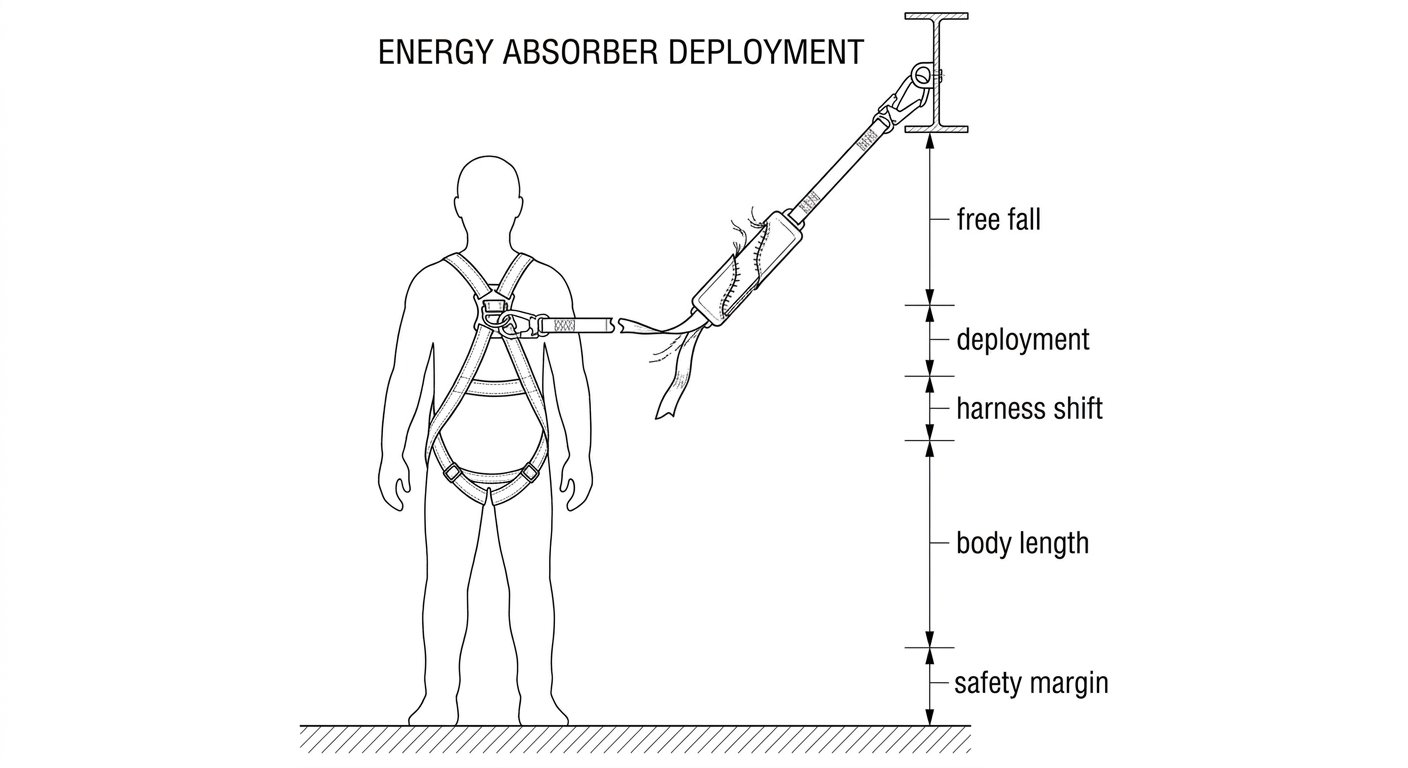
An energy absorber does its job by getting longer. That is the whole mechanism: stitching tears, webbing pays out, and the arrest force on the body is held down to a survivable level. The consequence for anyone planning work at height is that the lanyard length printed on the label is not the space the…
-
Choosing an Absorber for the Clearance Available
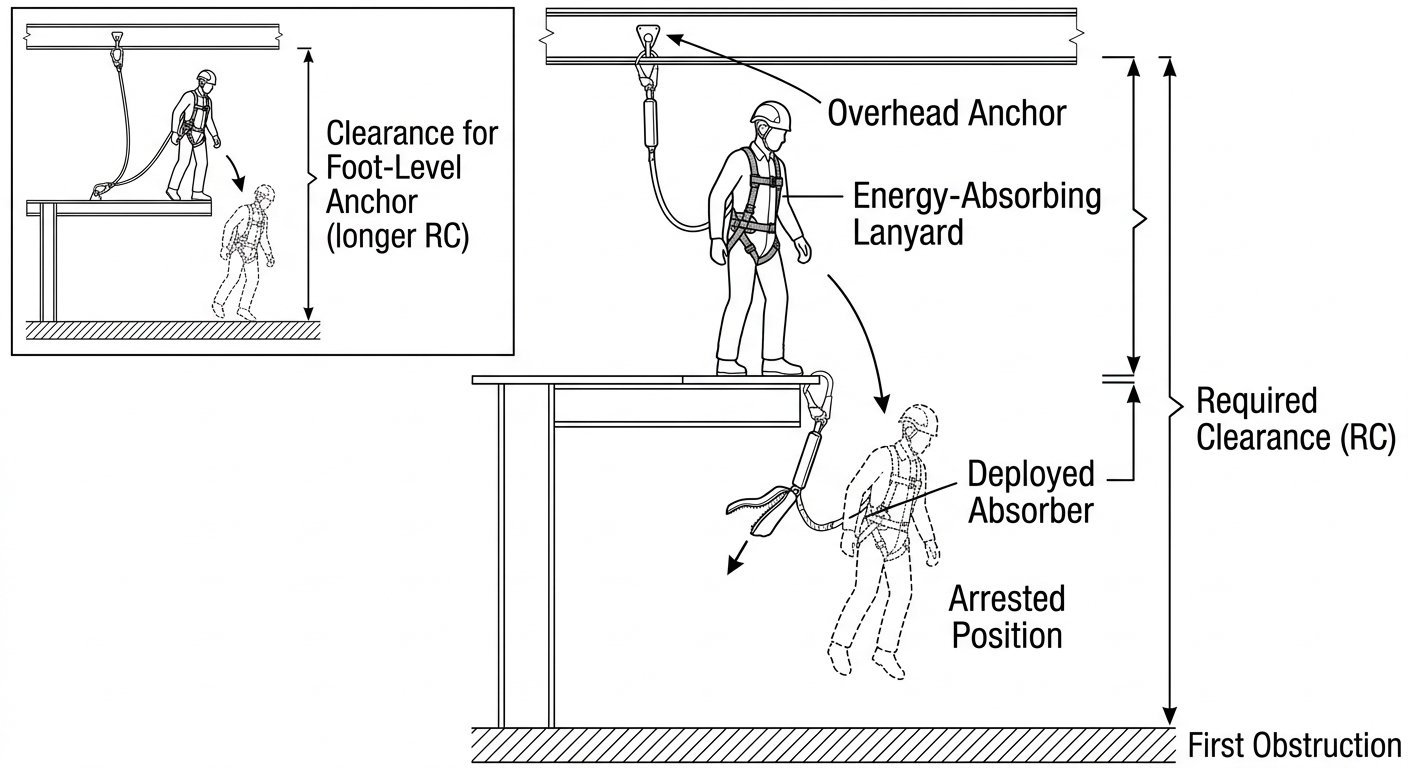
An energy absorber is only as good as the empty space underneath it. The absorber limits the force on the body during a fall arrest, but it does that by lengthening the fall — and if the structure, the plant floor or a pipe rack sits inside that lengthened distance, the worker stops against the…
-
Lanyard-End Connector for Fall Arrest: Gate Opening, Roll-Out and Correct Loading
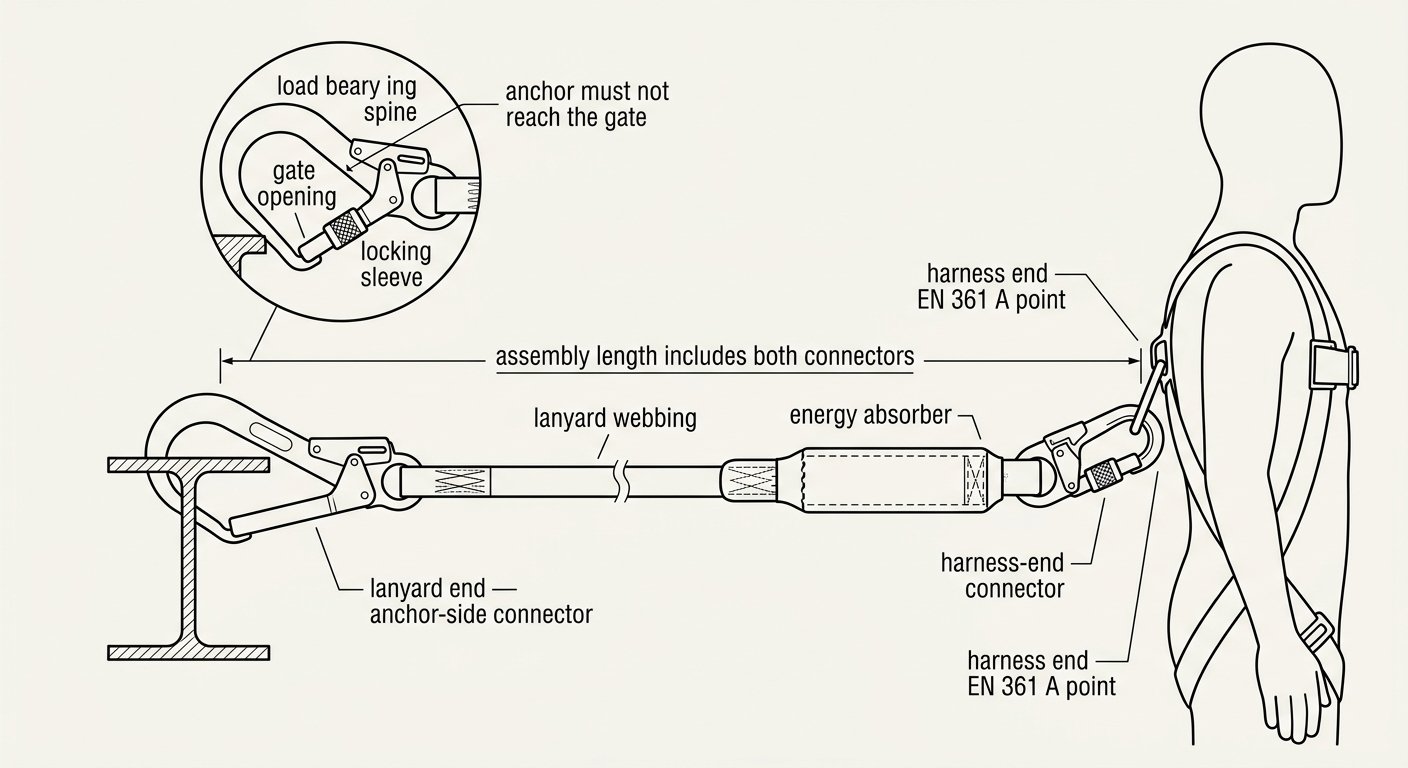
On a fall-arrest lanyard, the connector at the anchor end does more work than any other component in the assembly. It is the part that gets clipped and unclipped dozens of times a shift, the part that has to fit whatever structural member is actually available on site, and the part most likely to be…
-
Lanyard-End Connector for Work Positioning: Choosing and Loading the Anchor-Side Hook
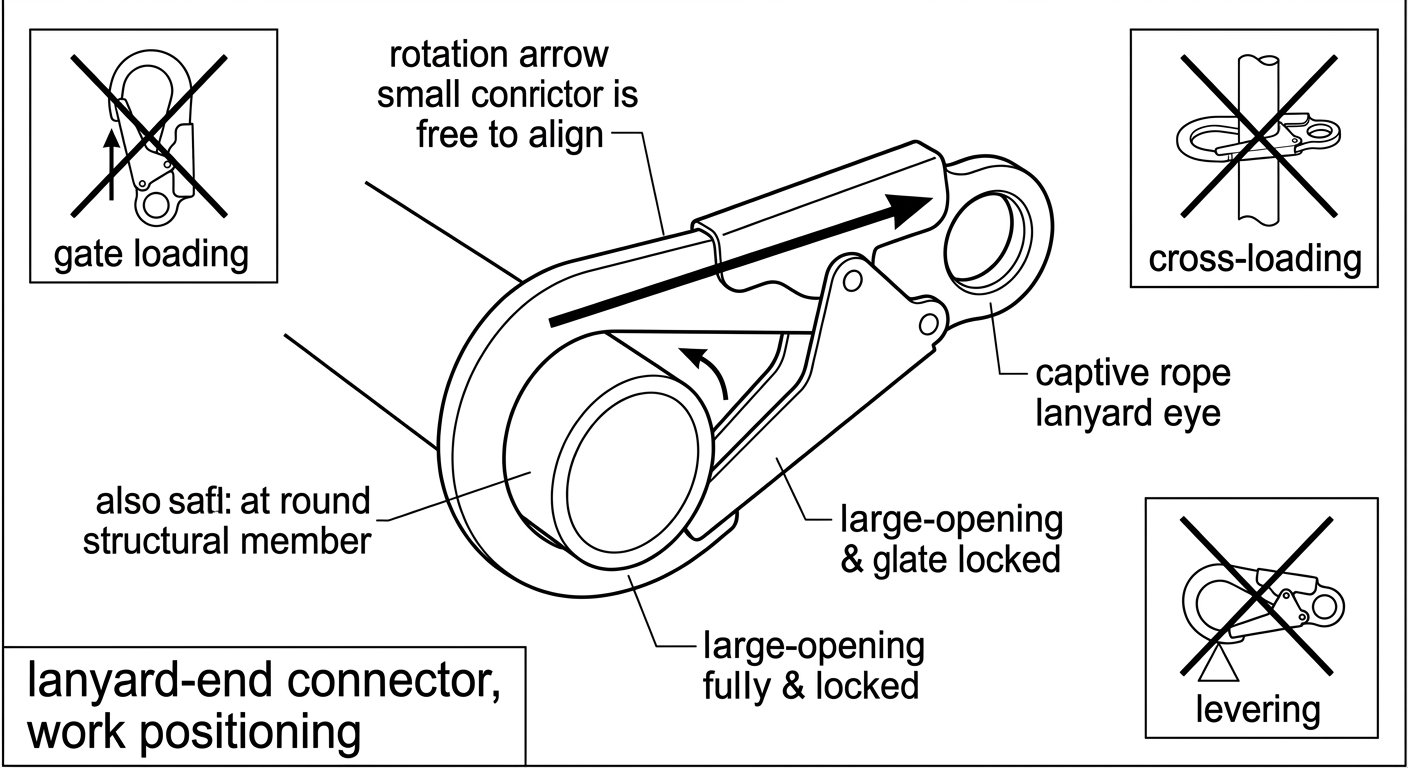
On an adjustable work positioning lanyard, the connector at the far end — the one that goes around the column, rung, pipe or scaffold tube — is the part of the system handled most and inspected least. It is opened and closed dozens of times a shift, frequently one-handed, frequently at arm’s length and out…
-
Which Type of Fall-Arrest Lanyard to Choose: A Selection Note
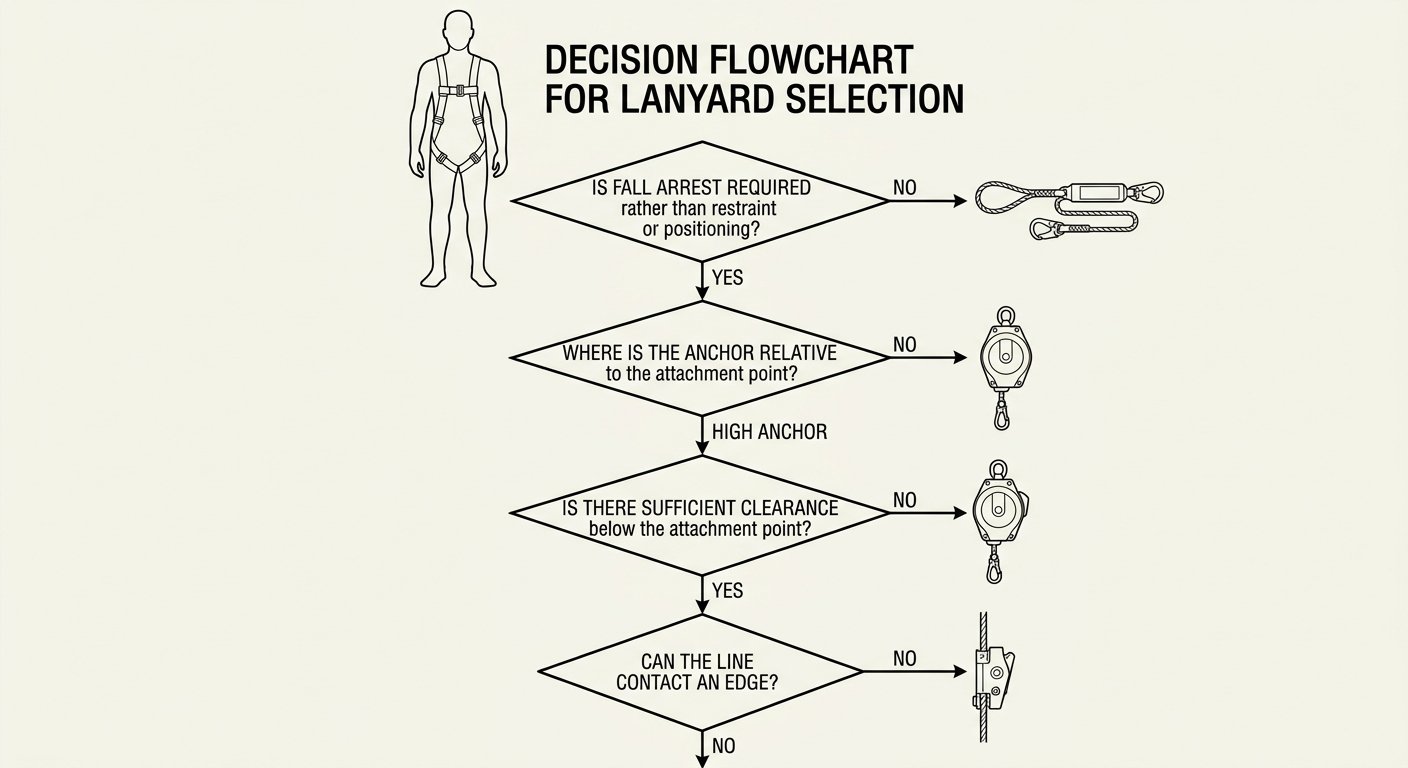
Choosing a fall-arrest lanyard is not a matter of preference or of what happens to be on the van. The choice is dictated by three site conditions that can be checked before anyone clips in: where the anchor sits relative to the harness attachment point, how much clear space there is below the worker, and…