
Safety / Tips and Tricks / Roofing and work at height
Activity 02 · Roofing
Choosing a Ladder Class for Roof Access: EN 131 Explained
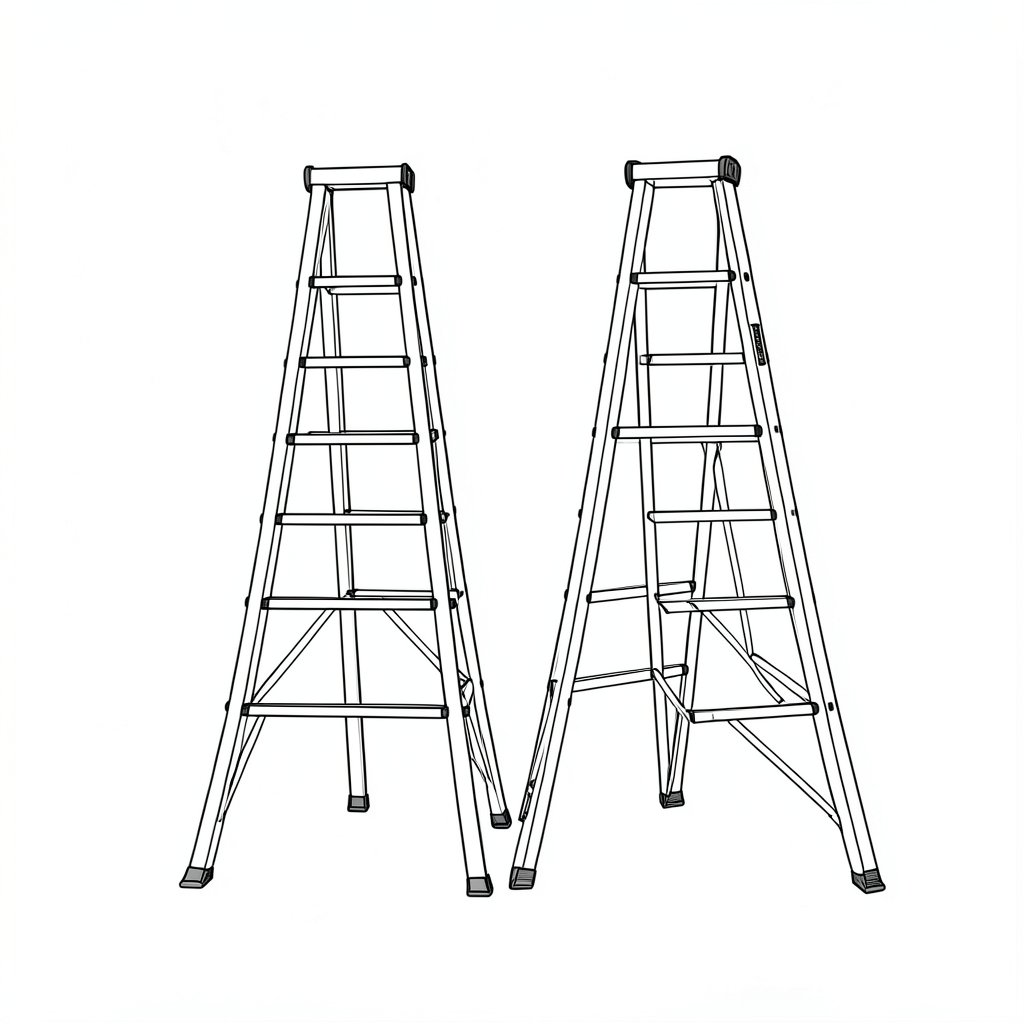
Not every ladder is rated for the same use, and the difference between a domestic stepladder from a hardware shop and a professional access ladder is not cosmetic — it is a difference in tested load, duty cycle and construction that directly affects whether the ladder is appropriate for repeated professional roof access.
What EN 131 covers
EN 131 is the European standard for portable ladders, setting out design, construction and testing requirements including static and dynamic load tests, torsional rigidity, and rung and stile strength. Ladders certified to EN 131 are marked with the standard and a professional or non-professional classification, which is the first thing to check before a ladder is put into regular site use rather than assumed suitable because it looks similar to one that is.
The standard covers several ladder types — single, extension, combination and stepladders — each with construction requirements suited to how that type is actually used, so the classification is specific to the ladder type as well as its duty rating.
Professional versus non-professional classification
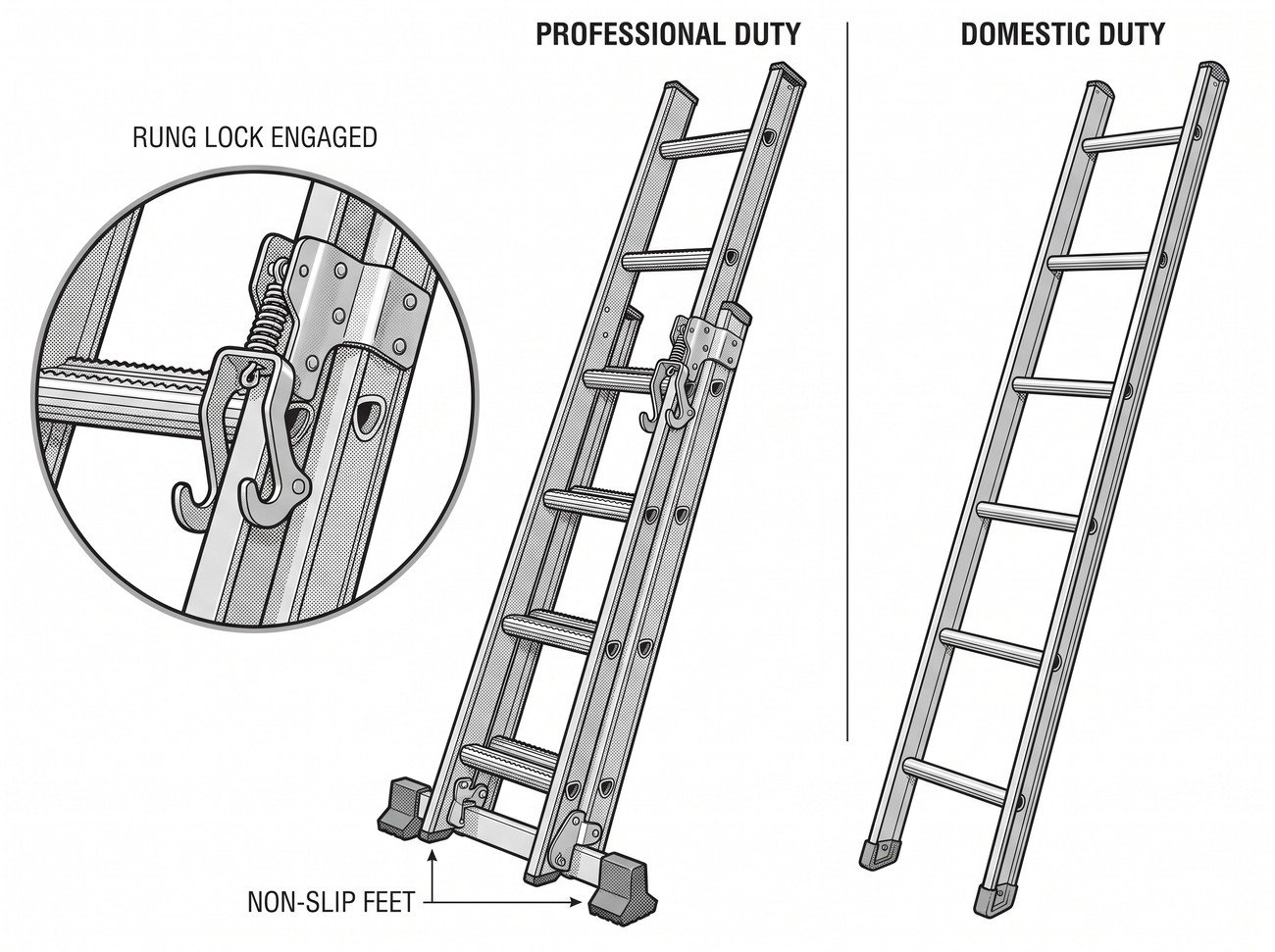
A ladder marked for professional or trade use has been tested to a higher load and durability standard than one marked for domestic or occasional use, reflecting the more frequent loading, harsher handling and longer service life expected on a work site. Using a domestic-rated ladder for regular professional roof access is a mismatch between the equipment’s tested capability and its actual use, even if the ladder appears to perform adequately for a period of time before any fault becomes apparent.
Matching ladder type to the access task
An extension ladder suits reaching a fixed height against a wall or roof edge where the base can be footed on solid, level ground. A combination ladder offers more flexibility where the access point varies, but with a weight and complexity trade-off. A stepladder is not designed for roof access at all in most configurations — it is built for a different load direction and stability profile, and using one to reach a roof edge is a common but serious mismatch between the equipment and the task.
Inspection before use
Every use should start with a visual and functional check: stiles free of cracks or bends, rungs secure and undamaged, locking mechanisms on extension sections engaging fully, feet intact and not worn smooth, and no visible corrosion at load-bearing joints. A ladder that fails any of these checks should be taken out of service immediately, not used “just for this one job” with the fault noted for later.
Once the right ladder is selected, the climbing technique itself is covered in ladder safety for roof access.
Common errors
1Using a domestically rated ladder for regular professional roof access.
2Using a stepladder to reach a roof edge when the task actually requires an extension ladder.
3Skipping the pre-use inspection because the ladder was used without issue the previous day.
4Assuming any ladder marked EN 131 is suitable for professional use without checking the specific classification.
Frequently asked questions
What does EN 131 actually certify about a ladder?
It sets design, construction and testing requirements including static and dynamic load tests, torsional rigidity, and rung and stile strength, with ladders marked to show the standard and a professional or non-professional classification.
What is the difference between professional and non-professional rated ladders?
Professional-rated ladders are tested to a higher load and durability standard, reflecting more frequent loading and harsher handling, and are the appropriate choice for regular work-site use rather than domestic-rated equivalents.
Why is a stepladder usually the wrong choice for roof access?
Stepladders are built for a different load direction and stability profile than reaching a fixed roof edge height, and using one for that purpose is a common mismatch between the equipment and the task.
What should be checked before every use of a ladder?
Stiles free of cracks or bends, rungs secure and undamaged, extension locking mechanisms fully engaging, intact feet, and no visible corrosion at load-bearing joints.
Why does ladder type matter beyond just its load rating?
Extension, combination and stepladders are each built for how that type is actually used, so the right type for the specific access task matters as much as the duty classification itself.
Need this as a document you can issue? The template library gives you the risk assessments, permits and inspection logs in editable form — and employer plans cover a whole team with completion records.