
Latest posts
-
General Principles for Work at Height: The Order of Decisions Before You Rig
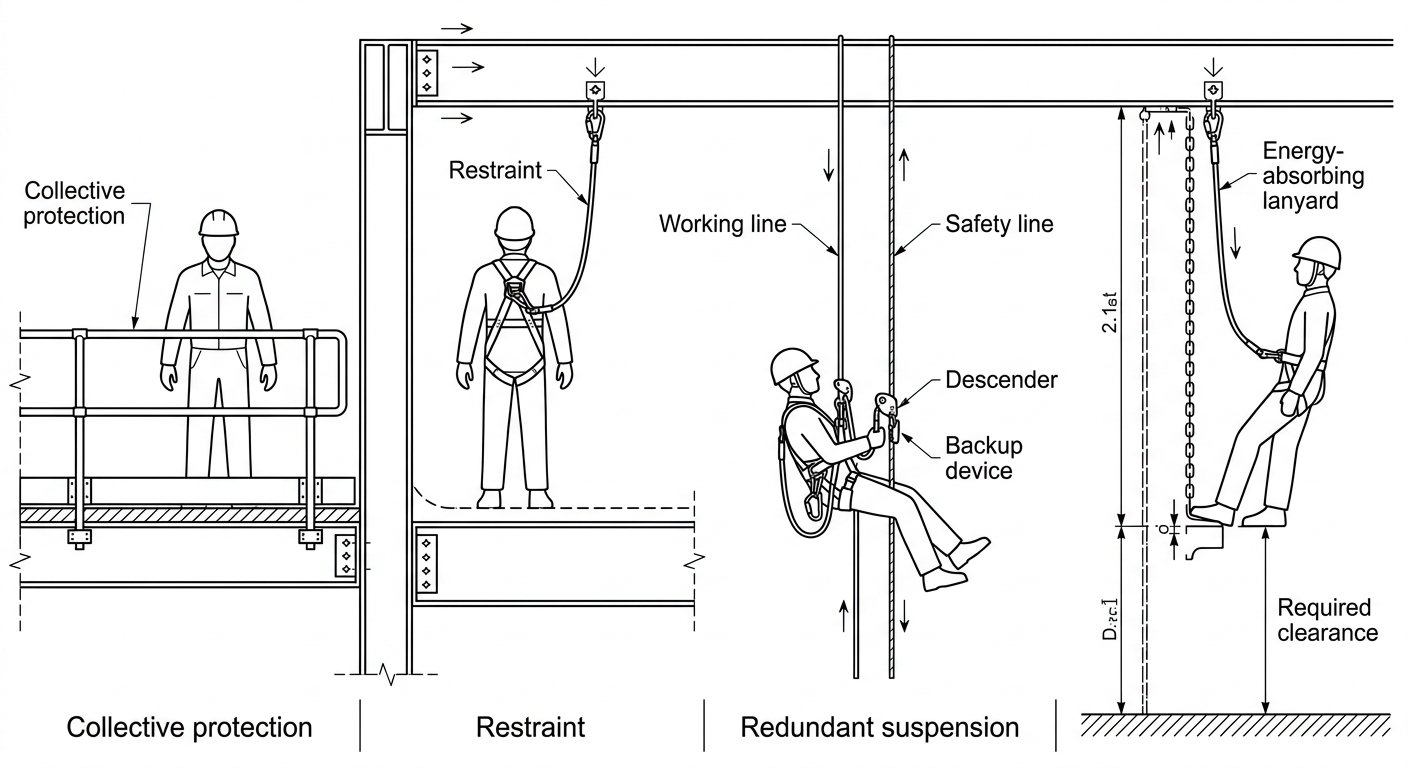
Most work-at-height failures are not equipment failures. They are ordering failures: someone chose a harness before checking whether the anchor could sit overhead, or chose a lanyard before measuring the clearance below the work position, or planned the access without planning the retrieval. The general principles for work at height exist to fix that order…
-
Service Life and Retirement Criteria for Textiles: Age Limits, Condition Checks and When to Cut the Sling
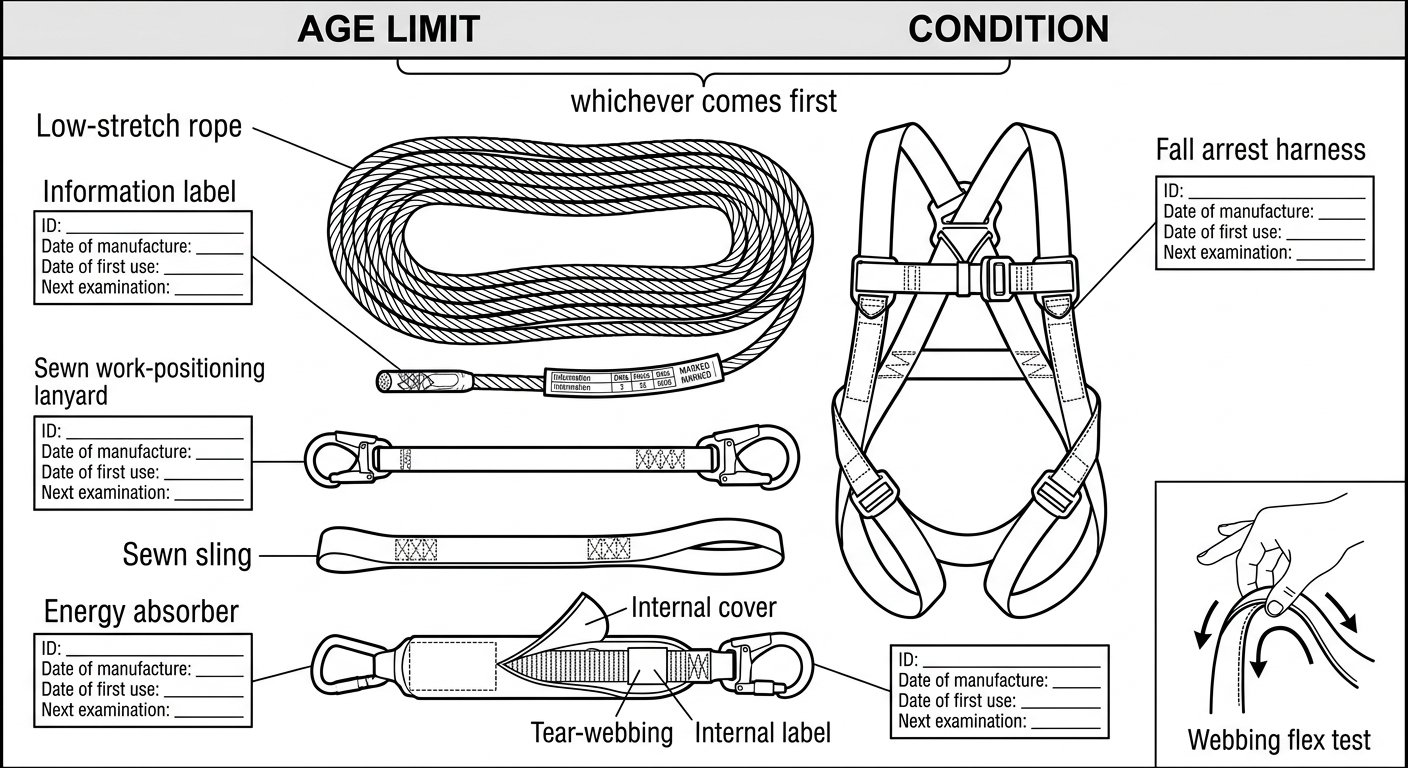
Every textile item in a rope-access or confined-space kit — rope, harness, positioning belt, lanyard, energy absorber, sling, anchor strap, accessory cord — leaves service for one of three reasons: it reached the maximum service life declared by its manufacturer, an inspection found damage that meets a retirement criterion, or a single event happened to…
-
Reading the Markings on a Connector
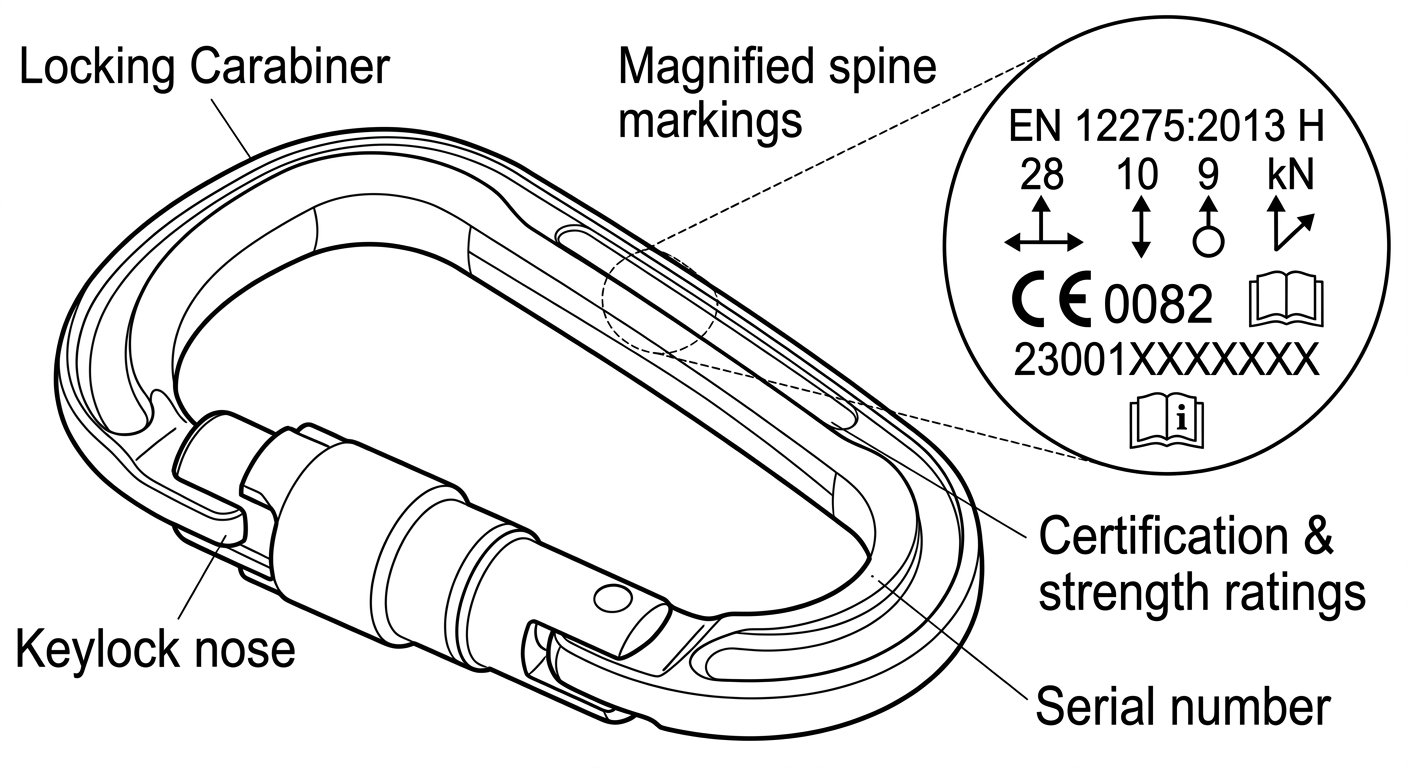
A connector that has been picked out of a kit bag tells you almost everything you need to know about whether it belongs in the system you are about to build — but only if you can read it. The letters, numbers and pictograms stamped or laser-etched into a carabiner body are not decoration or…
-
Which Attachment Points to Use for Restraint
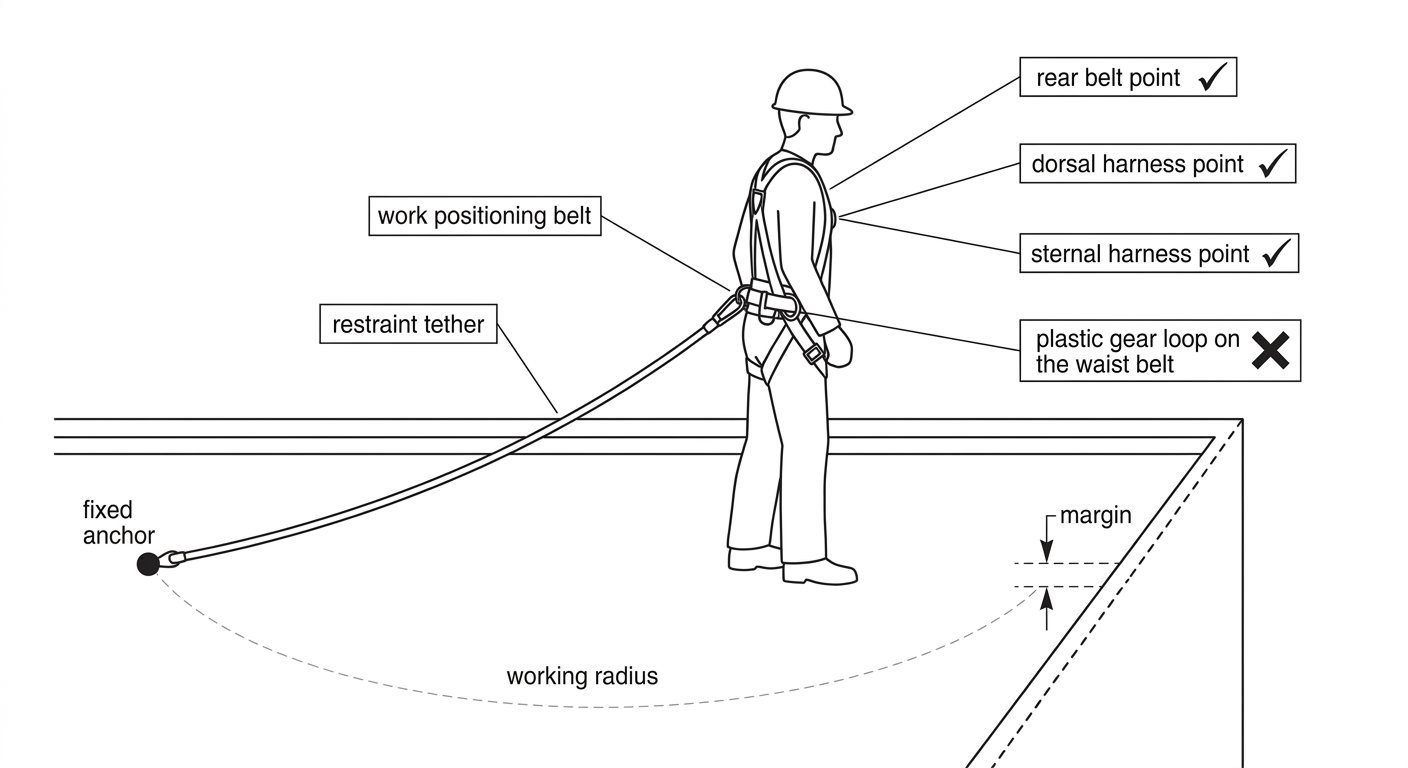
Restraint work looks simple on paper: connect to an anchor with a tether short enough that the worker cannot physically reach the fall hazard. Because a fall is designed out of the system rather than arrested, the attachment point on the body does not have to absorb a fall load — which is exactly why…
-
Lanyard-End Connector for Work Positioning: Choosing and Loading the Anchor-Side Hook
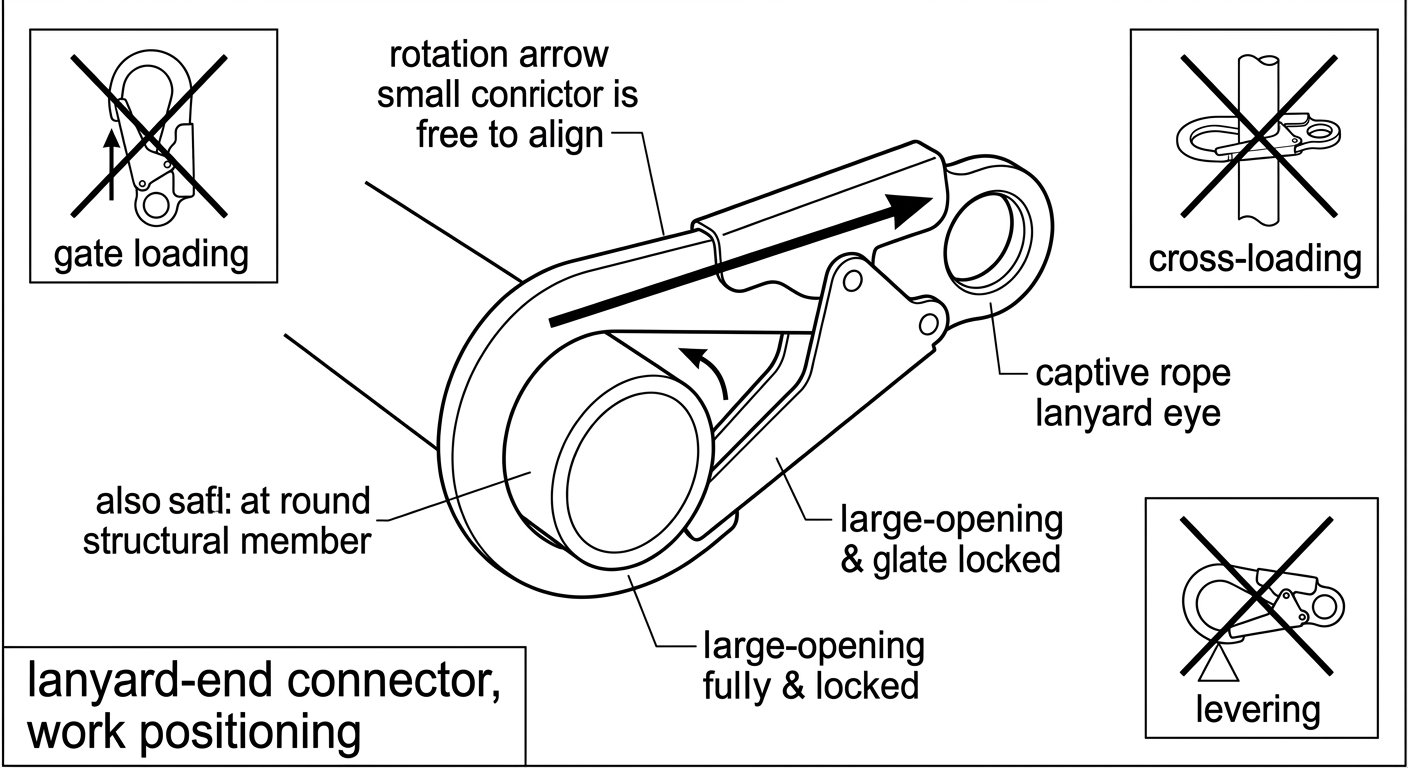
On an adjustable work positioning lanyard, the connector at the far end — the one that goes around the column, rung, pipe or scaffold tube — is the part of the system handled most and inspected least. It is opened and closed dozens of times a shift, frequently one-handed, frequently at arm’s length and out…
-
Connector Basics: Gates, Axes and Loading
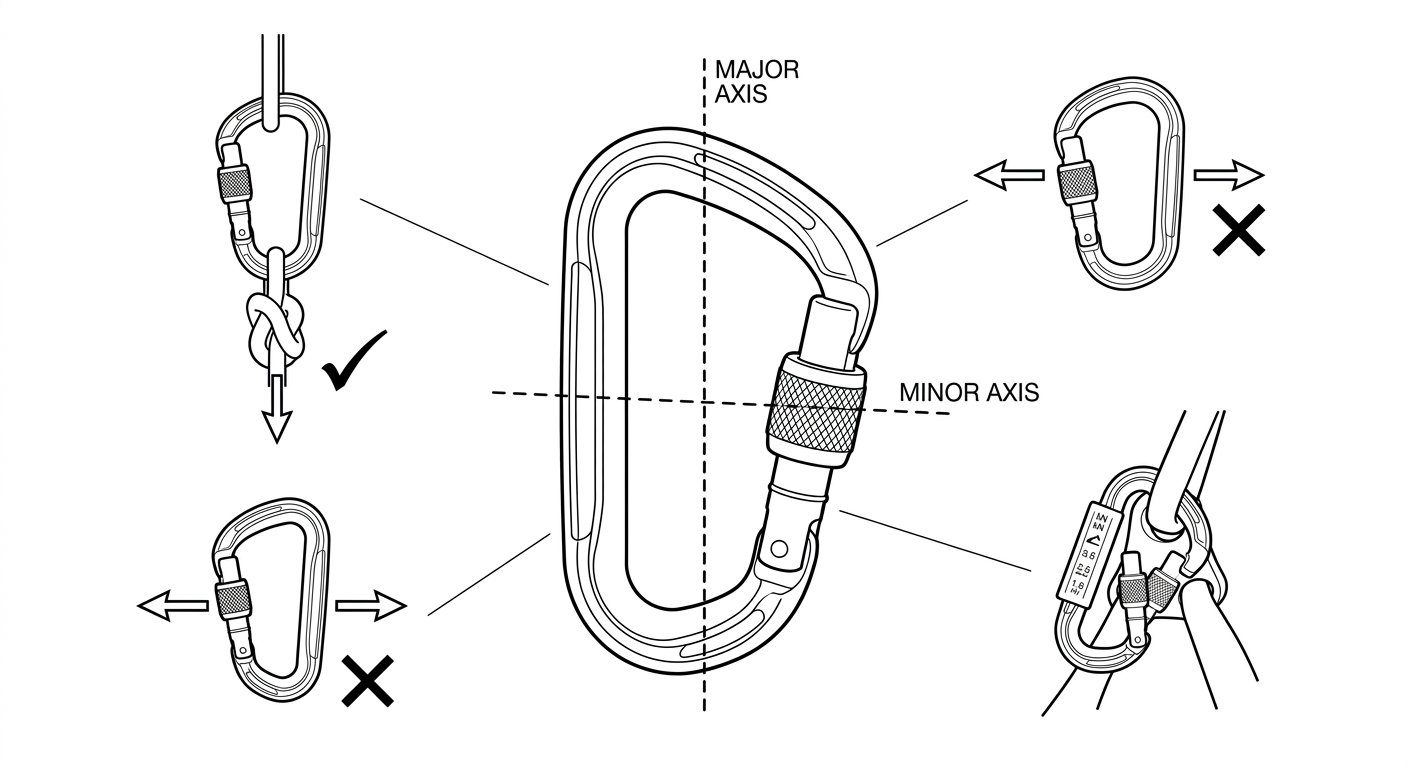
A connector is the smallest component in most rope-access and confined-space systems and the one most often loaded in a way it was never designed for. Every anchor, every lanyard, every descender and back-up device is attached through one, and the difference between a connector working at its rated strength and failing well below it…
-
Checking Connector Compatibility: A Field Method Before You Clip In
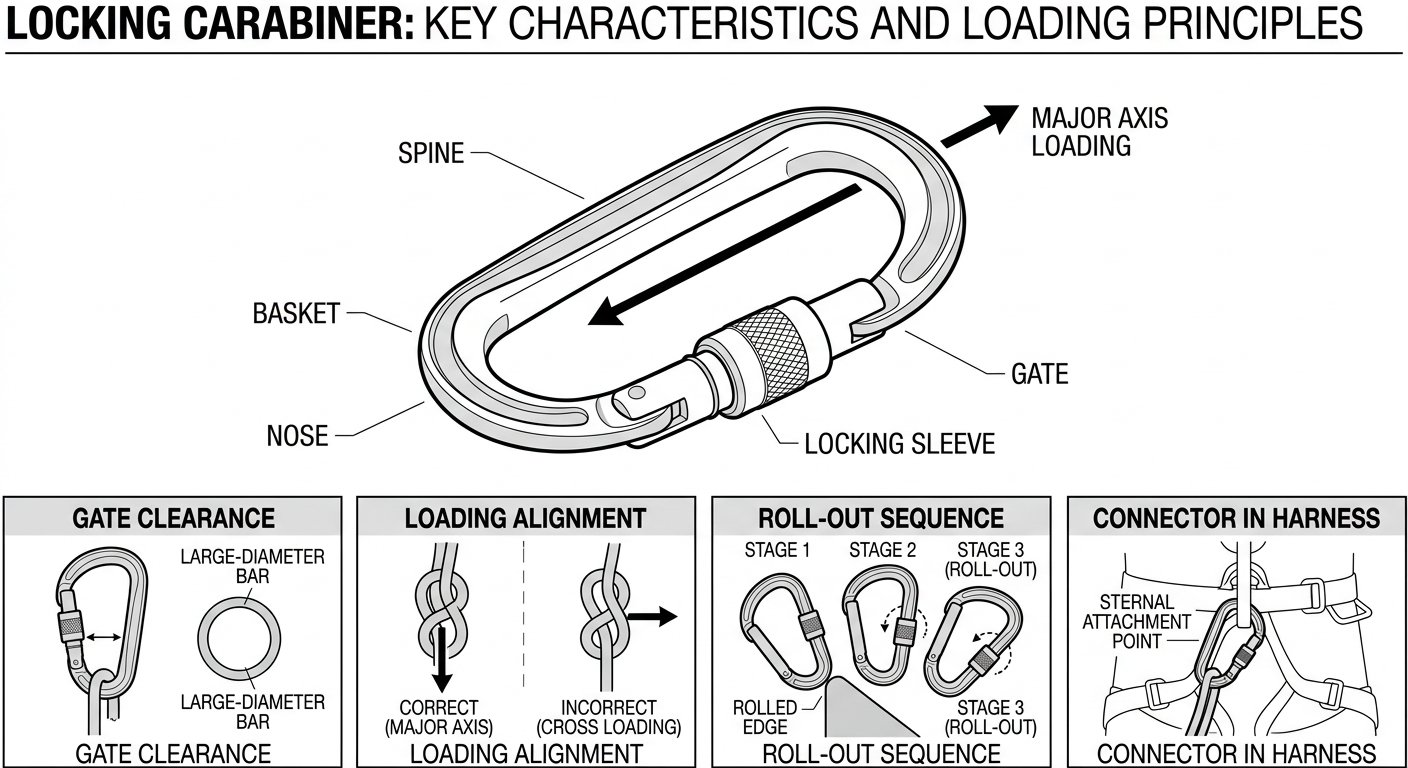
Most connector problems on site are not strength problems. A locking carabiner marked to EN 362 (Connectors for Fall Protection) has ample margin for the loads a rope access or confined-space system will generate — provided it is loaded along its major axis, with the gate closed and locked, against something it actually fits. Compatibility…
-
Adjusting a Full Body Harness Correctly: Fit, Checks and Common Errors
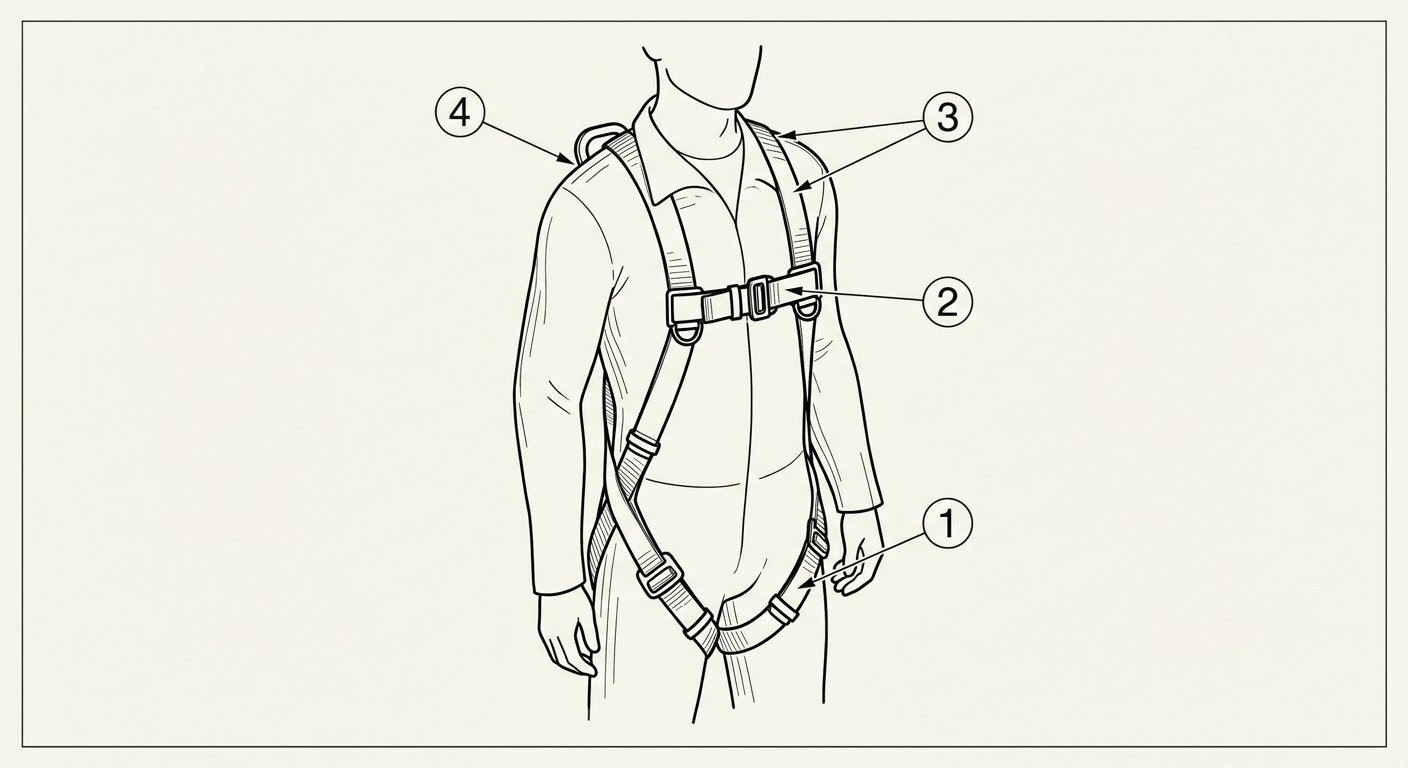
A full body harness only performs as designed if it is adjusted to the person wearing it. The same harness, on the same worker, can be either a functioning fall arrest system or a loose assembly of webbing that shifts under load, depending on five minutes of setup at the start of the shift. Adjustment…
-
Connector Locking Systems Compared: Screw-Lock, Two-Stage and Three-Stage Auto-Lock
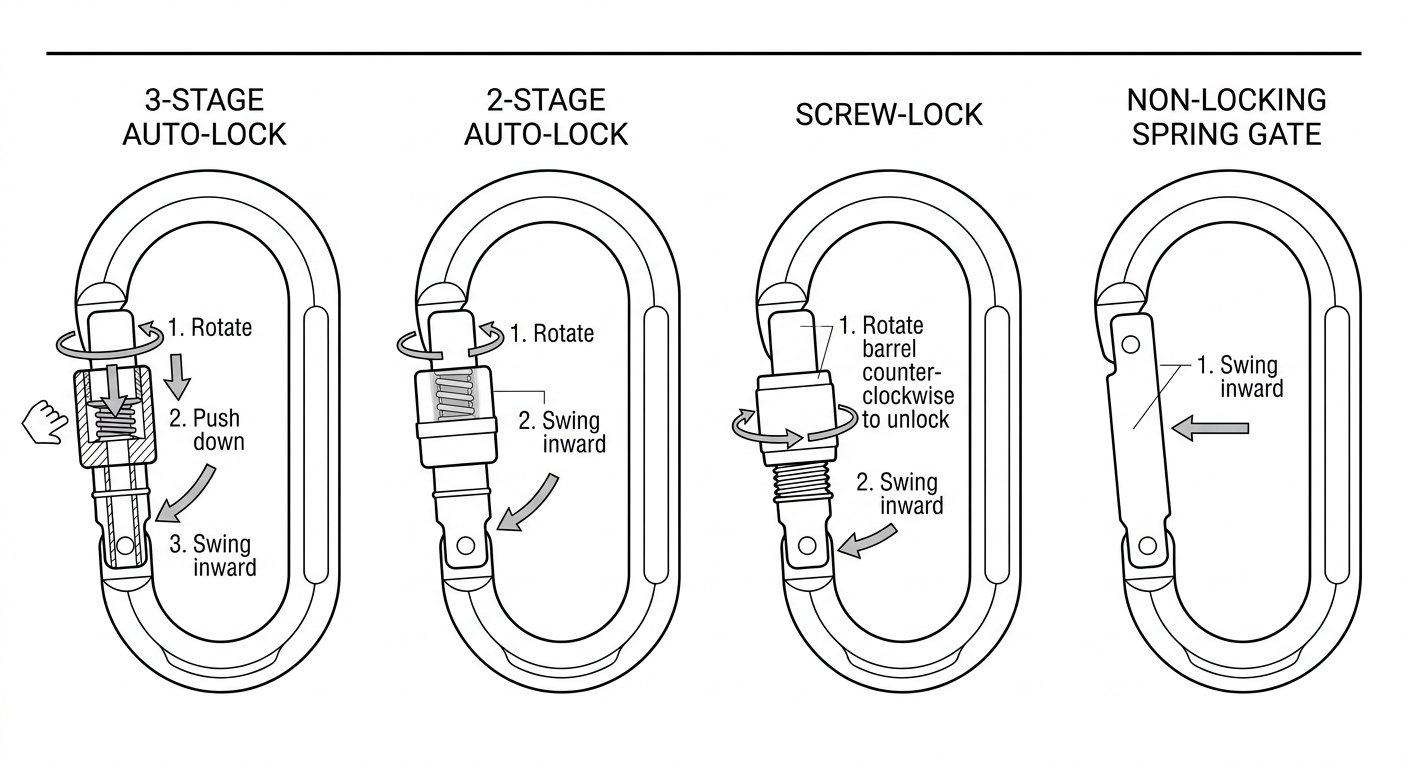
Every rope access or confined-space system comes down to a handful of small metal parts that hold the whole thing together. The connector at the harness attachment point, at the anchor, on the descender and on the back-up device is where a system most often fails through human error rather than material failure — a…