
Latest posts
-
General Principles for Work at Height: The Order of Decisions Before You Rig
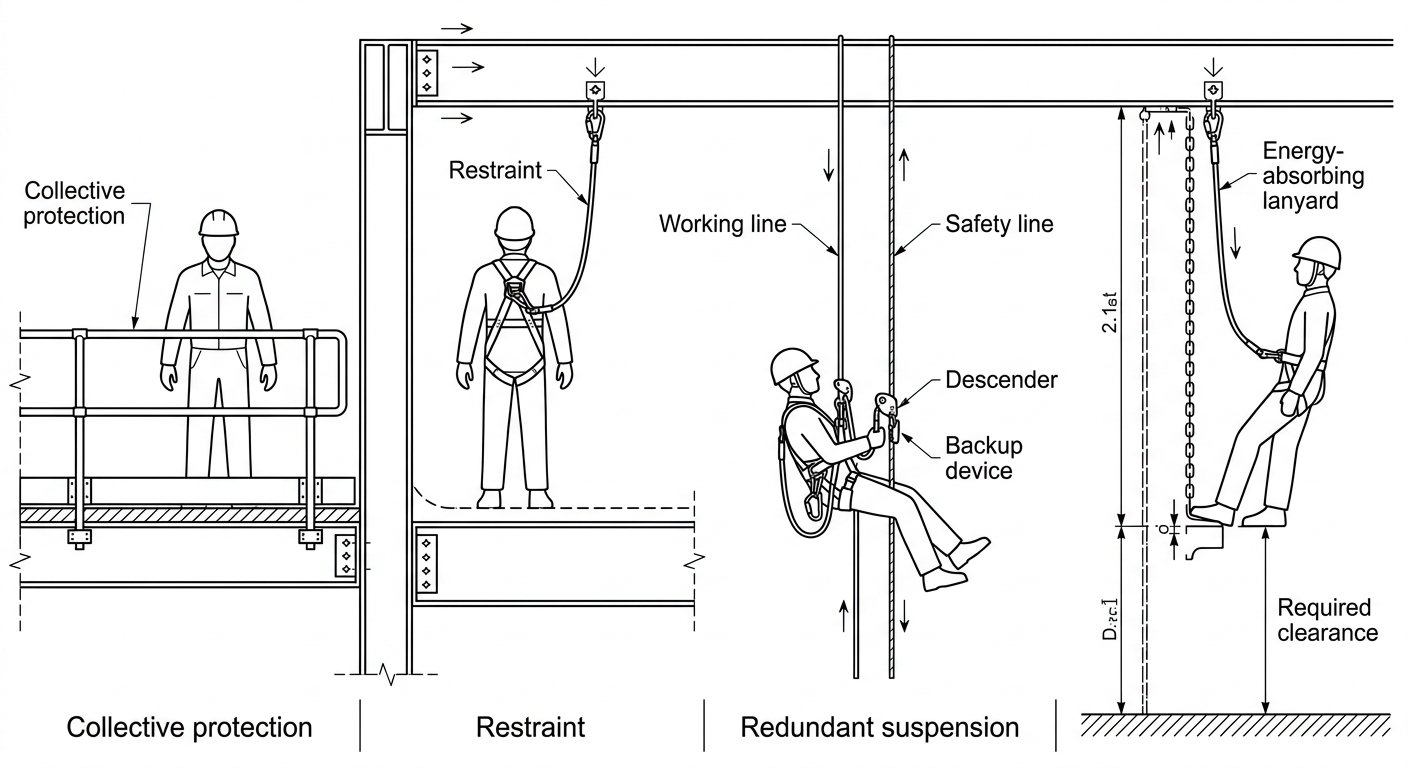
Most work-at-height failures are not equipment failures. They are ordering failures: someone chose a harness before checking whether the anchor could sit overhead, or chose a lanyard before measuring the clearance below the work position, or planned the access without planning the retrieval. The general principles for work at height exist to fix that order…
-
Energy Absorber Deployment Lengths: What They Mean and How They Change Your Clearance
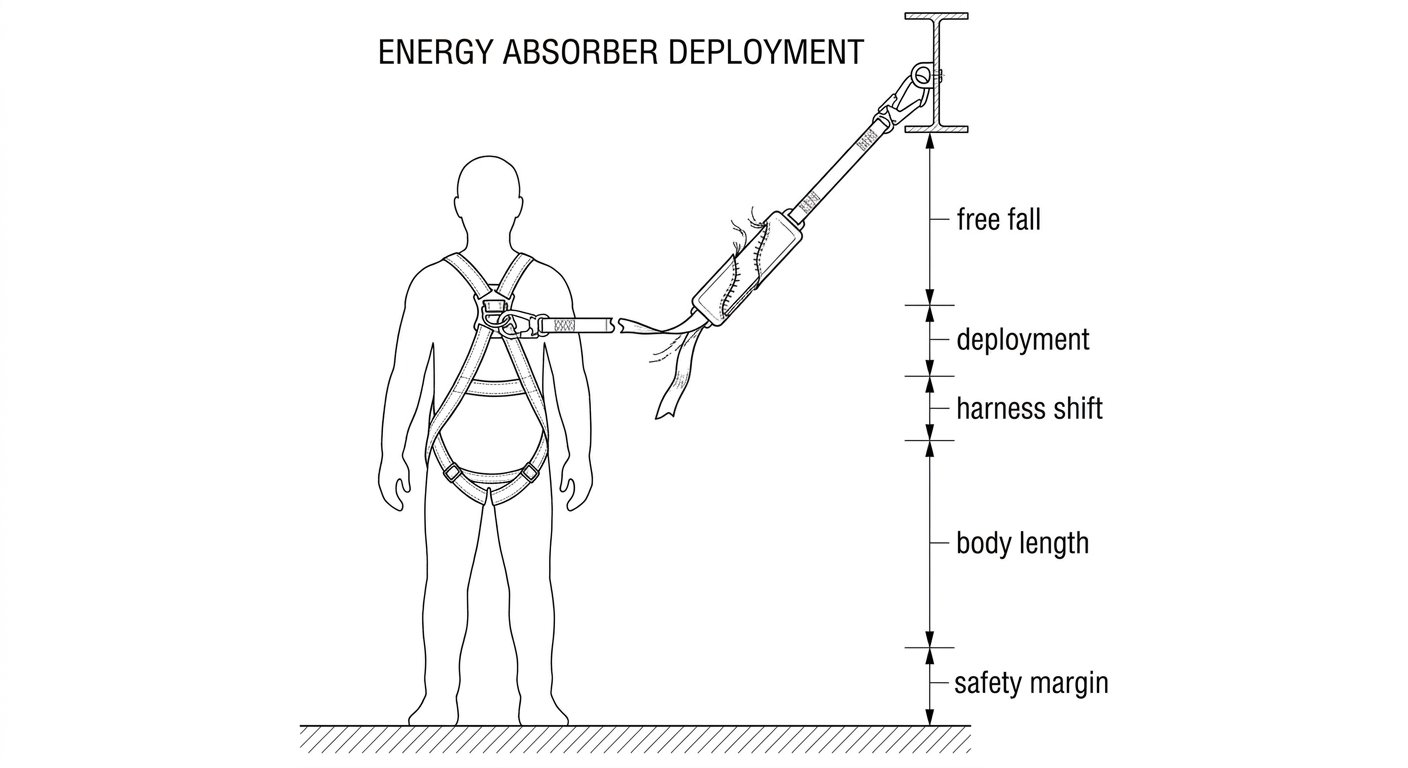
An energy absorber does its job by getting longer. That is the whole mechanism: stitching tears, webbing pays out, and the arrest force on the body is held down to a survivable level. The consequence for anyone planning work at height is that the lanyard length printed on the label is not the space the…
-
Choosing an Absorber for the Clearance Available
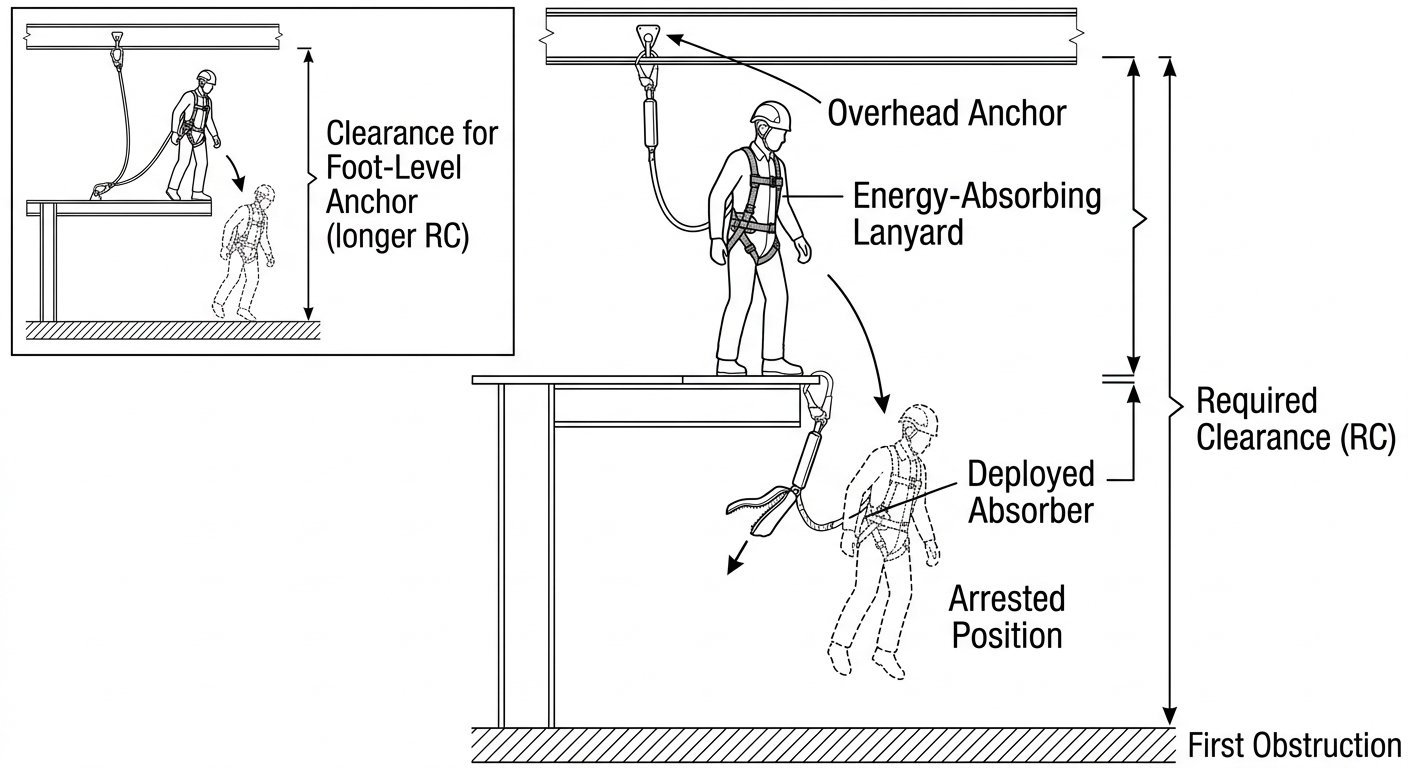
An energy absorber is only as good as the empty space underneath it. The absorber limits the force on the body during a fall arrest, but it does that by lengthening the fall — and if the structure, the plant floor or a pipe rack sits inside that lengthened distance, the worker stops against the…
-
Which Type of Fall-Arrest Lanyard to Choose: A Selection Note
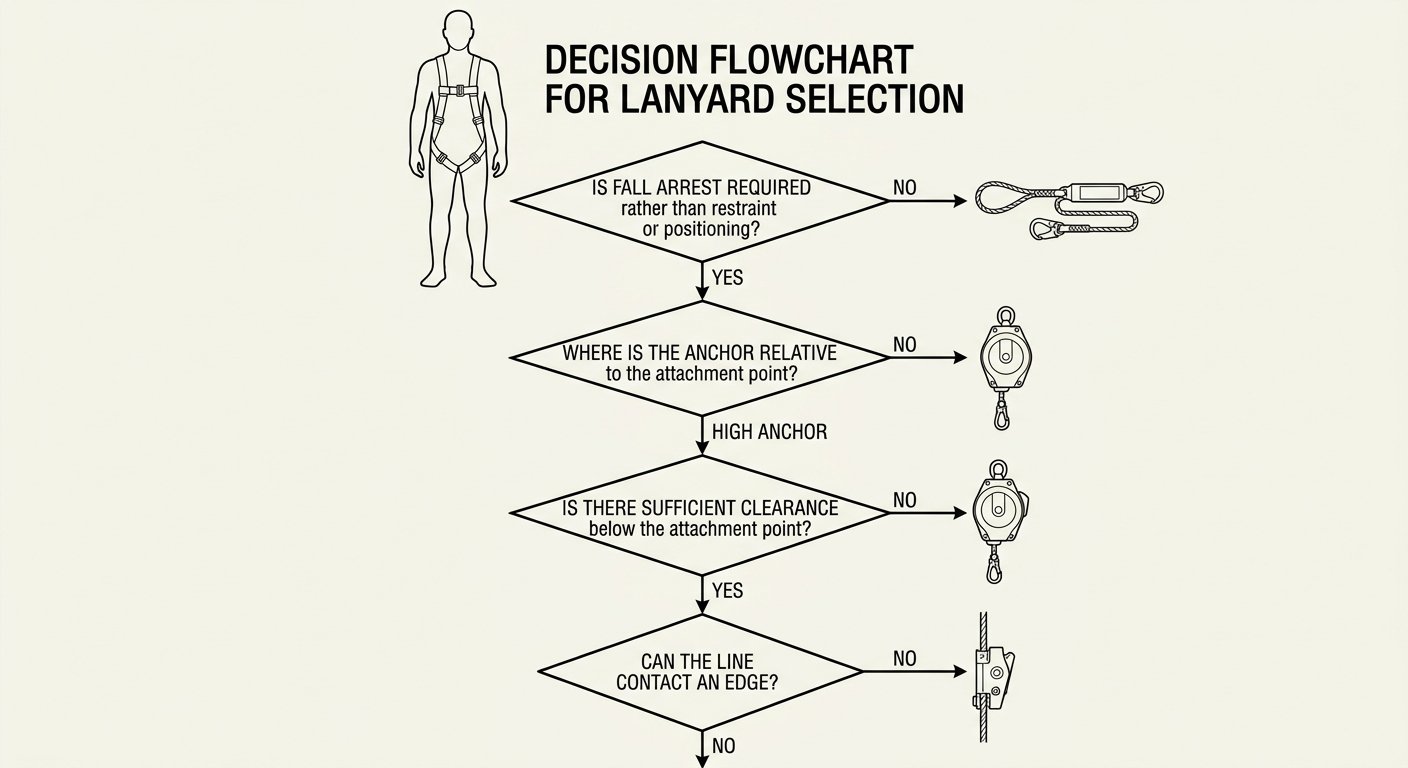
Choosing a fall-arrest lanyard is not a matter of preference or of what happens to be on the van. The choice is dictated by three site conditions that can be checked before anyone clips in: where the anchor sits relative to the harness attachment point, how much clear space there is below the worker, and…