Stories / The Blind Corner Where Paths Crossed
The Blind Corner Where Paths Crossed
A forklift and a pedestrian met at a warehouse corner with no mirror, no marked walkway and stacked pallets blocking the sightline. The truck driver braked hard and stopped inches short.
Field Story · Workplace Transport
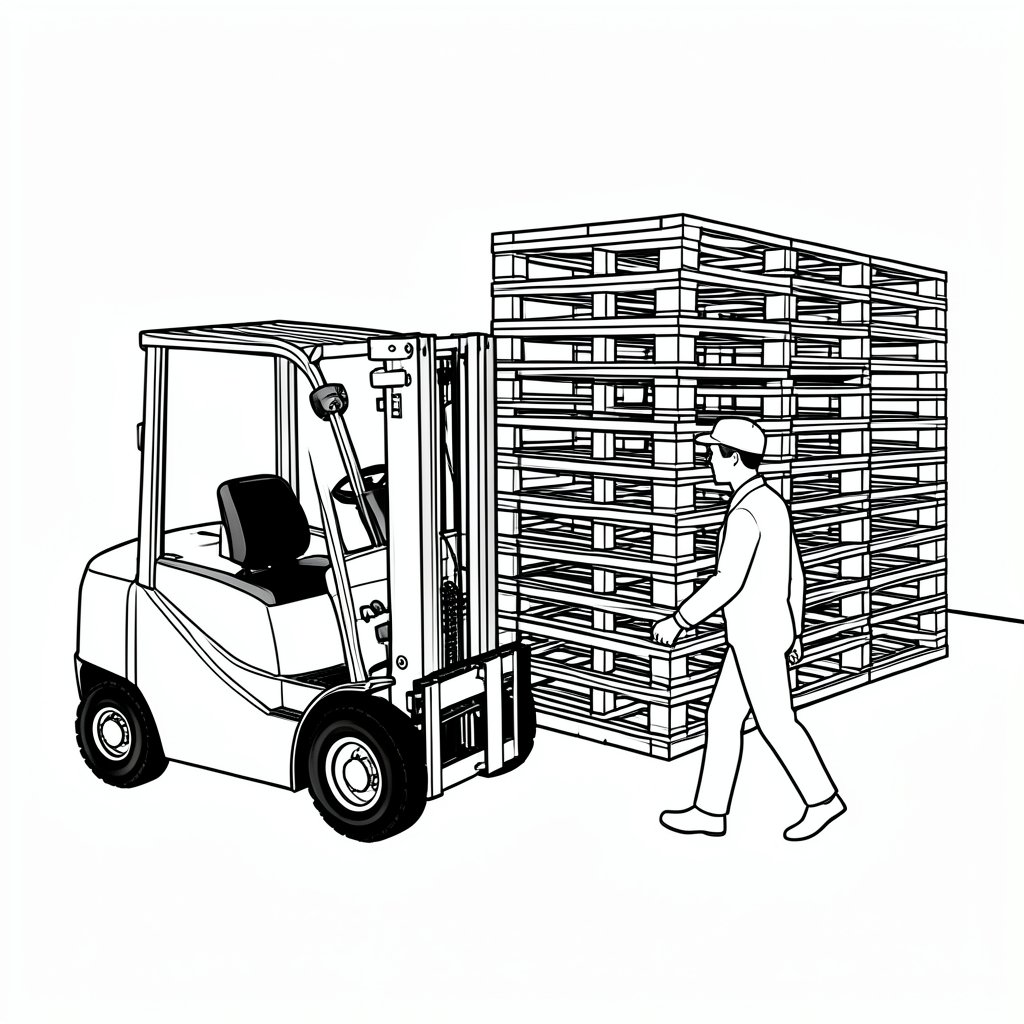
A forklift and a pedestrian met at a corner with no mirror and no marked walkway.
Everyone had used that corner for years and it had always been fine, which is how a hazard hides in plain sight. There was no physical separation between people and vehicles, so the only thing preventing a collision was luck and reaction time.
The lesson
The strongest control is to separate pedestrians and vehicles entirely with marked routes and barriers. Where paths must cross, mirrors, signage and high-visibility clothing meeting EN ISO 20471 reduce the residual risk, but they do not replace separation.
This is a composite case study built from common near-miss patterns, used to illustrate the safety principles involved. It does not describe a specific real person or workplace.
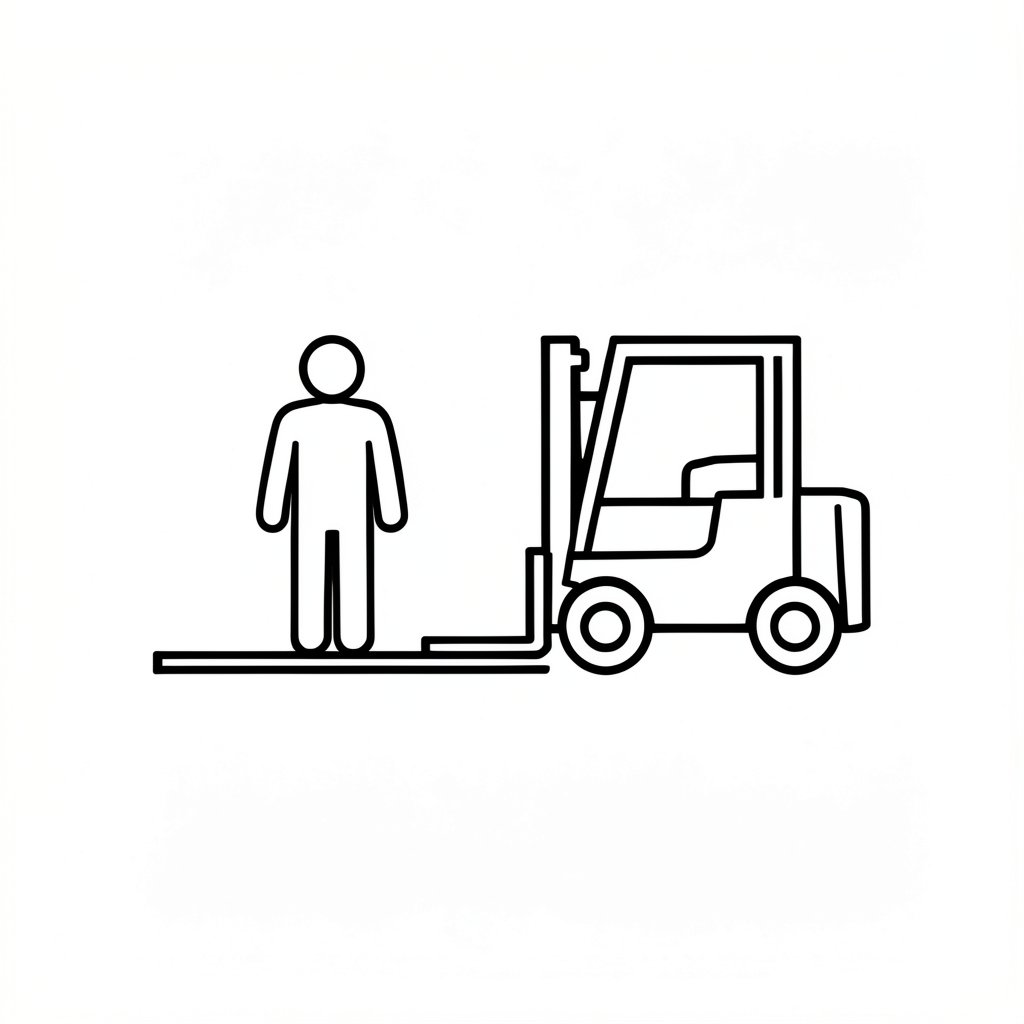
Physical separation is the strongest control where people and vehicles share a space.
← Back to all field stories | Browse EN standards
Frequently asked questions
Why is separating pedestrians and vehicles considered the strongest control here?
Marked routes and physical barriers remove the possibility of a person and a vehicle occupying the same space at the same time, which is more reliable than depending on visibility, signage or driver reaction time.
Why did a hazard that existed for years never get addressed?
Because nothing had gone wrong before, the blind corner was treated as normal rather than as an unaddressed hazard – a pattern where familiarity itself hides the risk.
What is the role of high-visibility clothing in a scenario like this?
Garments meeting EN ISO 20471 improve how quickly a pedestrian is noticed and reduce residual risk where paths must cross, but they do not replace separating people from vehicle routes in the first place.
What should be done where a blind corner cannot be redesigned?
Mirrors, signage, marked crossing points and enforced speed limits reduce the residual risk at a blind corner that cannot be eliminated by rerouting traffic or pedestrians.