
Latest posts
-
Using Pulleys With Small-Diameter Rope or Cord: Sheave Fit, Jamming and System Compatibility
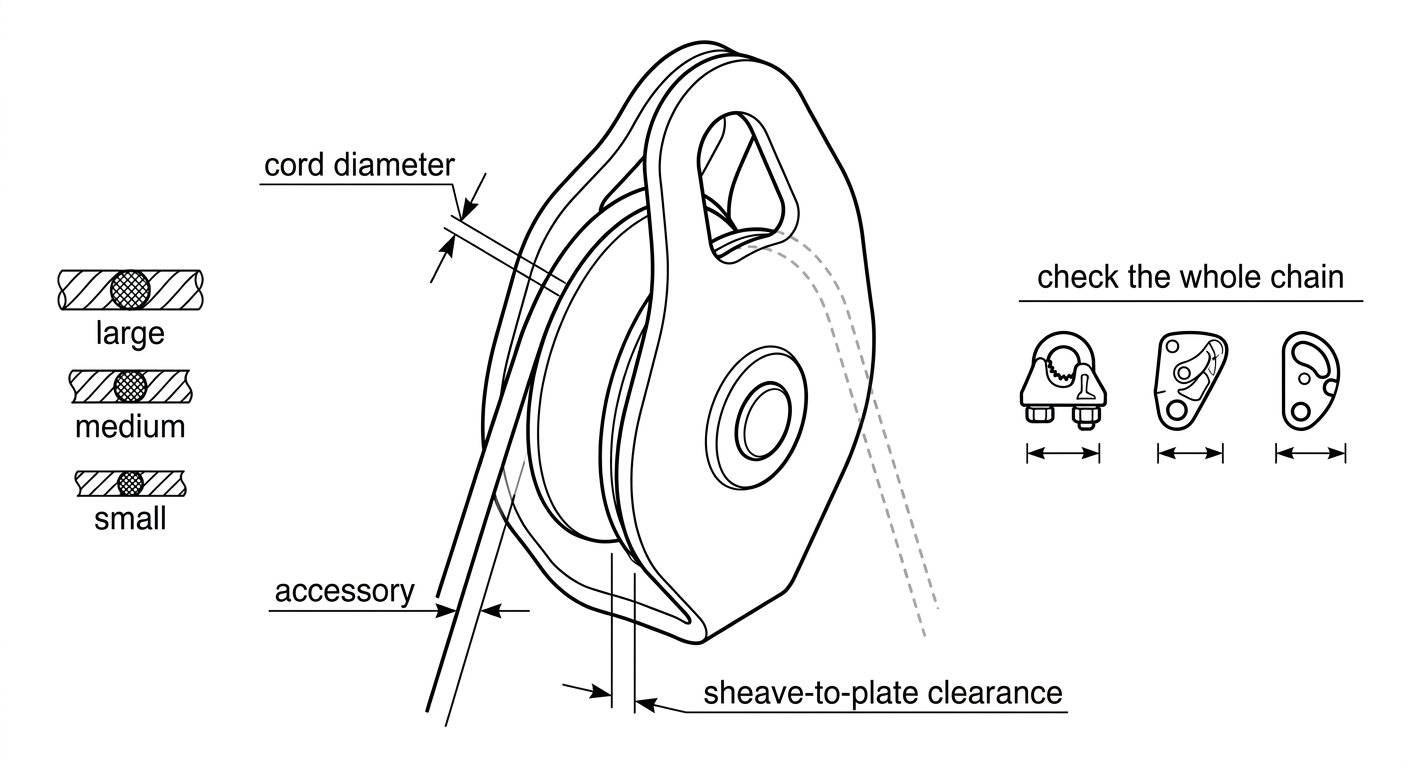
Small cord is convenient. It coils tight, it weighs nothing, and a 100 m spool of 6 mm accessory cord takes up less pack space than 30 m of 11 mm low-stretch rope. That convenience is exactly why it ends up threaded through pulleys that were never designed for it — tool-hoist lines through a…
-
Pulley Efficiency: What the Numbers Mean
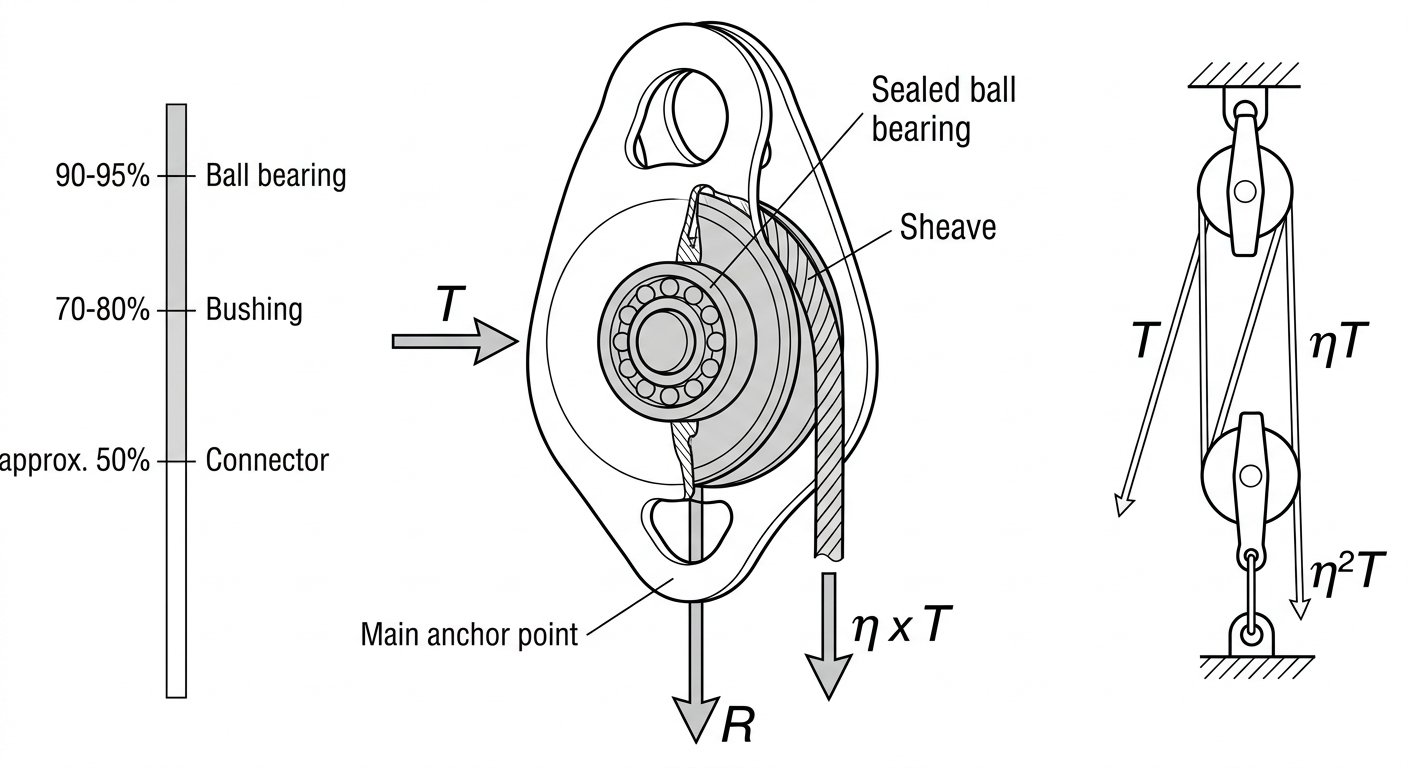
A pulley’s stated efficiency is not a marketing number — it changes the force a hauling team has to produce, the load the anchor actually sees, and whether a 4:1 on paper behaves like a 4:1 on the rope. On site the practical questions are simple: how much of the hauler’s effort reaches the load,…
-
Choosing Connectors for Hauling and Pulleys
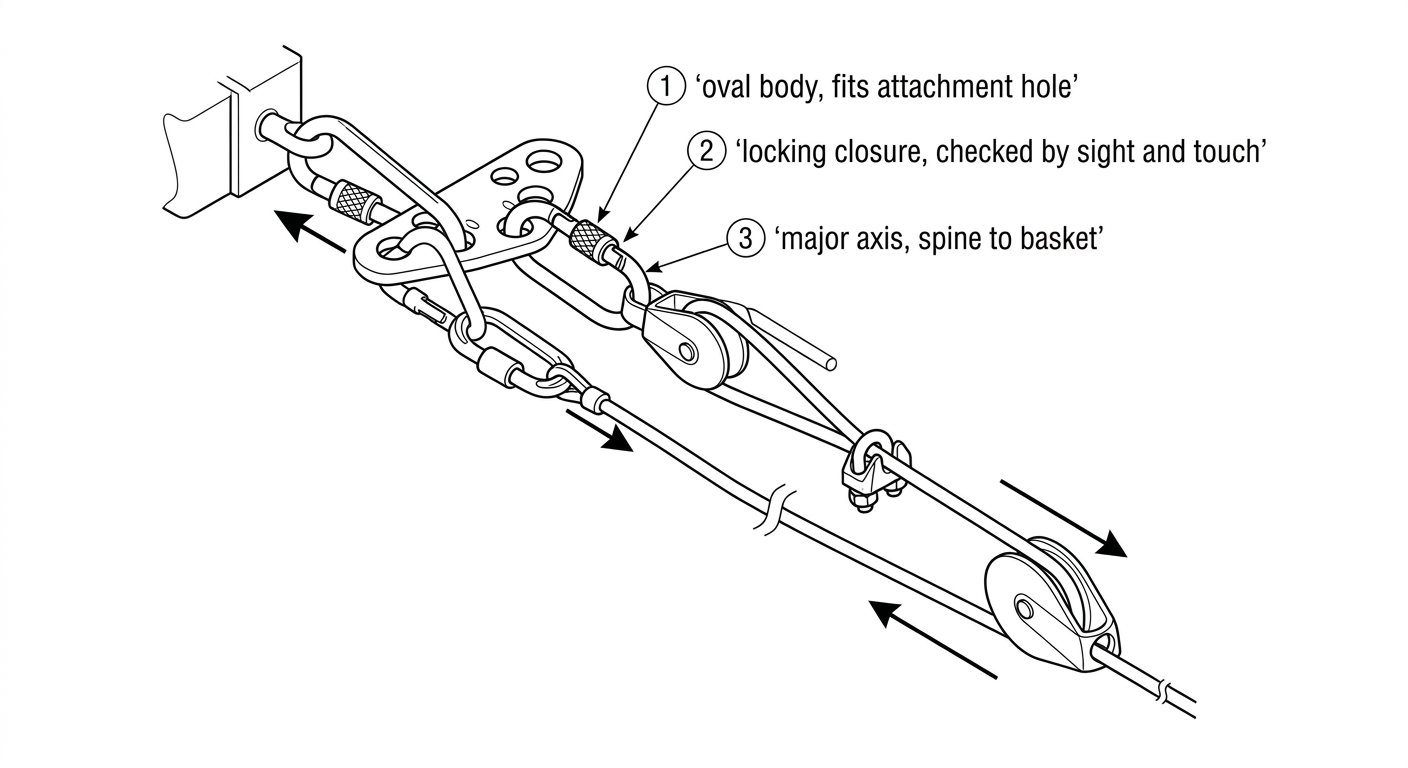
In a hauling system, the connector between the pulley and the anchor is one of the most heavily loaded components on the site. Mechanical advantage multiplies the force the haul team applies, redirects add vector loads on top of that, and every one of those forces passes through a single piece of hardware whose shape…
-
Choosing a Connector for a Descender: Locking, Compatibility and Correct Loading
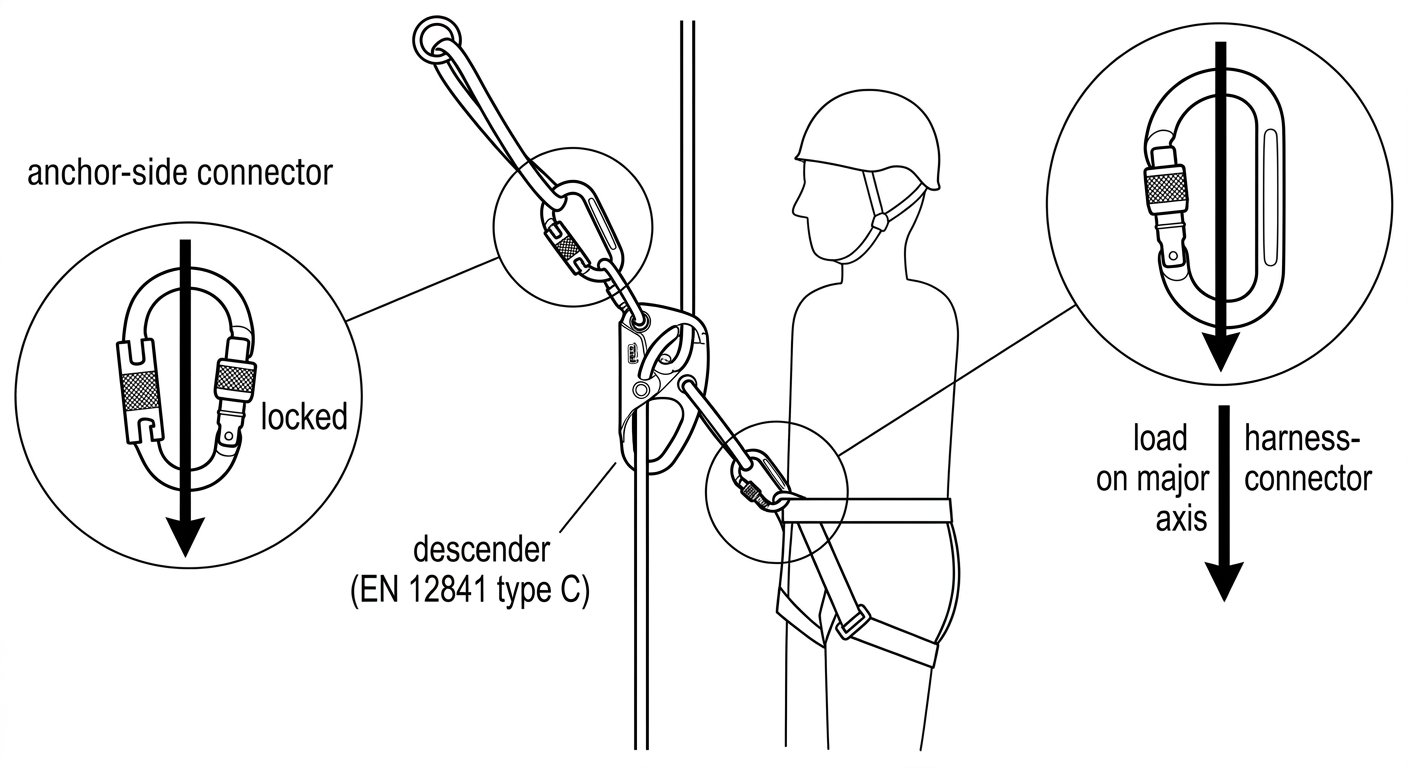
The connector between a descender and the harness is one of the smallest components in a rope access system and one of the least forgiving. It carries the operator’s full working load, it is handled dozens of times a shift, and it sits in a position where it can be rotated, pressed against a harness…
-
Connector Locking Systems Compared: Screw-Lock, Two-Stage and Three-Stage Auto-Lock
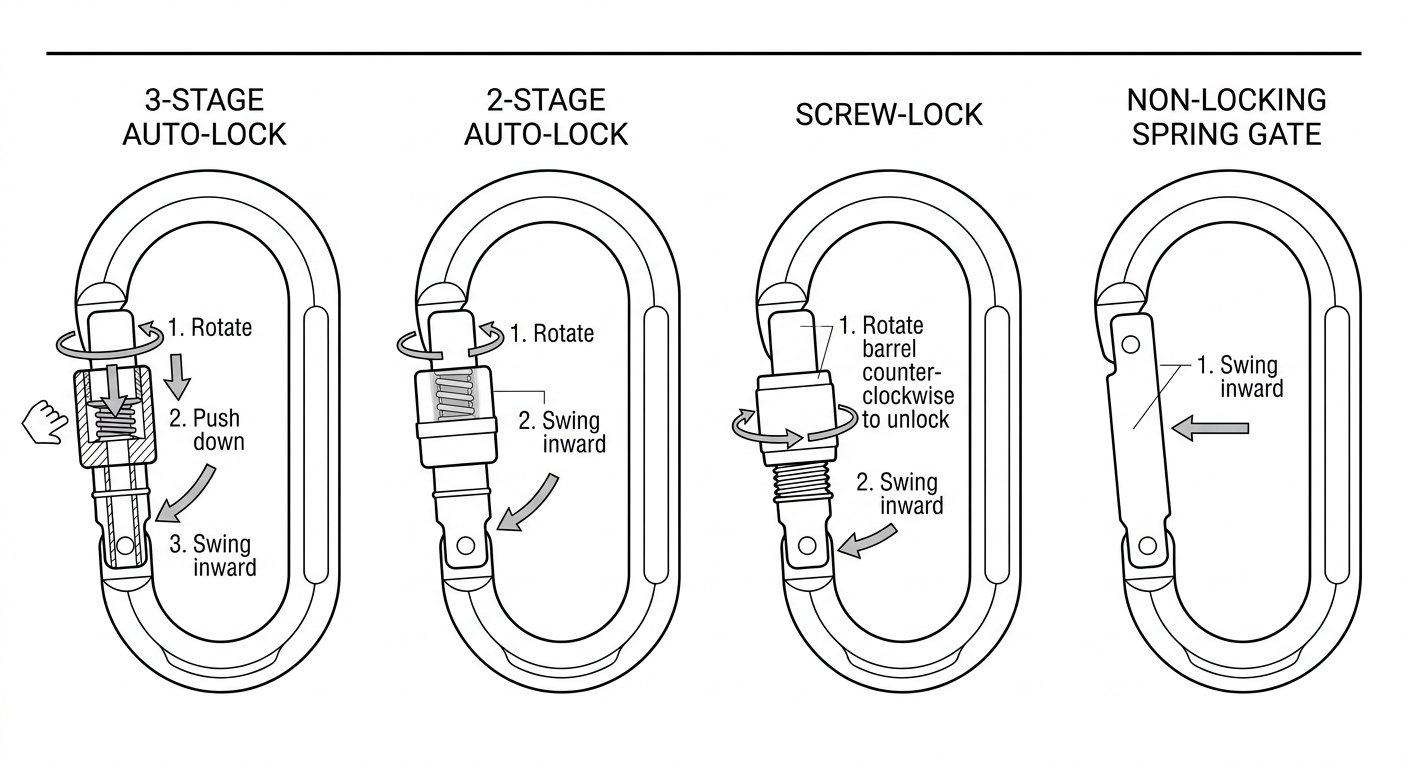
Every rope access or confined-space system comes down to a handful of small metal parts that hold the whole thing together. The connector at the harness attachment point, at the anchor, on the descender and on the back-up device is where a system most often fails through human error rather than material failure — a…