
Latest posts
-
Rope Grab Specifications and Rope Compatibility: Matching the Device to the Line
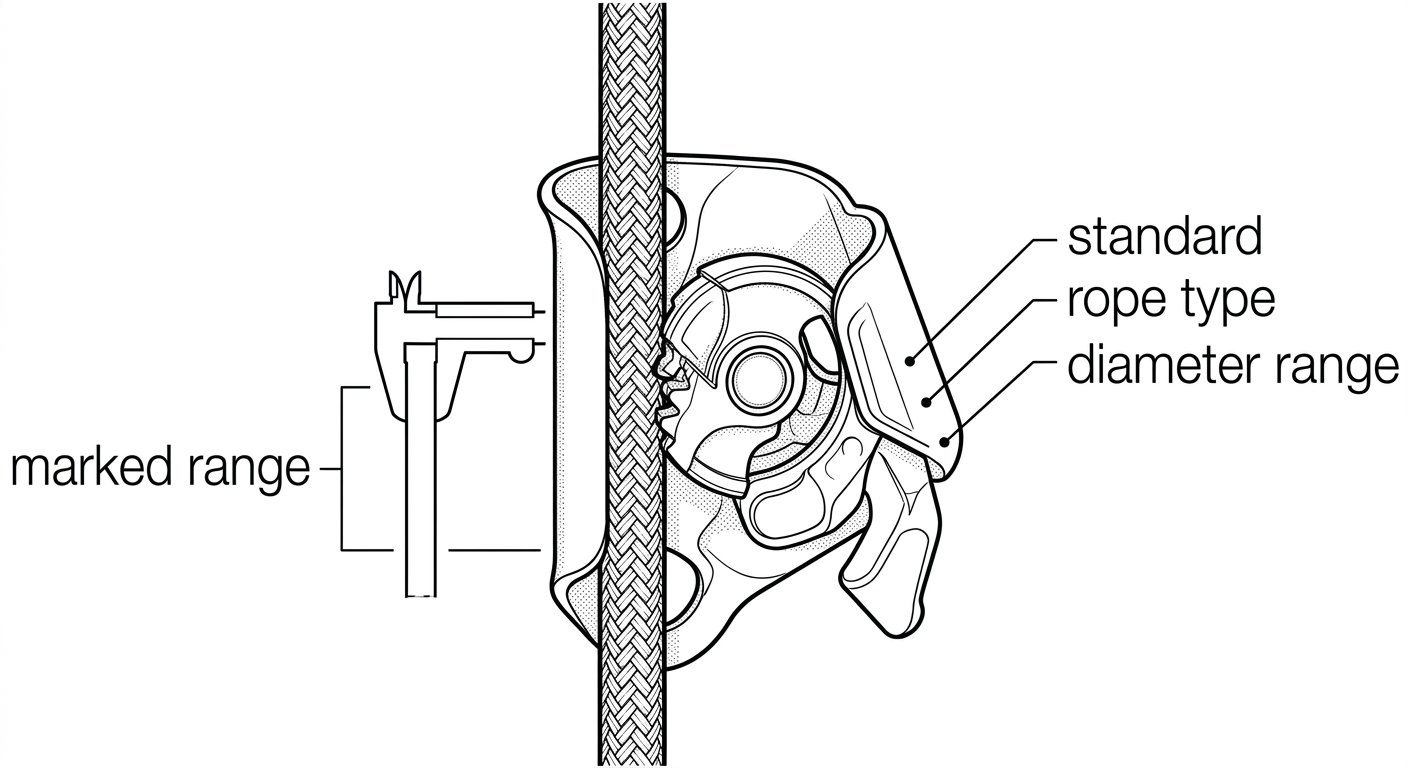
A rope grab is only as good as the rope it is sitting on. The device does not arrest a fall on its own – it does so by clamping a specific type of rope, of a specific diameter, in a specific condition. Put the same device on a line that is a millimetre too…
-
Washing a Low-Stretch Rope Before First Use
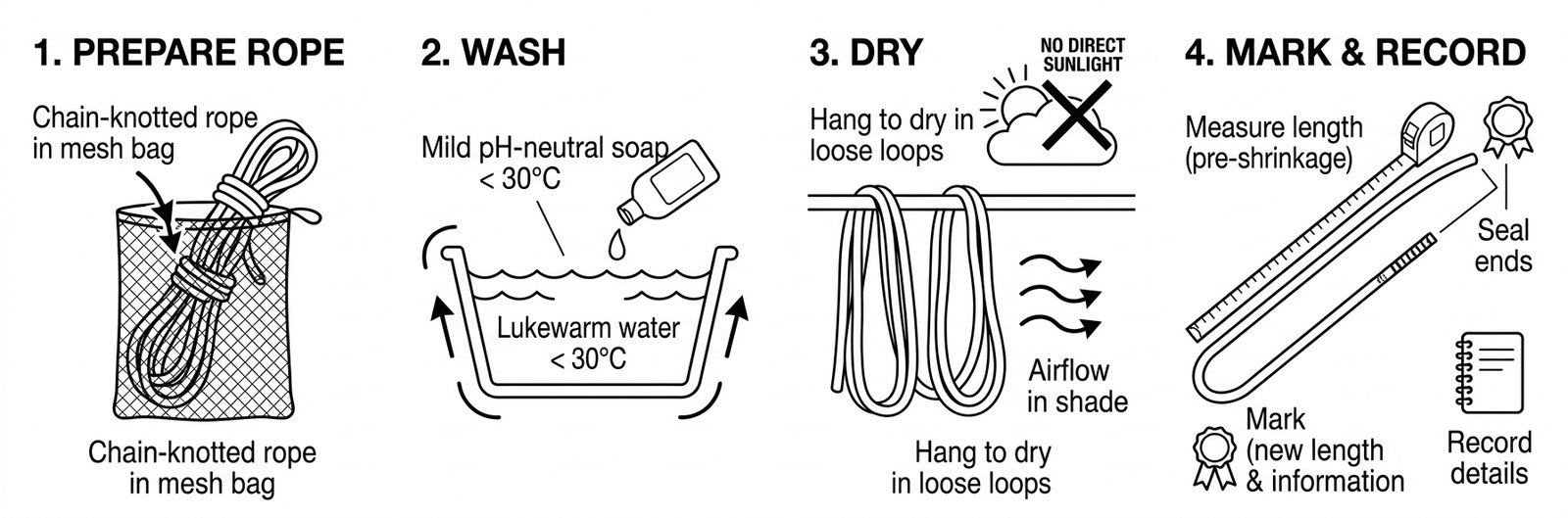
A new low-stretch (semi-static) kernmantle rope does not arrive in the state it will spend the rest of its working life in. It carries residual processing lubricants and fibre dust from spinning and braiding, its sheath is slick, and its length is not yet stable: the first thorough wetting shrinks it. Washing the rope before…
-
Performance of New Versus Used Ropes: Slip, Stretch, Diameter and Friction
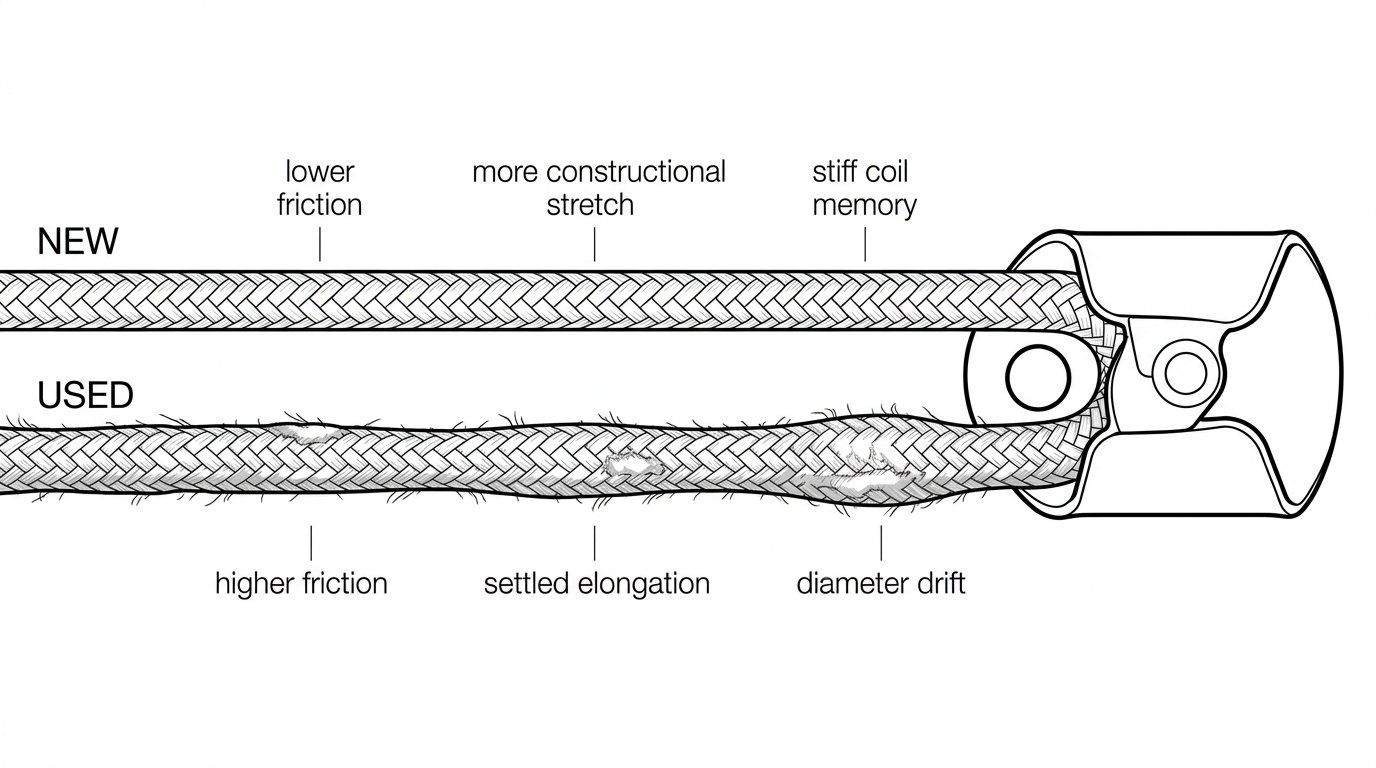
A rope that has been in service for a season does not behave like the one that came out of the bag last week, and the difference shows up in the places that matter most: how fast a descender runs, how far the rope stretches before the load is taken, whether a rope grab bites…
-
Rope Diameter Limits on Descenders: Why the Marked Range Matters
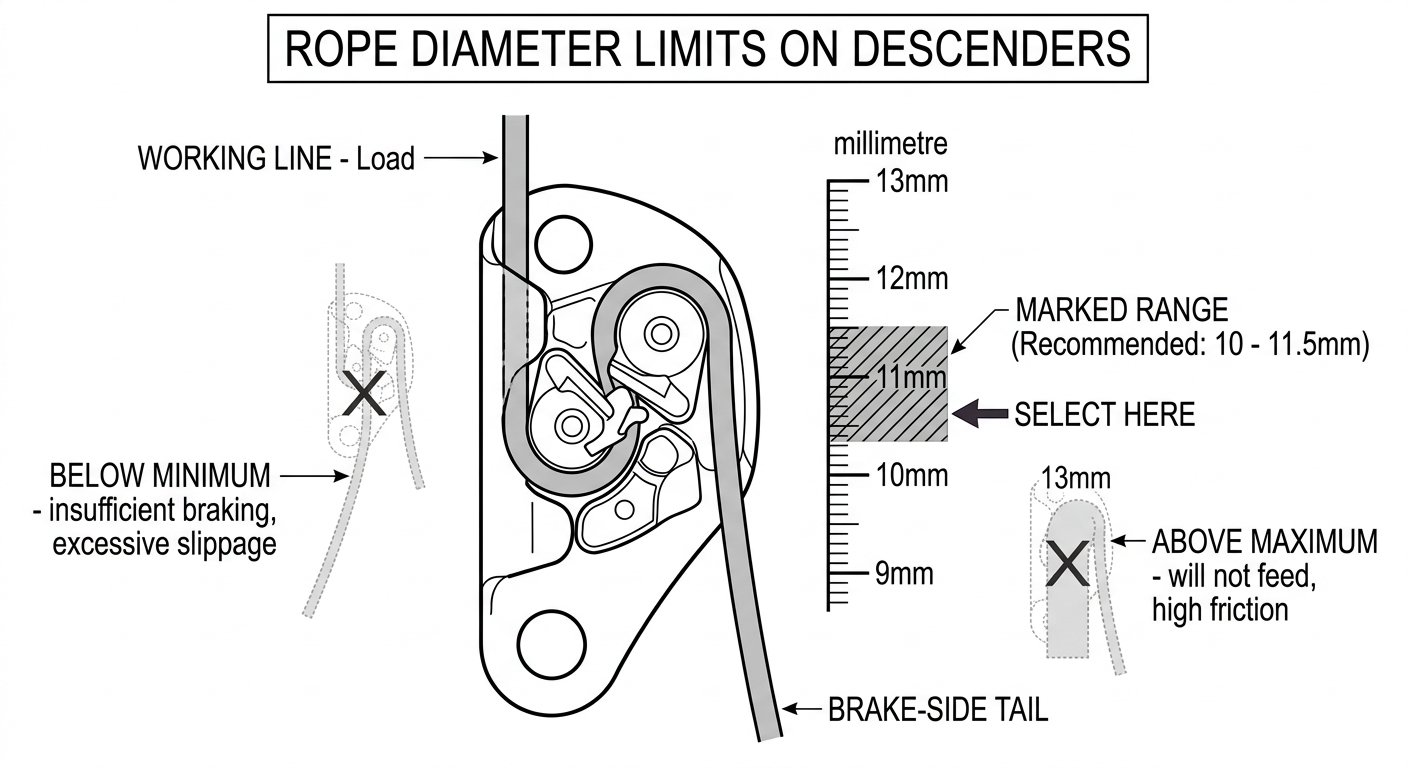
Every industrial descender carries a marked rope diameter range, and it is one of the few pieces of information on the device that directly governs whether the device will brake when a worker needs it to. Fit a rope thinner than the marked minimum and braking force drops, descent speed becomes hard to control and…